
In a month, Canada’s Religious Freedom ambassador’s first three-year term will expire, as will his office’s budget. He’s been making the rounds, once again, to talk about how much value there is in his office in helping our diplomats understand the religious points of view that dominate certain other countries, and uses that as the justification for his office. In a piece by the Citizen, there are a few other voices who say that he’s been doing a good job, and that he’s been available and accessible to talk about certain foreign policy issues, which is all well and good, but there does remain a certain discomfort around the very existence of the office and its raison d’etre. Part of that has to do with the suspicion that this was an office designed like its American counterpart to essentially be an office of Christian proselytising around the world – and to a certain extent, the press releases we did see out of that office seemed to weigh in particular to countries where there was a Christian minority in some level of persecution. But what the Citizen article misses is a more existential problem that the office faces, which is that its very existence creates a problem of perception in terms of a hierarchy of rights. The previous government in many statements it made in the Commons and elsewhere seemed to point to freedom of religion being a more fundamental building block to other rights and freedoms, which is fairly anathema to human rights academia. Back when the office was created, I spoke to a number of scholars who were sceptical because it introduced the notion that there was a hierarchy of rights, when all rights should be treated equally, lest they get their own departments within Global Affairs, and the jockeying for status, position and funding would take over. It remains to be seen what Stéphane Dion and the Liberal government thinks of the Office and whether they will be inclined to keep it around, or possibly absorb it into some other department within Global Affairs, of if they are persuaded by the argument of the perceptions of hierarchy.
Roundup: Prairie drama queens
Finance minister Bill Morneau was in Calgary yesterday as part of his pre-budget consultations, and while listening to the questions during his televised press conference after the meeting, I am forced to wonder if Albertans aren’t trying to be Confederation’s biggest drama queens about their current economic woes (and yes, I say this as a former Albertan). You’d think that the province was actually disintegrating, but if you look at their numbers, their unemployment rates are only now reaching the national average (around 7 percent), and those that are employed (being the vast majority) are making more money in those jobs than the national averages. Yes, their provincial budget has a huge hole blown through it with the fall in oil revenues, but it’s nothing compared to what Newfoundland & Labrador’s budget hole is looking like with their own oil shock. Meanwhile, I don’t hear the pundit class bemoaning the job losses in that province, or people threatening their premier (though he’s been on the job only a couple of months). People were asking Morneau about extraordinary funding mechanisms outside of equalisation, and while he demurred on answering most of it, I am reminded of the usual Twitter snark of some economists like Mike Moffatt, who quite rightly point out that nobody would have even contemplated the kinds of bailouts for southwestern Ontario when their manufacturing centre crashed the way you hear about what they’re demanding for Alberta. The other problem that the loudest of critics (especially Kevin O’Leary) can’t seem to grasp is that there is a global supply problem with oil – there’s too much in the market, which has depressed prices. What exactly can Alberta’s provincial government do to prop up the sector when there’s already too much supply in the market? Even getting that oil to tidewater would just be adding even more to the global supply chain, which one would imagine wouldn’t help with the depressed prices. Supply and demand, and all of that. Yes, it’s a challenge, and it’s a long-term one that’s rearing its head now. Yes, there is a need for some bigger transformation initiatives, and the provincial government is looking to make changes, and I’m sure the federal government will try to get in on that action, but transitions are difficult things. There are going to be hard periods ahead, but simply demanding federal handouts and calling for Rachel Notley’s head aren’t helping matters.
Roundup: I Lost My Talk
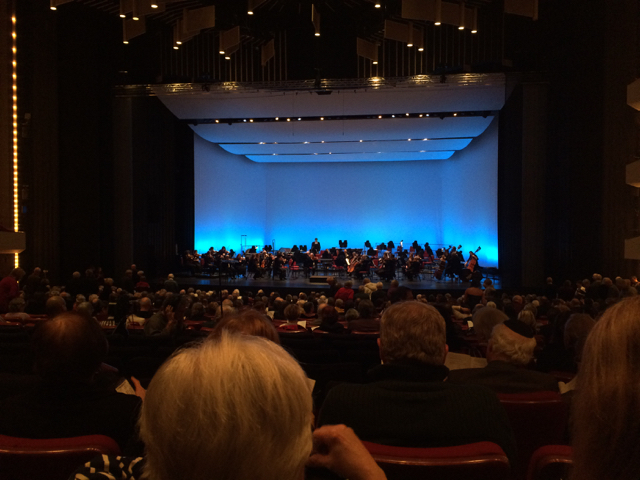 It’s been a while since I’ve done any arts reporting, but this is an exception. Last night I had the good fortune to attend the world premiere of I Lost My Talk, the new original composition commissioned by the family of former Prime Minister Joe Clark as a gift for his 75th birthday. The composition is based on the poem of the same name by Rita Joe, considered the “poet laureate of the Mi’kmaq” people, and it deals with a people losing their language and subsequently culture thanks to the legacy of residential schools. The evening was marked by a talk on Art and Reconciliation, led by Dr. Marie Wilson of the Truth and Reconciliation Commission, followed by the performance of the work itself. Presented along with other works about the endurance of the spirit – Shostakovich’s Symphony No. 9 in E-flat Major, Korngold’s Violin Concerto in D Major, Op.35, and John Williams’ theme from Schindler’s List, I Lost My Talk was the final performance of the evening. It was presented along with a video projection of a dance performance, also created to accompany the work. While one may not be sure how to turn a very tight poem of a few lines into an eighteen minute musical piece that is done without lyrics – lines of the poem recited intermittently through the piece – it was done perfectly. The composition itself was like an epic score to the poem, that was cinematic in scope and feel, the film and the choreography therein were wonderfully realized, and visually arresting. In total, it’s a powerful new work of Canadian composition that takes on the themes of reconciliation, bringing elements of the Indigenous conversation to more European art forms, and creates something powerful of them together. It was stated in the talk beforehand that reconciliation is not an Indigenous problem – it’s a Canadian one, where all of our society needs to participate. This work is part of that conversation, and reconciliation. One can think of no greater gift to a former Prime Minister like Joe Clark than the one that his family commissioned for him with I Lost My Talk. That the National Arts Centre is carrying on and extending the work with more First Nations artists creates a broader dialogue for the work, and the ongoing project or reconciliation.
We asked #Indigenous youth to create a song based on Rita Joe's "I Lost My Talk." Watch: https://t.co/XDToBIjz8O /JC pic.twitter.com/itD13V1Q2D
— National Arts Centre (@CanadasNAC) January 13, 2016

Roundup: Bemoaning private meetings
There are times when demands for transparency from the government in all things does perplex me, particularly times when it starts to feel creepily inappropriate. Case in point is the sudden cry of “Oh noes! Justin Trudeau’s itinerary doesn’t list who those private meetings are with!” followed by some handwringing about taxpayer dollars. And then a chorus of “Oh noes! He met with lobbyists!” Because that’s the whole point of lobbying – to meet with officials, and not all lobbying is evil or the exchange of money, gifts or favours for the sake of influence, despite what American television will tell you (though, to be honest, the American version of lobbying – where those lobbyists have been able to be on the floor of the House of Representatives – is excessive). The fact that we can see after the fact that the PM and his staff have met with lobbyists is a sign of the transparency in our reporting mechanism, and I’m sure that there are meetings that should probably be private for all sorts of legitimate reasons. Can we ask questions about it? Sure. Does it mean that we are entitled to be privy to all of the details? I don’t see why. The thing is, sometimes the government relies on private, frank conversations in order to help guide their thinking – kind of like meetings with the Governor General. Sometimes good governance requires a modicum of discretion, and sometimes total transparency makes things worse. Is there a balance to be had? Of course. The fact that we’re getting daily itineraries is a far cry more than what we got under the last guy, and while that can’t simply be the go-to excuse that something is better than nothing, it also behoves us to temper our expectations a little. They don’t have to jump when we say so. I sometimes wonder if there aren’t a few people who don’t realise this and who get bent out of shape when it doesn’t happen. By all means, let’s ask the questions – but let’s also not pretend that the system is broken when we don’t get the answer we’re looking for.
Roundup: Procedural secret ballots?
Suggestions for improving the way things work in the Commons are relatively common, and mostly a load of nonsense, but then Kady O’Malley comes along and pitches a new idea that I’d never heard of before, so I figured I’d deconstruct it a little. Essentially, she takes a never-before-used-but-on-the-books procedural tactic and looks to expand it – in this case, secret votes in the Commons on procedural matters. The one on the books is an appeal mechanism for MPs to use when their piece of private members’ business is deemed non-votable by both the subcommittee and the full committee that determines these things. Why this hasn’t been used before is because MPs generally know to keep their PMBs within the rules – federal jurisdiction (which they try to get around with the creation of national strategies) or by creatively trying to ensure that they don’t spend money (though some of those suggestions are too-cute-by-half, and yet they try anyway *cough*That NDP climate change bill that they won’t let die*cough*). O’Malley argues that this secret ballot process, extended to other procedural votes on things like time allocation and splitting complex bills into smaller parts, will somehow embolden MPs and ensure that House Leaders have to convince their caucuses rather than crack the whip. And while this sounds great in theory, I’m not buying it. For starters, even if we think that secret ballots for MPs under limited circumstances will somehow miraculously embolden them (and I’m highly doubtful about that one), it also takes them off the hook when it comes to voting for unpopular things like time allocation or keeping omnibus bills intact. Their voters should see them do it so that they can hold them to account for it. The larger problem, however, is that this is a suggestion that largely re-litigates the last parliament. The issue of omnibus bills this government has promised to amend the Standing Orders to prevent (and that’s a promise that we can hold them to account for), while the issue of time allocation is almost certainly to be handled differently, because frankly, we’re not seeing a return to the days of an incompetent House Leader, like Peter Van Loan most certainly was. And frankly, even it that wasn’t the case, I doubt we would see too many outliers on contentious bills being put before a procedural vote because they tend to buy their party’s decision on matters and will find a justification if it ever comes to that. So while it’s a nice idea in theory, I just can’t see this as anything other than yet another well-meaning bit of tinkering that will only serve to eventually make things worse through its unintended consequences. No thanks.
My reaction to @kady’s latest? https://t.co/nKKqjBfyqh pic.twitter.com/xbav36ddPi
— Dale Smith (@journo_dale) January 12, 2016
Roundup: Fledgling government delays
Delays seem to be the word of the day for the fledgling government – delays in getting the refugees here (but that’s happening), delays in getting committees up and running (thanks in no small part to NDP and Bloc wrangling) – though they did finally name the assisted dying committee members today, and it looks like there are now delays in getting the new Independent appointments committee for naming new senators up and running. This means that those promised five new “independent” senators won’t likely be chosen before Parliament comes back, nor will the new government “representative” be chosen from one of those five as intended. That could start being a problem for the government as they start looking to outline their agenda and figure out what they’re going to start sending over to the Senate in terms of legislation. Mind you, it’s not too late for the government to do the right thing and appoint an existing senator to the post (because it makes absolutely no sense to put someone with no Senate experience into the role – it really doesn’t), and then figure out how to keep the relationship as arm’s length as possible while still letting parliament function as it should, with government and opposition sides that help keep debate and accountability going. Oh, and while we’re on the subject, can We The Media please stop this whole “The Senate has traditionally been a partisan dumping ground” line? It’s a gross exaggeration of the truth, and it neglects the fact that a lot of eminently qualified people who weren’t just party hacks were appointed. Yes, some of them chose to behave a bit unfortunately once appointed because they thought they had do (particularly true of the way that Harper’s poor appointment process corrupted a generation of senators), but on the whole? We had some pretty great appointments on both sides for a lot of years. Stephen Harper and his PMO upsetting the balance should not be held up as the norm of the chamber’s history any more than the small number of senators with questionable expenses should be treated as a reflection on the vast majority who didn’t. But by all means, keep repeating the received wisdom (and in some cases mendacious gossip) about the Chamber and its denizens. It’s really helping us live up to our role of educating the public as to what goes on in Parliament.
Roundup: Airfare obsessions
Oh, the things we obsess over in this country – like the Prime Minister’s air travel. Perpetual source of media copy, as are the strange figures that get attached to it. As previously mentioned, Justin Trudeau and family went on vacation to the Caribbean island of St. Kitts-Nevis, and apparently rented a villa there (which they paid for out of pocket), and got a bit of tabloid attention, because why not? Also, apparently there was a bit of diplomacy as he met with the country’s prime minister and foreign minister, but that’s beside the point. The point is that while Trudeau has promised to reimburse the public purse for the equivalent of economy fares for the trip, the media continues to bring forward the dollar figure of $10,000 per flying hour to operate the Challenger jets, which the PM is obligated to take for security reasons. The problem with using that $10,000/flying hour figure is that it never places it in the context of it being a military aircraft, and it’s not just sitting around waiting to shuttle the PM around – they’re in use for other operations, and even when they’re not, they still get flown empty because those military pilots need to keep up flying hours aboard them. It’s a Thing, but nobody ever mentions it. Instead, when the PM wants to go somewhere on personal business, we drag up the $10,000/flying hours figure because we want a bit of cheap outrage, and if there’s anything that Canadian media loves, it’s cheap outrage. It is a little curious that Trudeau is reimbursing at the economy fare rate, but I guess we’ll see what that rate looks like once it’s repaid. While Paul Martin made it the practice to repay double the going business-class rate, Stephen Harper would occasionally reimburse it at what was alleged to be the lowest possible economy fare, though most of the time when reporters tried to find equivalent flights for what Harper repaid, well, it couldn’t be done. I would say that if anything, repaying less than the economy fare is almost more insulting than not repaying anything and saying “I’m Prime Minister, I can’t fly commercial, so deal with it” because it almost looks like you’re showing contempt than respecting the taxpayer (which is the born-again motto of the Conservative Party post-election). So really, we should suck it up (provided that the trips aren’t egregious) but I see little chance of that happening anytime soon.
Roundup: Important praise for the status quo
The electoral reform conversation has been going around, and proportional representation fans frequently take to my Twitter feed to harass me about the subject, and we usually end at the impasse where they refuse to deal with our system as it exists in order to comprehend its logic. Regardless, there are few voices out in the mainstream in favour of the status quo option, but I was pleased to see that the Ottawa Citizen’s editorial board wrote a defence of the status quo. While some of it needed a bit more work (particularly in how they went about describing how the current system can “skew” results – it really doesn’t if you read those results properly and don’t import the logical fallacies of popular vote figures), but the nub of their argument is the most important – that our current system is particularly valuable in that it lets the electorate throw the bums out on a regular basis. It’s often said that in Canada, we don’t elect governments – we defeat them. And every few years, we get tired of who is in power, and we punish them and elect someone new who will clean up the mess left behind (and really, most of those parties need the defeats to let them clean house, re-energise, and think about where they went wrong. Sometimes, it takes them a couple of elections to do just that). What the editorial didn’t address very specifically is that in many PR countries, there really isn’t this ability to throw the bums out. Instead, they tend to be dominated by a central party who remains in power for decades, while they simply shuffle up their coalition partners when they need something. This was certainly the case in Germany, and while we don’t know what a PR-landscape in Canada would look like, it is a distinct possibility as there would be more incentive for small and fringe parties who exist to start agitating for their own power and influence within a coalition (as that would be the likeliest way to form future governments in what looks to be a continued sense of minority parliaments). As more small parties grow, the larger ones will likely fracture as there will be less incentive for the interests that they contain would stick around when they could gain outsized influence as a smaller party vying for that coalition power. Add to that, if we adopt a PR system that employs party lists, that makes it even harder for problem MPs to be tossed aside, as their fortunes are in the hands of the party itself, not the electorate. While emotional arguments about perceived fairness and “wasted” votes tends to rule the day, accountability should be a feature that requires greater consideration. Most other systems can’t provide it the way ours can, and that remains one of the reasons why I remain with team status quo on our electoral system.
Roundup: The problem with private members’ bills
I’ve written a lot about the problems with private members’ bills, and in my column this week over at Loonie Politics, it came up again given that the lottery for the Order of Precedence was posted. I wrote about it back in the spring when there were a number of problematic ones that the Senate was possibly going to kill (and in some cases did when the clock ran out on them) for good reason – because they were bad bills. While interviewing Liberal Senator George Baker yesterday for a story I was writing, he offered this, which I unfortunately wasn’t able to include in the piece, but every MP should nevertheless read it and take it to heart:
“Here’s a real problem with these private member’s bills: if there’s a fault in the bill, if there’s a word out of place, if there’s an error in the wording or in the intent of a sentence of paragraph – if it’s a private member’s bill, then the Senate is in a quandary because if they amend the bill, then they will in all likelihood be defeating the bill. If you amend a bill in the Senate, if it’s a private member’s bill, it goes back to the Commons and it goes to the bottom of the list for consideration, and then the private member will come to the Senate committee and say you’re going to pass this bill. We had it happen three times in the past two years. They say you’re going to defeat the bill, so the Senate turned around and passed the bill, given the tradition of not defeating something that’s legitimately passed in the House of Commons, and Senate ignored the necessary amendments and they passed bad legislation.”
Baker is absolutely right in that there is a problem – MPs don’t have them drafted very well, and then don’t do their due diligence because these bills are automatically time-allocated by design. That a number of these bills died on the Order Paper in the Senate one hopes might be an object lesson to MPs that they need to do better, but unfortunately, the lesson too many MPs took is that the “unelected and unaccountable Senate” didn’t just rubber-stamp a bill because it passed the Commons. Except, of course, it’s not their job to rubber stamp, and we’ve had an increasing number of bad bills getting through the cracks based on these emotive arguments, and not a few hissy fits along the way *cough*Reform Act*cough*. And now we have bad laws on the books because of it, apparently content to let the courts handle it instead. It’s sad and a little pathetic, to be perfectly honest. We should be demanding out MPs do better, and when they screw up, they need to take their lumps so that they’ll do better next time. Otherwise they won’t learn – or worse, they will take the wrong lesson, and our system will be worse off.
Roundup: Caution on the veto
The particular bugaboos of electoral reform and the role of the Senate have been colliding increasingly in the past number of days, as there have been threats coming that certain Conservative senators have been threatening to use their majority to vote down any legislation on changes to the electoral system unless there’s a referendum first. And then this particular op-ed in the Citizen by a Université de Montréal law professor urging them to do just that makes me want to just take a moment to talk it all through. First, a few things to keep in mind – the senator who went to the media about this threat was Don Plett, who is, well, singular on some issues. He’s broken ranks before, and is willing to stick to his guns on others, but I wouldn’t ever quote him as the voice of the Conservatives in the Senate, even though he is now the caucus whip. The other thing to keep in mind is that the Senate of Canada, being probably the most powerful Upper Chamber in the democratic world, does indeed have the power of unlimited veto – there is no overriding it if the Senate decides that they want something to die. It’s a power that they very rarely use, particularly when it comes to government bills – it’s kind of like the nuclear deterrent for legislation. No, they’d rather make amendments and send it back, with few exceptions. The reason it’s treated with such caution is that they know they don’t have the democratic mandate to exercise these powers except in rare circumstances. In those rare circumstances, they will do it because it’s their job to have a check on a majority government, and be empowered to speak truth to power, which is why they are afforded the kind of institutional independence that they have. So with this in mind, I will hold up a big caution sign when it comes to encouraging them to overturn any theoretical bill on electoral reform. This all dredges up memories of the Free Trade Agreement, and when the Senate held up that bill from the Mulroney government until it could be put to the people, seeing as this deal was hugely contentious at the time, and it was believed that it was going to be selling out our sovereignty to the Americans. The election was fought on this issue, Mulroney won, and the bill passed, and lo and behold, the sky didn’t fall. But while there was merit in putting that question to the people, it was part of the chain of events that started to polarise the Senate, which prior to 1984, was said to have operated on a much less partisan basis. Tit-for-tat games ramped up the partisanship there, until things became so bad that Mulroney exercised the emergency powers of appealing to the Queen to appoint an additional eight senators in order to get the GST passed. The Senate is currently in a vulnerable spot, and while I wouldn’t ask them not to do their jobs because they are in a period of intense scrutiny and this would get blown completely out of proportion by an ignorant pundit class and MPs with agendas harmful to the independence of the Senate – but it would hurt them. That’s why this discussion needs to be approached extremely cautiously, and rash actions scrupulously avoided at all costs.