
The NDP have decided to spend their opposition day motion on what is basically the endorsement of wanton constitutional vandalism, but in this particular case, trying to put forward the case for Senate abolition. Never mind that their arguments will ignore federalism, bicameralism, and the actual work that the Senate does or perspective it provides – no, it’ll be all specious catchy slogans and intellectually dishonest false comparisons masquerading as substantive debate. It’s like saying that you don’t know what your pancreas does, so why not remove it? Meanwhile, Thomas Mulcair won’t say whether or not he’d appoint Senators if he were to form government in 2015 – never mind that whether he believes in the Senate or not, there is still a constitutionally mandated legislative process that needs to be followed. But you know, details.
Tag Archives: Civic Literacy
Roundup: Mike Duffy’s cognitive dissonance
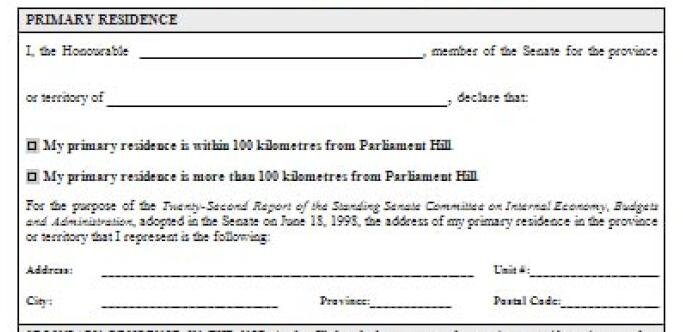
Beleaguered Senator Mike Duffy went to the media last night, and declared that he was going to repay the residency expenses he’s been claiming for his “secondary” residence in Ottawa. He claims, however, that he still qualifies to sit as a PEI senator – because the cognitive dissonance, it burns! As his excuse, Duffy said that the Senate rules are fuzzy and the form wasn’t clear – err, except it was. It’s two ticky boxes, and fill-in-your-address. No, seriously. But no, this repayment doesn’t halt the audits, or the question as to his residency being in line with the constitutional requirement for residency. And while Charlie Angus may huff and puff and demand the RCMP be brought in, one has to ask if the RCMP were brought in when MPs were found to be improperly claiming housing allowances a few years ago. No? Didn’t think so. Meanwhile, the former editor of satirical Frank magazine reminisces about his fractious relationship with Duffy, and it paints a pretty interesting picture of the Senator back in the day.
Roundup: Wallin’s celebrity senatorial status
Senator Pamela Wallin takes the Toronto Star on a tour of her Saskatchewan hometown, and talks about her travel expenses, including the fact that it’s not easy to get to Wadena from Ottawa, and that because she’s an honorary captain in the Air Force, she has to travel to events at airbases around the country. Meanwhile, Senator Segal writes about his proposition to hold a referendum on Senate abolition as a means of getting people talking about the institution, but given the state of civic illiteracy in this country, my sense is that it’s a very dangerous proposition, and is akin to asking people if they want to remove their pancreas if they don’t know what it does. Senator McInnis thinks an elected Upper Chamber would have more “credibility,” but he doesn’t discuss any of the other consequences of such an action, including gridlock or battles over who has more “democratic legitimacy” and therefore clout. Jesse Klein writes about electoral and Senate reform while relying on meaningless emotional and romantic terms like “fairness” without paying enough attention to either current electoral realities or the actual consequences of the changes.
Garneau, Trudeau, and the presidentialisation of leadership
At a press conference in Ottawa Wednesday morning, Marc Garneau laid down a marker in the leadership campaign between himself and Justin Trudeau. Essentially, Garneau called out Trudeau for not having enough solid policy positions, never mind that Trudeau has consistently said that he doesn’t want to come out with a full platform because the last thing the party needs is another top-down leader making pronouncements.
Without inserting myself into one camp or the other, it seems to me that there is a much bigger question at play here about the direction that Canadian politics has been taking, and it does bring me back to a basic discussion around civic literacy. Moreover, it’s a discussion about the role that parties play within our democratic system, and the way in which the grassroots interacts with those parties. With power ever increasingly centralising in leaders’ offices, this is probably a discussion that more people should be having.
Roundup: Brazeau and the pundit class
So, Senator Patrick Brazeau, arrested and held in police custody on suspicion of domestic violence, possibly sexual assault. Stephen Harper reacted immediately by expelling him from caucus – so far so good. But then came the immediate and not unexpected boneheaded comments from the commentariat with its ad homenim attacks and visceral hatred for the Senate, apparently based solely on the received wisdom of the ages, and not upon reality. For example, NDP MP Charlie Angus insisted that Stephen Harper remove Brazeau from the Senate entirely – err, except that he can’t do that. You see, there’s a reason why Prime Ministers can’t arbitrarily remove Senators – because it’s the job of the Senate to hold the executive in check. If a Prime Minister could remove Senators at will, then he would do so anytime they became a nuisance to him, and replace them with more compliant models. That kind of protection from arbitrary removal is actually a design feature – it allows them to speak truth to power without fearing for their jobs. And while yes, they can be removed through an internal process, it’s a pretty high bar that’s set in order to ensure that their jobs aren’t under threat when they oppose the government of the day. And yes, many Senators do take advantage of that, even when it’s inconvenient to the Prime Minister that appointed them, because that’s their job. While the received wisdom is that they are all hacks napping until their retirement, a lot of good work happens in the Senate that simply isn’t talked a lot about, mostly because there isn’t a lot of drama behind it. Add to that this concern-trolling about being “democratic” or “accountable” without actually understanding what those terms mean in their holistic contexts, and it’s when things start to spiral out of control.
Roundup: Knee-jerk populism vs. the Charter
In another stunning bout of knee-jerk populism, Jason Kenney has seized on the story of a Canadian dual-citizen blowing up a bus in Bulgaria, coupled it with a dubious Private Member’s Bill about stripping the citizenship of dual-citizens who engage in acts of war against the country, talked about amending it to include terrorism, and viola – ready for the media. How predictable, and how so very, very flawed. For one, it’ll never stand up to the Charter, because Canadians, no matter where they may have been born, are all equal under the law. Also, it shows contempt for process because he’s trying to hijack a PMB that probably shouldn’t have been voteable in the first place. It’s worse that Kenney wants to try and ram through unconstitutional measures into the PMB process, which would get a mere couple of hours of committee study before heading back to the Chamber for a mere two more hours of debate. Yeah, he may need to rethink this whole proposition.
Roundup: Push-poll “miscommunications”
Oh dear. It seems that despite initially denying the story, the Conservatives did eventually admit to being behind a push-poll in Saskatchewan designed to turn public opinion against the electoral boundaries changes – changes that will disadvantage the Conservatives as genuine urban ridings are carved out of the old distorting “rurban” ridings. Oh, but it was an “oversight” that they didn’t identify themselves. I’m sure the CRTC will be happy to hear that “guilty plea,” as Pierre Poilievre would term it, were this a Liberal mishap. But it’s not, so I’m sure their euphemisms will be equally creative.
The Environment Commissioner tabled his final report yesterday, which details frustrations with the pace of resource projects outstripping the capacity of regulatory agencies who are dealing with changing legislation, jurisdictional confusion, and not enough resources.
Roundup: Farewell Canadian Crown, hello Crown colony status
The government did something well-meaning yesterday, but in the process, ended up doing something very, very bad. In what was no doubt a somewhat thoughtless attempt to circumvent the rules around constitutional amendments, they tabled their act to change the laws of succession for the Canadian Monarchy yesterday that evoked a moot section of the Statute of Westminster that basically said “whatever the Mother Country decides, we’re cool with.” And with that one fell swoop, the government of Canada has undone eighty-two years of Canada having an independent Crown, and has once again relegated us to the status of a Crown colony of Britain – and no, I’m really not being dramatic. (See the bill and the government’s nonsensical backgrounder here). You see, that section of the Statute of Westminster that they’re evoking – was repealed with the patriation of the Constitution in 1982. Oops. And by simply assenting to the UK change, it means that the Crown of Canada is not a separate corporate sole from the Crown of the United Kingdom – which means that Canada is not a sovereign country. And because the Office of the Queen – which the rules of succession are a Very Big Deal regarding – falls under s.41(a) of the Constitution – that means a constitutional amendment requiring the unanimous consent of the provinces. Yes, it’s a little messier and will take a little more time, but we’ve got at least two generations of heirs in order to get it right, and there is little reason that any of the provinces would object to such common sense changes. But hey, for the sake of expediency, let’s treat the constitution like it doesn’t matter! Which seems to be the modus operandi of the entire political discourse of this country of late – between this, the NDP’s “Unity bill,” and Bob Rae thinking that the Governor General should be involved in political meetings with the First Nations and denying royal assent on the Wheat Board bill, we have pretty much proven that civic literacy in this country is in complete and utter shambles. How many other mature democracies treat their constitutions like they’re relative documents that you can project your own interpretations onto as they suit your agenda? Unbelievable.
YCYC and their latest distorted poll
On Wednesday, purported “civic literacy” group Your Canada, Your Constitution released the results of a new poll, this time on restricting the powers of prime ministers and premiers through codified rules that could be enforce.
The question was as follows:
Some rules that are part of Canada’s Constitution, that are called “constitutional conventions”, are not written down, and so experts disagree what these rules actually are and whether the rules can be enforced. Experts do agree that the unwritten convention rules cover decisions such as: when the Prime Minister and premiers can open and close parliament; what measures can be included in bills such as budgets; whether a government has lost a vote that should cause an election; whether an election should be called just because a Prime Minister or premier wants an election, and; which political party, or parties, will be the government after an election.
In most countries in the world, including Britain, Australia and New Zealand, these rules are written down so the powers of their politicians are clearly defined and restricted, and so the rules can be enforced.
Do you think Canada’s constitutional convention rules should be written down so that the powers of the Prime Minister and provincial premiers are clearly defined and restricted, and so the rules can be enforced?
Respondents were given the option to strongly agree/agree/disagree/strongly disagree/don’t know, and the question received an 84 percent agreement. Sounds great, right?
Roundup: Returning to untenable demands
The AFN is apparently back to their demands that Harper and the GG be at the table together at their next meeting – which is untenable. That a number of chiefs think that the GG can force Harper to deal with their issues is a gross misconception that they need to abandon. It’s even worse when one of them comes on Power & Politics and declares that the Queen got it wrong. Because you know, it’s not like she’s been on the job for the past 60 years or anything. Meanwhile, Tim Harper has a very disturbing tale of threats and intimidation going on in the internal politics of the AFN, which includes threats being made against National Chief Shawn Atleo and other regional chiefs. Paul Wells writes about Stephen Harper’s choice between cooperation and confrontation with First Nations.