
It’s hard to know where to start with the constant revelations on the Senator Mike Duffy file yesterday, because they were coming pretty fast and furious, but the biggest news was that he “voluntarily” left caucus because he had become a distraction. One adds the quotation marks around “voluntary” because word is that the other members of the Conservative Senate caucus were signing a petition to have him ousted, so the writing may have been on the wall. He still wants back in, once everything is sorted and he is somehow vindicated, but considering how he and his lawyers refused to cooperate with the Deloitte auditors, and the fact that he was allegedly making that deal with Nigel Wright in order to make his expenses outrage go away, well, the desire to see his name cleared doesn’t seem to have been top of mind the past few months.
Tag Archives: F-35 Fighters
Roundup: Duffy and Brazeau are totally helping their cause
Not that it’s a big surprise, but Senator Patrick Brazeau has vowed to fight the order that he repay those living expense in the wake of that Senate audit. While he does have a point that he was cooperative and that he met all four residency requirements, unlike the other two Senators, but that doesn’t change the fact that he spent a mere ten percent of the time. Government leader in the Senate has threatened that if Senator Brazeau and Harb don’t repay their expenses – with interest – immediately, the Senate will garnish their wages, which they can do. It’s also not clear with which court they can try to challenge these audit results and the orders that the Senate itself will be voting to enforce, seeing as Parliament is actually the highest court in the land. Meanwhile, Charlie Angus wants the legal opinion that LeBreton solicited regarding Senator Mike Duffy’s eligibility to sit in the Senate based on his residency – which told LeBreton that everything was fine – made public. (As an aside, one does wonder just how many legal opinions on the Commons side are made public.) LeBreton replied that Duffy owns property and maintains a residence in the province he represents, so case closed. Ah, but perhaps not, as it was revealed last night that that there appears to have been a deal struck between Harper’s chief of staff to help Duffy with his repayment two days before he announced it, and while the PM’s spokesperson has said on the record that no taxpayer funds were used, that likely means party funds. I suppose the party may consider it fair compensation after Duffy did all of that fundraising for them, but yeah, this is totally not helping his case any more than Brazeau and Harb’s fight is helping their own. But seriously, the rest of you – the behaviour of three individual Senators is not actually indicative of the institution as a whole, and shouldn’t undo the good work that the other hundred Senators are actually doing, within the rules. The Senate’s strength as an institution is stronger than the damage caused by a couple of bad apples, and people need to be reminded of that.
Roundup: Everything’s coming up Vic Toews
Vic Toews is all over the news right now, and quite possibly all over Question Period later today. Yesterday morning Toews was on The West Block and basically said that the RCMP “communications protocol” was put into place so that he doesn’t get ambushed by opposition questions in the House after the parliamentarians who had those meetings bring up things they discussed. Aww, muffin! Access to information documents also show that Toews tried to limit the RCMP’s apology to the families of victims of serial killer Robert Pickton. The RCMP ended up rejecting said revisions, saying they came in too late, but it appears to be a case of overreach, and likely an attempt to forestall any attempts of legal action that an admission that the RCMP could have done more to stop Pickton is likely to generate.
Roundup: The meaning of Margaret Thatcher
The death of Baroness Thatcher was all over the political scene in Canada yesterday. Susan Delacourt writes about her legacy with respect to political marketing, which shaped campaigns of Stephen Harper, and she also spoke with Brian Mulroney about his recollections of Thatcher – including a famous blow-up in an airport over the issue of sanctions against apartheid South Africa. Anne Kingston writes about Thatcher’s complicated relationship with feminism. John Ivison, who lived through the Thatcher years in Scotland, finds himself a little surprised at the legacy she left behind in reforming Britain’s economy. Michael Den Tandt says that she was popular because of her principles – though he notes that on occasion, she was on the wrong side of an issue.
Roundup: Keystone XL silence
Thomas Mulcair is in Washington DC, and while he didn’t actively lobby against the Keystone XL pipeline down there, he did argue that it would cost some 40,000 Canadian jobs (though I’m not sure where that number might have come from). Joe Oliver, meanwhile, thinks that Mulcair is being hypocritical by remaining silent, since he and his party have already made their position on the pipeline clear (and I’m sure that he would like to hit back at the NDP for lobbying against Canada’s interests if that were the case).
They’ve been in government for seven years, but Peter MacKay still insists that the problems in replacing our fleet of search and rescue planes isn’t the fault of the defence department – despite all evidence to the contrary, with allegations of rigged bid processes (once again).
QP: Return of the F-35
With odes paid to Stompin’ Tom Connors, and with Ron Paul visiting in the gallery, QP got underway with Tom Mulcair reading off a question about the new reported problems with the F-35 fighters. Harper assured him that after the Auditor General’s report, they had put a new process in place for finding a new next-generation option. Mulcair then asked a somewhat bizarre question about the number of responses by women on behalf of the government — given that tomorrow is International Women’s Day — to which Harper assured him that they had more women in cabinet, their were more women MPs, and in the senior ranks of the public service. For his final question, Mulcair asked about the Correctional Investigator’s report on Aboriginals in prison. Harper responded that they wouldn’t presume to question the judiciary, but they were trying to take a balanced approach to deal with the issue. Jean Crowder carried on the same line of questions, but this time Rob Nicholson delivered a very similar response. Justin Trudeau led off for the Liberals today, and started off with a question about the suspected changes to EI training funds, and how centralising them in Ottawa would be of detriment. Harper assured him that they had consulted and were working with the provinces in order to address skills shortages in the country.
Roundup: Voting down legislative stunts
Not one, but two opposition stunts were voted down in the Commons yesterday. The first was the NDP’s opposition day motion on Senate abolition, which they, the Bloc and Elizabeth May voted in support of, and was defeated 186-101. The other was the Bloc’s motion to repeal the Clarity Act, which only they voted in support of, the NDP “totally not whipped” into voting down, and it went to its defeat 283-5. Bob Rae called out the NDP for their “total incoherence” on their Clarity Act/Unity Bill position, and deemed the party to be an unstable coalition in the wake of their “orange wave” fortunes. And now, with these votes out of the way, one can hope that the opposition parties get back to their actual jobs of holding the government to account rather than to continue with stunts and grudge-matches, but that’s probably asking too much. Sadly.
Roundup: Mike Duffy’s cognitive dissonance
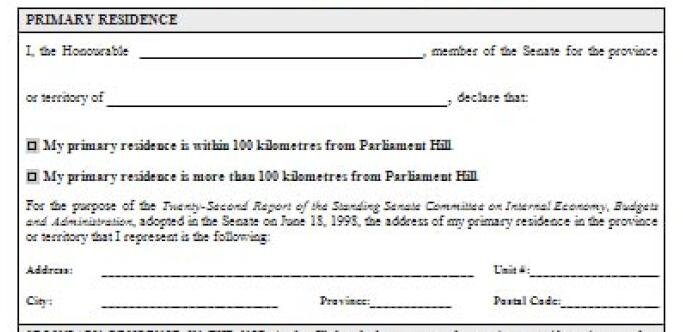
Beleaguered Senator Mike Duffy went to the media last night, and declared that he was going to repay the residency expenses he’s been claiming for his “secondary” residence in Ottawa. He claims, however, that he still qualifies to sit as a PEI senator – because the cognitive dissonance, it burns! As his excuse, Duffy said that the Senate rules are fuzzy and the form wasn’t clear – err, except it was. It’s two ticky boxes, and fill-in-your-address. No, seriously. But no, this repayment doesn’t halt the audits, or the question as to his residency being in line with the constitutional requirement for residency. And while Charlie Angus may huff and puff and demand the RCMP be brought in, one has to ask if the RCMP were brought in when MPs were found to be improperly claiming housing allowances a few years ago. No? Didn’t think so. Meanwhile, the former editor of satirical Frank magazine reminisces about his fractious relationship with Duffy, and it paints a pretty interesting picture of the Senator back in the day.
Roundup: New residency questions
It seems that Senator Peterson of Nunavut is next on the list to have his residency questioned. Apparently he may be spending more time in BC than in Nunavut, where he is representing. Meanwhile, intrepid reporters went to check out signs of life at Senator Mac Harb’s alleged primary residence in the Ottawa Valley, and found the Christmas lights were still up. Closer to home, there is talk that Senator Wallin’s travel expenses were flagged during a random audit, for what it’s worth. And yes, the audits of those residences will be made public. What is amusing is the concern that the NDP are showing about “secret audits” in the Senate – as though the Commons Board of Internal Inquiry were a paragon of openness and transparency as opposed to the most secretive organisation on the Hill.
What’s that? The RCMP has a problem of bullying within the ranks? You don’t say!
QP: Starting off the new parliamentary year
The first QP of 2013, and all leaders were in the House — even Bloc leader Daniel Paillé in the diplomatic gallery. Thomas Mulcair started off by wishing everyone a productive session before he read off a pro-forma question about the mission to Mali. Harper offered him assurances that there would be no combat mission and that he would consult the House before any future deployments. Next up, Mulcair read off a pair of questions about the First Nations, and why progress on their issues was so slow. Harper assured him that they were moving ahead with the issues, and that processes were in place and they would continue to work with those partners who were willing (this being the key phrase the government has been employing of late). Romeo Saganash was up next, and gave the vague threat that they didn’t need the government because he has a Private Member’s Bill on implementing the UN Declaration on the Rights of Indigenous Peoples — err, except that he’s number 167 on the Order of Precedence, and it’s the job of the opposition to oppose, and not to govern. It’s called the Westminster system, which he may need to read up on. John Duncan offered up a bland list of achievements by way of response. Bob Rae then got up for the Liberals, and pressed about the signing of the Declaration, and that the government has been insufficient in its consultations with First Nations. Harper disputed this, stating that the government has met all of its legal obligations and their duty to consult. For his final question, Rae asked about the role of the Parliamentary Budget Officer, to which Harper reminded him that his government created the office to be non-partisan and credible.