
So, yesterday was…enlightening. If you call the “debate” on Senate abolition, using incorrect facts, intellectual dishonesty, and treating the constitution as a suggestion to be informed debate, that is. It boggles the mind that the NDP, who claims to champion decisions based on things like science, to turn around and use myth, folklore and figures pulled entirely out of context to back up an ideological and civically illiterate position. For example, they claim the Senate only sits an average of 56 days per year – never mind that the figure aggregates election years (of which we’ve had quite a few of late) with non-election years, and only counts days in which the Chamber itself sits. Never mind the fact that committees sit on days when the Chamber itself doesn’t, that Senate committees often sit longer than Commons committees, or the additional days of committee travel for studies that they undertake, and that the Senate sat 88 days last year – being a non-election year. But those are mere details that get in the way of a good quip. And then there were Thomas Mulcair’s interviews – while he avoided directly answering whether or not he would theoretically appoint NDP Senators were he to form a government in the future, he neglected to figure that in refusing to do so, he would be in violation of the Constitution. You see, it’s one of the duties spelled out that must be done – the GG shall appoint Senators, and that is always done on the advice of the Prime Minister. It’s not a may appoint – it’s a shall, an instruction or command. To refuse to appoint Senators is an abrogation of constitutional responsibilities, but hey, it’s not like wanton constitutional vandalism isn’t the whole backbone of the discussion in the first place. And then Mulcair skated around the question of how he would deal with regional representation if the Senate were to be abolished. He gave some vague response about discussing it with the provinces, neglecting that one of the founding principles of the Senate was to balance out the representation-by-population of the Commons so that smaller provinces wouldn’t be swamped. And if Mulcair thinks that simply tinkering with the Commons seat distribution formula to somehow protect the smaller provinces, well, he’s further overcomplicating the principle of rep-by-pop that the Chamber is founded on. But once again, let’s just let constitutional vandalism slide with some pithy slogans. It’s not like it’s important or anything.
Tag Archives: Fiscal Austerity
QP: Not recognising the best finance minister in the world
Interrupting a day of debate on wanton constitutional vandalism, QP started off with Thomas Mulcair reading off a question about EI auditors “shadowing” claimants, to which Harper responded with some bog-standard response about EI being there when they need it. Mulcair then moved onto a question about Flaherty’s back-and-forth policy changes without consultation, and treated the Peter DeVries and Scott Clark article as though they were still currently employed by the department. Harper sang Flaherty’s praises in response. Mulcair carried on, citing Flaherty’s breach of ethics over the CRTC letter, not that Harper’s vigorous praises were diminished any less. Chris Charlton finished off the leader’s round, asking about EI training funds, but Jim Flaherty assured her that they consulted broadly on the budget. Bob Rae was up next, keeping up the issue of the EI training funds, but Harper touted just how transparent his government is as a non-sequitur response. Rae then brought up Dr. Arthur Porter’s party donations while he was SIRC chair, and wondered how he managed to escape a security clearance. Harper insisted that none of the allegations against Porter had to do with his time at SIRC — skirting the issue of donations. For his final question, Rae wondered why there wasn’t an inquiry into Jeffrey Delisle’s security breaches, but Harper told him that they’re not unique to Canada, and brought up the Bradley Manning case in the States.
QP: Specious and unclever comparisons
Monday afternoon, and MPs were still filtering back into Ottawa after the weekend. Thomas Mulcair started things off by reading questions on EI inspectors’ guidelines, and how the government could justify that kind of invasion of privacy. James Moore, the designated back-up PM du jour, accused Mulcair of fear-mongering. Mulcair then moved onto the specious comparison between the Senate and its “honour system” and the EI inspections. Moore pointed out that Mulcair was happy to trash people without offering any particular solutions for reform. Alexandre Boulerice was up next, and continued to decry said “honour system” (not that this has anything to do with the business of the Commons, and never mind that MPs’ books are even more opaque). Poilievre stood up to speak to Boulerice’s separatist credentials instead of answering. Bob Rae was up for the Liberals next, wondering about the government’s curious plans for dealing with slow economic growth by means of more austerity and curtailing competition. Moore instead insisted that the Liberals had no credible economic plans. Rae asked then about the EI inspections, not that Moore’s answer differed much. For his final question, Rae asked about how security clearances have become more lax under the present government. Moore insisted that the allegations against Dr. Arthur Porter had nothing to do with his time as an appointee.
Roundup: Attack ads and shadow MPs
The NDP are launching anti-Conservative attack ads in Quebec. Because they’re the party that wants to raise the tone of debate and end the politics of division! They’ve also declared that MP Dany Morin will act as a kind of “shadow MP” for Claude Patry’s riding, to ensure that his constituents can still get their voices hear. Um, okay – remember when people were up in arms that the Conservatives had defeated candidates as “shadow MPs” in opposition ridings? How is this any different, really?
The government is going to scale back on their Arctic operations, as well as some training operations in other environments, because of budget cuts. Also being scaled back are plans for a naval base in the North. Remember the whole “use it or lose it” mentality that the government was applying to Arctic sovereignty? Yeah, what ever happened to that?
QP: Baird backs up everyone
The morning on the Hill was a bit of a gong show — NDP MP Claude Patry crossed the floor over to the Bloc, and Conservatives everywhere were frantically distancing themselves from Stephen Harper’s former mentor and chief of staff, Tom Flanagan, after he made comments about child pornography. When QP got underway, Thomas Mulcair read a pair of questions about those sixteen Senators who didn’t tell the CBC about their residency, and doubted their ability to investigate themselves — you know, like MPs do. John Baird, the designated back-up PM du jour, responded by assuring him that the outside auditors had been called in for the four Senators in question. For his final question, Mulcair asked about the PBO’s report on the Joint Support Ship plans. Baird didn’t answer, but ridiculed Mulcair’s Private Member’s bill on the PBO, which would require Senate sign off for for a new PBO, even though his position on the Senate is abolition. Matthew Kellway was up next and asked the very same thing, but this time Rona Ambrose answered, touting the expertise that they have in place, but they would make any adjustments with the Navy and the Coast Guard going forward. Bob Rae wouldn’t let up, and demanded to know if those “adjustments” meant fewer ships or a bigger budget. For his final question, Bob Rae wondered about how the government went about trying to get a security clearance for Dr. Arthur Porter, and related it to other lapses like Bruce Carson. Vic Toews tried to summon high dudgeon for the opposition “abdicating” their responsibility in approving Porter’s appointment, apparently oblivious to his own abdication of accountability for the appointment.
QP: Quotas and downshifting
It’s an awful, wet day out in the Nation’s Capital, the precipitation an ugly mix of fluffy wet snow and needle-like ice pellets. Inside the Commons, QP kicked off with Thomas Mulcair reading a question about cuts to services for First Nations including policing. Harper responded that there were no cuts, and that new funds would be announced in due course. Mulcair’s second question was about Flaherty’s letter to the CRTC, to which Harper reminded him that he already answered the question the day before. Mulcair then asked a question about those Senators who have not yet responded to the CBC about their residency. Harper assured him that all Senators respect their residency requirement (though I suppose that remains to be seen). Nycole Turmel was up next to ask a pair of EI “quota” questions, speciously tying in the Senate, to which Diane Finley assured her that there were no quotas or bonuses for achieving cuts. Rae pressed on the issue of bonuses for cuts, to which Harper talked about how they wanted to ensure that EI funds were there for those who paid into them. Rae carried on about how this move was simply downshifting the unemployed onto provincial welfare rolls, but Harper insisted there was no such plan.
QP: Getting Harper on the record, scattershot style
With all leaders on deck on a lovely Tuesday afternoon in the Nation’s Capital, QP got underway with Thomas Mulcair reading a question on why John Duncan was dropped from cabinet over an improper letter, but not Jim Flaherty. Harper responded that in Flaherty’s case, it was an administrative error. Mulcair moved on to the topic of EI “quotas,” to which Harper insisted that they were merely performance audit. Mulcair then moved onto the “scandals” in the Senate, to which Harper somehow turned it into a paean for an elected Senate — not that it would actually address the current issues. For his final question, Mulcair demanded that Harper stay away from the Commonwealth Heads of Government Meeting in Sri Lanka, and Harper started off by carrying on his elected Senate paean before saying that he would not attend the meeting. For the Liberals, Bob Rae asked about the house calls that EI recipients are receiving as part of the effort to stamp out fraud. Harper responded by saying that EI was paid into by honest Canadians and they want to ensure that the money is there for honest recipients. For his final question, Rae asked about the Estimates tabled yesterday and the increase in advertising budgets while front-line services are being cut. Harper insisted that said front-line services were not being cut.
QP: Let’s compare everything to Mike Duffy!
Monday after a constituency week, and MPs are still trickling back into the Nation’s Capital. QP got started off with Thomas Mulcair reading off a question about Senators Mike Duffy and Pamela Wallin committing “fraud.” As Harper was not in the Chamber, it fell to Peter Van Loan, apparently the designated back-up PM du jour, who insisted that the Senators in question were being investigated, but that they owned property and had “deep ties” to the provinces they represent. In other words, they are now circling the wagons around their Senate appointees. Mulcair carried on, taking all supplementals in the leader’s round, asking about the EI “quota” figures uncovered by Le Devoir. Diane Finley assured her that they weren’t quotas but performance indicators, and that there were hundreds of millions of dollars lost to fraud last year. Bob Rae was up for the Liberals, asking about a statement that funding for First Nations not being an issue but that it was about accountability, and it if meant that unequal funding would continue. Van Loan assured him that Rae was wrong, that education funding was the same on reserves, and that the priority was to create opportunities for young Aboriginal people across the country. For his last question, Rae asked about the human rights situation in Sri Lanka and demanded that the next Commonwealth Heads of Government Meeting will be held elsewhere from Columbo. Bob Dechert responded saying the actions of the Sri Lankan government was unacceptable, and they were continuing to engage.
Roundup: Mike Duffy’s cognitive dissonance
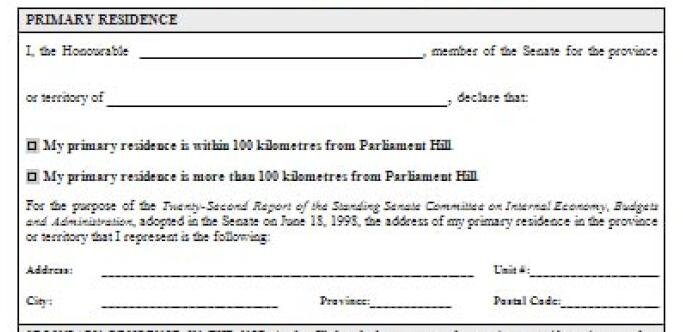
Beleaguered Senator Mike Duffy went to the media last night, and declared that he was going to repay the residency expenses he’s been claiming for his “secondary” residence in Ottawa. He claims, however, that he still qualifies to sit as a PEI senator – because the cognitive dissonance, it burns! As his excuse, Duffy said that the Senate rules are fuzzy and the form wasn’t clear – err, except it was. It’s two ticky boxes, and fill-in-your-address. No, seriously. But no, this repayment doesn’t halt the audits, or the question as to his residency being in line with the constitutional requirement for residency. And while Charlie Angus may huff and puff and demand the RCMP be brought in, one has to ask if the RCMP were brought in when MPs were found to be improperly claiming housing allowances a few years ago. No? Didn’t think so. Meanwhile, the former editor of satirical Frank magazine reminisces about his fractious relationship with Duffy, and it paints a pretty interesting picture of the Senator back in the day.
Roundup: Apparently successful pipeline lobbying
Access to Information documents have shown that the Canadian Energy Pipeline Association was pushing for the changes to the Navigable Waters Protection Act that went through in the fall omnibudget bill. They note, however, that the provisions strengthen the environmental protections because they’re all under one review now, rather than spread out.
Service Canada employees around the country have made random house calls to EI recipients to personally invite them to EI interviews – a move that is being called “intimidation.” I suspect this will be conflated and rolled into the false “bad guys” quote and make the rounds during QP next week.