
So, yesterday was…enlightening. If you call the “debate” on Senate abolition, using incorrect facts, intellectual dishonesty, and treating the constitution as a suggestion to be informed debate, that is. It boggles the mind that the NDP, who claims to champion decisions based on things like science, to turn around and use myth, folklore and figures pulled entirely out of context to back up an ideological and civically illiterate position. For example, they claim the Senate only sits an average of 56 days per year – never mind that the figure aggregates election years (of which we’ve had quite a few of late) with non-election years, and only counts days in which the Chamber itself sits. Never mind the fact that committees sit on days when the Chamber itself doesn’t, that Senate committees often sit longer than Commons committees, or the additional days of committee travel for studies that they undertake, and that the Senate sat 88 days last year – being a non-election year. But those are mere details that get in the way of a good quip. And then there were Thomas Mulcair’s interviews – while he avoided directly answering whether or not he would theoretically appoint NDP Senators were he to form a government in the future, he neglected to figure that in refusing to do so, he would be in violation of the Constitution. You see, it’s one of the duties spelled out that must be done – the GG shall appoint Senators, and that is always done on the advice of the Prime Minister. It’s not a may appoint – it’s a shall, an instruction or command. To refuse to appoint Senators is an abrogation of constitutional responsibilities, but hey, it’s not like wanton constitutional vandalism isn’t the whole backbone of the discussion in the first place. And then Mulcair skated around the question of how he would deal with regional representation if the Senate were to be abolished. He gave some vague response about discussing it with the provinces, neglecting that one of the founding principles of the Senate was to balance out the representation-by-population of the Commons so that smaller provinces wouldn’t be swamped. And if Mulcair thinks that simply tinkering with the Commons seat distribution formula to somehow protect the smaller provinces, well, he’s further overcomplicating the principle of rep-by-pop that the Chamber is founded on. But once again, let’s just let constitutional vandalism slide with some pithy slogans. It’s not like it’s important or anything.
Tag Archives: Marc Garneau
The fight for second place: The Halifax debate
The fourth and second last Liberal leadership debate took place at the Pier 21 Museum in Halifax. The big difference this time is that we had one candidate self-eliminate, being of course hot republican mess George Takach, who dropped out last week to support Justin Trudeau. That said, the bottom three were still the bottom three and should all have been eliminated by now if we were conducting this leadership race by the RuPaul’s Drag Race model that I’ve been advocating, and the middle tier would be in the make-or-break points in their bids for leadership. But alas, that is not the case.
Roundup: Fallout from a Thursday Gong Show
So, yesterday was a busy day. Bit of a gong show really. But let’s start with the more shocking news – that NDP MP Claude Patry crossed over to the Bloc. Okay, well, it’s actually not all that shocking. Paul Wells has predicted this since 2011, and it could very well be the first of many. A rather shamefaced Thomas Mulcair took to a microphone and rather sulkily declared that Patry had voted in favour of an NDP PMB that would require MPs to resign and run in a by-election if they wanted to cross the floor – not that said bill passed, and Patry indicated that the vote was whipped, and has let it be known that the rigid party discipline of the NDP is one of the reasons that he decided to take his leave. And I’m going to be a bit counter-intuitive here, but I say that Patry is under no obligation to run in a by-election. He was elected to fill the seat, and that means that voters have put their trust in him to exercise his judgement, and if his judgement is that the NDP was no longer where his values lay, then he should be free to exercise that judgement and leave the party. Despite what people may think, seats are not filled based solely on the basis of party affiliation – yes, it is a major part of the decision on the part of many voters, but we are also voting for a person to fill that seat – not a robot wearing party colours to recite the speeches prepared for him by Central Command and vote on command. And guess what – the accountability mechanism is that if those voters don’t believe he made the right choice in his judgement, they can vote him out in the next election. Michael Den Tandt writes that Patry’s defection is a mess of Mulcair’s own making.
Roundup: The unravelling cases of Senators Wallin and Duffy
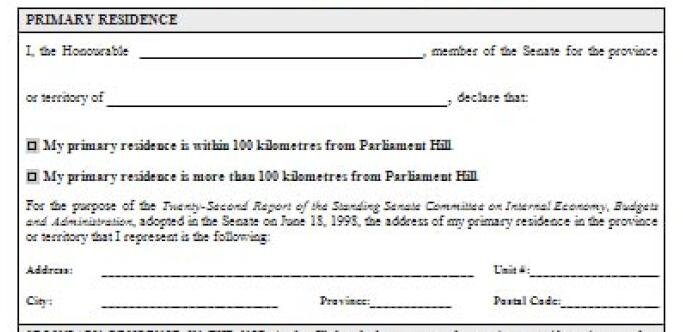
In the past couple of days of Senate revelations, we find that Senator Pamela Wallin has an Ontario health card and not a Saskatchewan one, which raises the question about her residency – no matter that she spent 168 days in Saskatchewan last year. Wallin also apparently repaid a substantial amount in expense claims before this whole audit business started, which is also interesting news. Senator Mike Duffy, meanwhile, could actually end up owing $90,000 plus interest on his living expense claims rather than the $42,000 that was cited over the weekend. Oops. Tim Harper looks at the sideshow that is Senator Duffy’s non-apology and smells a deal made to save his job. Senator Cowan says that repayment doesn’t answer the questions – especially not the ones about residency, which means he may not be up to protect Duffy – or Wallin and Patterson’s – seats. And those Senators who’ve been silent on their residency claims are now being called before the Senate Internal Economy committee to explain themselves. Terry Milewski goes through the entire housing claims allegations and fixes an appropriate amount of scorn on the idea that two ticky-boxes are “complex” on the forms.
Roundup: Mike Duffy’s cognitive dissonance
Beleaguered Senator Mike Duffy went to the media last night, and declared that he was going to repay the residency expenses he’s been claiming for his “secondary” residence in Ottawa. He claims, however, that he still qualifies to sit as a PEI senator – because the cognitive dissonance, it burns! As his excuse, Duffy said that the Senate rules are fuzzy and the form wasn’t clear – err, except it was. It’s two ticky boxes, and fill-in-your-address. No, seriously. But no, this repayment doesn’t halt the audits, or the question as to his residency being in line with the constitutional requirement for residency. And while Charlie Angus may huff and puff and demand the RCMP be brought in, one has to ask if the RCMP were brought in when MPs were found to be improperly claiming housing allowances a few years ago. No? Didn’t think so. Meanwhile, the former editor of satirical Frank magazine reminisces about his fractious relationship with Duffy, and it paints a pretty interesting picture of the Senator back in the day.
Roundup: Wallin’s celebrity senatorial status
Senator Pamela Wallin takes the Toronto Star on a tour of her Saskatchewan hometown, and talks about her travel expenses, including the fact that it’s not easy to get to Wadena from Ottawa, and that because she’s an honorary captain in the Air Force, she has to travel to events at airbases around the country. Meanwhile, Senator Segal writes about his proposition to hold a referendum on Senate abolition as a means of getting people talking about the institution, but given the state of civic illiteracy in this country, my sense is that it’s a very dangerous proposition, and is akin to asking people if they want to remove their pancreas if they don’t know what it does. Senator McInnis thinks an elected Upper Chamber would have more “credibility,” but he doesn’t discuss any of the other consequences of such an action, including gridlock or battles over who has more “democratic legitimacy” and therefore clout. Jesse Klein writes about electoral and Senate reform while relying on meaningless emotional and romantic terms like “fairness” without paying enough attention to either current electoral realities or the actual consequences of the changes.
Magic Bean Economics and tragicomedy: The Mississauga debate
The third Liberal leadership debate was held today in Mississauga, and while the format was somewhat more successful than the previous debacle, it really did reinforce the candidate ranking that has emerged over the course of the debates. The one-on-one questions could have been better served if each exchange were another minute longer, and the moderate stepped in when they tried to talk about themselves in the form of a question. Because really, take the format seriously. The three-person debates worked quite well, and got the best traction of the debates to date.
Remaining in the bottom four were David Bertschi, George Takach, Martin Cauchon and Karen McCrimmon. If this contest were like RuPaul’s Drag Race, as it should be, then Bertschi and at least one other would have been eliminated by this point, but alas, they are still hanging around. And once again, they reminded us why they are in the bottom four.
Roundup: New residency questions
It seems that Senator Peterson of Nunavut is next on the list to have his residency questioned. Apparently he may be spending more time in BC than in Nunavut, where he is representing. Meanwhile, intrepid reporters went to check out signs of life at Senator Mac Harb’s alleged primary residence in the Ottawa Valley, and found the Christmas lights were still up. Closer to home, there is talk that Senator Wallin’s travel expenses were flagged during a random audit, for what it’s worth. And yes, the audits of those residences will be made public. What is amusing is the concern that the NDP are showing about “secret audits” in the Senate – as though the Commons Board of Internal Inquiry were a paragon of openness and transparency as opposed to the most secretive organisation on the Hill.
What’s that? The RCMP has a problem of bullying within the ranks? You don’t say!
Garneau, Trudeau, and the presidentialisation of leadership
At a press conference in Ottawa Wednesday morning, Marc Garneau laid down a marker in the leadership campaign between himself and Justin Trudeau. Essentially, Garneau called out Trudeau for not having enough solid policy positions, never mind that Trudeau has consistently said that he doesn’t want to come out with a full platform because the last thing the party needs is another top-down leader making pronouncements.
Without inserting myself into one camp or the other, it seems to me that there is a much bigger question at play here about the direction that Canadian politics has been taking, and it does bring me back to a basic discussion around civic literacy. Moreover, it’s a discussion about the role that parties play within our democratic system, and the way in which the grassroots interacts with those parties. With power ever increasingly centralising in leaders’ offices, this is probably a discussion that more people should be having.
Roundup: Absenteeism, transparency and outside auditors
It’s time to look at the absenteeism rates over in the Senate once more, and Senator Romeo Dallaire currently has the highest rate, largely because he’s doing research at Dalhousie on child soldiers and advising the UN – things he’s not declaring as Senate business and isn’t claiming expenses or time on. The promised review of absenteeism rules is still ongoing, but has become a bit of a backburner issue with the other things going on at the moment. And no, you can’t actually find out what the absenteeism rates of MPs are, because they don’t make that data available, whereas the Senate does (even if you do have to head to an office building during business hours to find out). As for the allegations of misspending, there are suggestions that they turn the investigation over to the Auditor General because it may be too much for the three-member committee to handle – though I know there has been reluctance to have the AG look at their expenses because he reports to them. Oh, and Senator Wallin’s travel claims are now being added to the list of things to be checked by the outside auditor – even though Harper himself asserted that her travel claims are not out of line, which he has not done for Senator Duffy.