
Stephen Harper’s former advisor, and now accused fraudster, Bruce Carson, wrote a book. And as Colby Cosh noted, historians are forever grateful to those with nothing to lose. So while the Conservatives and NDP gripe about Carson’s current status, we have stories on how Harper wanted to move Jim Flaherty to industry in 2007 but he refused to go, and that Harper backed down because he didn’t want to lose him. We have a story on how Harper gave advice to Jack Layton in the 2008 election about trying to “bury” Stéphane Dion, and how Harper had Ambrose so busy doing other things when she was environment minister that she couldn’t pay attention to her actual file. And here’s a story on how Harper briefly thought he might have to step aside while the Cadman affair (remember that?) was in full swing, before being disabused of that notion by his staff. Could make for interesting reading.
Tag Archives: Privacy
Roundup: Victoria Day and the Canadian Crown
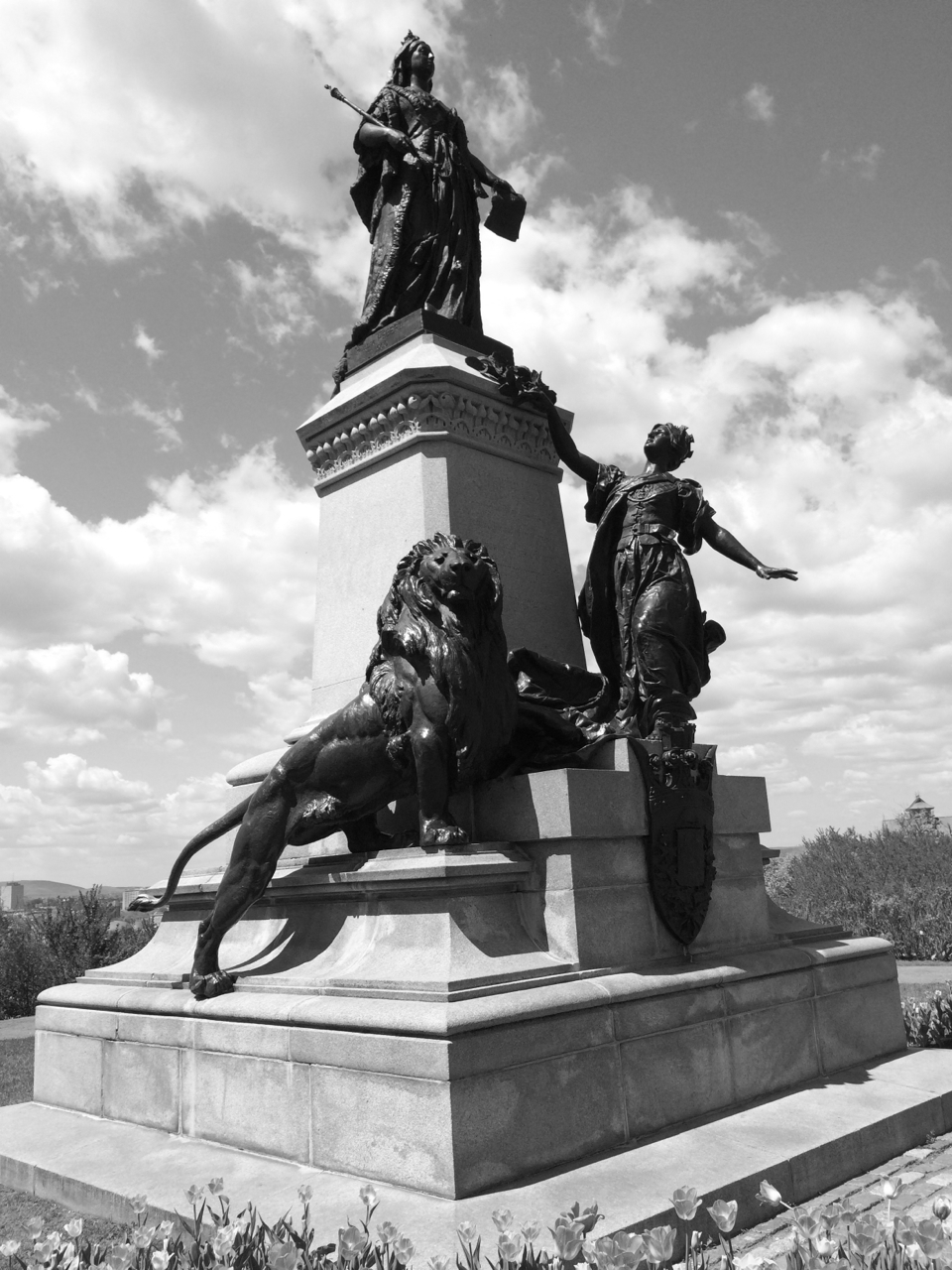
Given that yesterday was Victoria Day, here is a look at how it’s a particularly idiosyncratic Canadian holiday, which combines the celebration of the monarch who founded our country along with the official birthday of the reigning monarch, and has a history wrapped up in things like Empire Day, but remains uniquely Canadian all the same.
QP: Who advised Nadon?
It being Tuesday, and lo and behold, all three leaders were in the House. Praise be. Thomas Mulcair led off with a softball about the assistance that Canada is deploying to Nigeria to help locate the schoolgirls kidnapped by Boko Haram. Stephen Harper offered a condemnation of Boko Haram, needn’t said that Canadian personnel were in Nigeria to help authorities there. Mulcair moved on to ask a short question as to whether he advised Justice Nadon to resign and rejoin the Quebec Bar. Harper spoke about advice he received that said appointing him from the Federal Court would be okay. Mulcair noted that he didn’t get an answer and asked which staffer gave Nadon that advice to resign. Harper reiterated his answer. Mulcair changed topics again and demanded severe financial penalties for companies that breach railway safety rules. Harper noted improvements that had been made to the safety network, and that they were coordinating with the United States before congratulating the police for laying charges on the individuals involved in the Lac Mégantic disaster. Mulcair insisted that nothing had really been done, but Harper insisted that they were indeed taking measures. Justin Trudeau rose for the Liberals and noted his visit to Fort McMurray before saying that the Temporary Foreign Workers programme was increasing unemployment in Alberta. Harper retorted that the Liberals were looking for more TFWs for their ridings. Trudeau pointed out the ways that the government loosened the rules and demanded the adoption of his party’s plans. Harper said that while there was a need for some workers, it shouldn’t be a business model. Trudeau then noted the objections to the changes in Quebec, but Harper reiterated his assertion that the Liberals wanted even more TFWs.
Roundup: Honour and protocol
The government has declared today to be a National Day of Honour to mark the mission in Afghanistan, but not everyone is pleased with the way they’ve handled it. The fact that the last flag from Kabul is being handed to Harper and not the Commander-in-Chief – the Governor General – is a pretty major breach of protocol that really won’t endear Harper to the troops, especially as such a breach looks transparently like a photo-op. Some of us thought that Harper had given up on such outright breaches after Prince Charles was here for Remembrance Day a few years ago and proper protocol was suddenly observed once again. Perhaps Harper’s presidential envy has reared its head again? The Royal Canadian Legion’s Dominion President is none too pleased with the government for the short timelines and lack of communication when it comes to preparations, because it didn’t allow many of the branches across Canada time to plan anything.
A Silver Cross mother whose son died in Afghanistan has told Power & Politics the tale of her difficulties with the system following her son’s death, from being billed for cost overruns at the funeral to being denied support services because her son was unmarried. It’s a pretty awful and wrenching tale to watch, but one that everyone should. It certainly colours the government’s Day of Honour back-patting.
QP: Those pesky temporary foreign strippers
With the March for Life happening on the lawn outside — mostly Catholic high school students bussed in for the occasion, and disrupted by topless protesters — and with the House not sitting tomorrow because of the Day of Honour for the mission in Afghanistan, it was a bit of a Friday-on-a-Thursday day in the chamber. Well, attendance was a bit better, but not much. Megan Leslie led off for the NDP and brought up the government collecting data by “creeping” Facebook pages. Tony Clement assured her that the government wants to listen to Canadians, and they were engaging with the Privacy Commissioner, before accusing them of trying to shut down Canadians who were letting their views be known. Leslie changed topics to the Nadon appointment and the reports that he was advised to resign from the Federal Court and rejoin the Quebec Bar. MacKay accused her of conspiracy theory, and touted the consultation process and the expert legal advice they sought. Françoise Boivin carried on with the same line of questioning in both languages, to which MacKay continued to tout the process that they followed. John McCallum led off for the Liberals and accused the government of hating the Canada Pension Plan and being dismissive of Kathleen Wynne’s Ontario pension plans. Clement responded and decried the “massive tax grab” that would ruin jobs and opportunity. McCallum moved onto the topic of market wages for foreign workers and driving down Canadian wages, to which Kenney took a shot at the opposition parties.
Roundup: The AG’s spring report tabled
It was the release of the Auditor General’s spring report, and among the findings are a major lack of long-term planning when it came to expansions in the prison system which will lead to more overcrowding in a few years, risks with the long-term sustainability of the public sector pension plan, the government’s relocation services contract being completely botched from the start, that First Nations policing is failing and falling behind provincial standards in some places like Ontario, that the CRA faces some notable gaps in how it deals with aggressive tax planning, that Statistics Canada isn’t adequately collecting data that reflects smaller geographic areas – a particularly salient issue right now with labour market issues, and that the company that manages federal buildings is getting billions in bonus payments for no apparent reason. The government, of course, thanks the AG for his findings and agrees with his recommendations.
QP: The Attorney General’s silence on protecting the courts
It was a gorgeous spring day in Ottawa, but it was too bad that neither Stephen Harper or Justin Trudeau weren’t around to enjoy it, as they apparently all found better things to do than to attend the grand inquest of the nation. Thomas Mulcair was in attendance, and led off by asking if the Attorney General felt it was his job to ensure that there were never any attempts to intimate the courts of the country. Peter MacKay rejected the premise of the question, and said that after the Chief Justice met with special committee, she called him and he decided that the Prime Minister didn’t need to speak to her, then gave the line about the inappropriateness of discussing cases with judgments. Mulcair carried on, about the separation of powers, to which MacKay carried on with talking points about the legal opinions they received. Mulcair was not impressed and accused MacKay of being a henchman of the PM. MacKay waxed about Justice Rothstein being appointed from the Federal Court, to which Mulcair blasted back about the difference in Quebec law, hence requiring special judicial requirements. MacKay kept on with the justifications of legal opinions and the special committee. Mulcair hammered away at the difference rules, but MacKay tried to play down Mulcair’s own reading of the Supreme Court Act. Stéphane Dion led for the Liberals, and echoed in English by Sean Casey, brought up the anonymous Conservatives who complained to the media and appeared to be leaking confidential information from the special appointment committee, but MacKay shrugged the questions off as “convoluted.” Casey hammered away at the loss of confidence in the selection process, and wondered if the minister would make any changes to restore confidences. MacKay insisted that the process was the most open and inclusive in history, and that even the opposition justice critic had praised Nadon.
Roundup: Expats voting restored
An Ontario superior court judge has struck down provisions that prevent Canadian ex-pats from voting in federal elections, despite living abroad. Considering that we vote for local constituency MPs, and not parties or leaders, one does wonder how we will determine who these ex-pats will vote for, seeing as they don’t have a current riding for whom they are choosing an MP to represent them in. While some jurisdictions that allow expats to vote decide this on the basis of their last Canadian address, it does make one wonder about that kind of determination as riding boundaries change and you have more people voting at that address than are currently registered. Or maybe I’m letting reality and the rules of the way things work get in the way of more abstract feelings about democracy once again.
Roundup: Inciting a feud with the Supreme Court
A rift between the government and the Supreme Court of Canada appears to be opening as a bunch of anonymous Conservative ministers and backbenchers bravely approached National Post columnist John Ivison under the cloak of anonymity and trash-talked Chief Justice Beverley McLachlin, insinuating that she lobbied against Nadon’s appointment. The Executive Legal Officer of the Supreme Court put out a release that denied any lobbying, and said that the Chief Justice was consulted by the committee of MPs that were creating the short-list of nominees, and that because of the issue of appointing a Federal Court judge in a Quebec seat was already well known, the Chief Justice also advised the justice minister and the Prime Minister’s chief of staff that it could be an issue. This happened back in July. The PMO, late in the day, put out a release of their own, insinuating that McLachlin made a cold call to Harper, which he refused because it would be inappropriate to discuss a matter before the courts – only it wasn’t before the courts, because that consultation, which was made to his chief of staff and not Harper directly, was in July – a fact that they only confirmed when the Toronto Star pressed them on it. It’s really worrying that the PMO is trying to assert that the Chief Justice did something untoward as Prime Ministers and Minsters of Justice often consult with her when there are vacancies on the bench, because the Chief Justice can advise them on what particular subject areas the Court is looking for an expert to fill. In the context of advising on a replacement for Justice Fish, there would have been nothing wrong with McLachlin consulting the government, nor with raising the point of caution about Federal Court judges. That this government has made a mess of the appointment process with their opaque committee process under the window dressing of greater accountability and transparency – of which there is actually none – and to try and come after the Court like this, is extremely unbecoming of any government. Especially when they were warned there would be a problem and went ahead with it anyway.
QP: A million criminals at work?
Despite it being only Thursday, only one major leader was present in the Chamber — Thomas Mulcair — which continues the worrying trend that QP somehow doesn’t matter. Mulcair led off today by asking why government agencies needed to collect telecom information on over a million Canadians. James Moore assured him that they were being used by law enforcement agencies for necessary actions. Mulcair mockingly wondered if there were a million criminals being tracked, but Moore insisted that Section 7 of the privacy legislation spells out why this information is necessary. Mulcair brought up the reports that there may be as many a thousand missing and murdered Aboriginal women, to which Stephen Blaney assured him of the measures they had taken. Jean Crowder and Niki Ashton followed up with increasingly outraged calls for a national public inquiry, but Blaney repeated that they were taking measures to keep the street safe. Chrystia Freeland led off for the Liberals, noting the record levels of unemployment in Southwestern Ontario while large numbers of Temporary Foreign Workers continued to be brought in. Jason Kenney insisted that anyone who cut corners and tried to bring in workers illegitimately would face consequences. John McCallum noted that the Canada Experience Class was created as a tool of diplomacy, and was since co-opted by the department of immigration for their own ends. Chris Alexander insisted that the programme benefited Canadians, and when McCallum noted that the previous minister went to Ireland to seek potential immigrants when youth unemployment levels were high, Alexander extolled the relatively buoyant job market in Canada.