About Dale

Journalist in the Canadian Parliamentary Press Gallery

QP: Parsing the minister’s answers

A hot Thursday afternoon, and most of the leaders were gone, Thomas Mulcair excepted. Candice Bergen led off for the day, raising the lack of mention of China in Chrystia Freeland’s speech and the sale of a satellite company to China. Navdeep Bains responded that they take national security very seriously and and that the national security review board gave it a pass (and he said national security about twelve times). Bergen wondered why the sale went ahead without a comprehensive security review, and Bains insisted that the comprehensive review under the Investment Canada Act had been undertaken. Bergen insisted this was about appeasing China, and Bains insisted that the Act stipulates that all transactions are subjected to a national security review, and that included this one. Gérard Deltell then took a kick at the same can in French, twice, but Bains gave the very same answer. Thomas Mulcair was up next, and picked apart Bains’ answers, parsing the language particularly between a full review and a standard screening. Bains reiterated that they followed the law and did their due diligence and would take any advice from national security agencies. Mulcair tried again in French, raising a previous sale, and Bains reminded him that the previous process under the previous government had been botched. Mulcair then turned to the nuclear disarmament treaty and parsed the PM’s responses from yesterday. Bains got up again, and to reiterate the PM’s points about getting a fissile materials treaty underway instead. Mulcair tried again, and Bains read the same points that the PM made.

Continue reading →

Roundup: Backloading the spending with good reason

Yesterday was the big day, and the Defence Policy Review was released, which by all accounts was a fairly comprehensive look at what the vision of the Forces should be for the next twenty years, complete with an extra $62 billion in defence spending over those two decades, plus more cyber warfare and drones, more ships, and more fighters along the way. The hitch? That most of that spending won’t start rolling out until after the next election, which could be a problem. The other hitch? That the way these things works means that it couldn’t actually start rolling out until then anyway owing to the way that these things work, and yes, the Liberals meticulously costed their plans with five different accounting firms looking over the numbers and ensuring that both cash and accrual accounting methodologies were included. (One defence analyst did note that this funding means that existing commitments that were made but not funded are actually being accounted for and funded under this new model). These accounting considerations are worth noting, and economist Kevin Milligan explains:

https://twitter.com/kevinmilligan/status/872508516132462593

https://twitter.com/kevinmilligan/status/872509412862066688

https://twitter.com/kevinmilligan/status/872510368379097088

https://twitter.com/kevinmilligan/status/872511237401096192

https://twitter.com/kevinmilligan/status/872512007248920576

https://twitter.com/kevinmilligan/status/872512983905165312

https://twitter.com/kevinmilligan/status/872575096560304132

https://twitter.com/kevinmilligan/status/872576254284775424

https://twitter.com/kevinmilligan/status/872576782850965504

Meanwhile, John Geddes casts a critical eye at the promises for future spending, while former Navy commander Ken Hansen offers his insider’s perspective on the document and its contents. Stephen Saideman takes a higher-level perspective including looking at whether the consultation process leading up to the report was followed (and it seems to be the case).

Continue reading →

QP: A furious rewrite of the scripts

With the news that Madeleine Meilleur had withdrawn her name from consideration for Language Commissioner just before QP, you could almost hear the furious rewriting of question scripts. In fact, I saw pages deliver new scripts to MPs just before everything got underway. Andrew Scheer led off, raising her withdrawal, and wanted an assurance that future appointments would have cross-party support. Justin Trudeau responded with praise for his new open and transparent process. Scheer shifted topics to the risk profile of the Infrastructure Bank, and Trudeau praised the commitment to $180 billion in new Infrastructure that the Bank would leverage private sector dollars to help with. Scheer repeated the question in French, insinuating that this was about Liberal millionaire friends, and Trudeau reiterated his points on the need for the Bank. Scheer then moved to the issue of a public sex offender registry, and Trudeau insisted that they took the protection of families seriously, and it was up to police to advise the public. Scheer demanded that Trudeau reject the advice of bureaucrats to not make a registry public, but Trudeau stuck to his points. Thomas Mulcair was up next, noting the presence of a Hiroshima survivor and demanded the government join nuclear disarmament talks in New York. Trudeau said that they were taking meaningful steps which included rallying states for the support of a fissile material cut-off treaty and getting tangible results. Mulcair pressed, and Trudeau noted that the treaty Mulcair demanded we sign onto didn’t include nuclear states, so it was somewhat useless. Mulcair moved onto criminal records for simple possession while marijuana legalisation in the pipeline, and Trudeau returned to his well-worn talking points about decriminalisation not protecting children or taking profits away from the black market. Mulcair asked again, louder, and Trudeau held firm.

Continue reading →

Roundup: Freeland articulates her vision

Foreign Affairs minister Chrystia Freeland gave her major foreign policy speech yesterday in the House of Commons, and the theme was basically that we can’t rely on the Americans anymore, so it’s time to step up more, and that includes hard power. That also means more spending on the military, some of which is there and waiting to actually be spent once we get some of our procurement issues sorted, but that particular speech is later today as the Defence Policy Review is finally unveiled. (And incidentally, on Friday, Marie-Claude Bibeau will unveil our feminist foreign aid policy). It was noted by a couple of people, chiefly among them Paul Wells, that we really should have a major foreign policy speech every year or so, and this is certainly a better indication of where the government’s thinking is at.

https://twitter.com/AaronWherry/status/872099635107704832

This was not the case with the previous government, and it’s certainly worth noting. That this government actually uses the time allotted for statements by ministers is a good thing, as the constant eschewing of Parliament in favour of human backdrops in some alternate location was insulting.

Meanwhile, Stephanie Carvin offered some cogent analysis over Twitter, so here you go:

https://twitter.com/StephanieCarvin/status/872137661275934723

https://twitter.com/StephanieCarvin/status/872138106413166593

https://twitter.com/StephanieCarvin/status/872138388056551425

https://twitter.com/StephanieCarvin/status/872138744316534784

https://twitter.com/StephanieCarvin/status/872139113910194177

https://twitter.com/StephanieCarvin/status/872139424515149824

https://twitter.com/StephanieCarvin/status/872139675980443648

https://twitter.com/StephanieCarvin/status/872140002398003200

https://twitter.com/StephanieCarvin/status/872140341067034624

You can also find Carvin’s thoughts in expanded form here. For some more analysis on the speech, read Paul Wells for some more context around the points Freeland made in the speech, Susan Delacourt on the jabs made at the Trumpocalypse, and Stephen Saideman for some more foreign and defence policy angles.

Continue reading →

QP: At last, the exchange of quips

On a rainy Tuesday in Ottawa, it was all hands on deck in the Commons, with all leaders present for a change. Andrew Scheer led off, noting the anniversary of D-Day, and turned it into a question on fighting ISIS. Trudeau noted the contributions that Canada was making to the fight. Scheer tried mocking Trudeau’s television interview responses about positive spaces in this fight, and Trudeau quipped back that Scheer must not be too busy as opposition leader if he was all caught up on his daytime TV. Scheer batted back that it was the only place he could find Trudeau over the past week, and then railed about new taxes on beer and wine. Trudeau responded that they cut taxes to the middle class. Scheer insisted that wasn’t true, and listed a number of penny ante issues like making Uber pay HST and carbon taxes (which are largely provincial), and Trudeau noted the difference in vision that his government offered. Scheer then veered into a question about the public sex offender registry, and Trudeau called Scheer out for politicising the wrong issues, and said that trying to insinuate the Liberals didn’t care about children and families was shameful. Up next was Thomas Mulcair, who brought up the Madeleine Meilleur nomination and stated that she confirmed in the Senate that she discussed the position with Gerald Butts and Katie Telford — which isn’t what she said. Trudeau reminded him of the open nomination process, and when Mulcair tried to insist that one f them were lying, Trudeau didn’t budge from his points. Mulcair then railed about Trudeau slamming the door on Quebec’s face on their request to discuss the constitution, and Trudeau said that he had other priorities. Mulcair gave it a second go, insisting this was a snub at Quebec alone, and Trudeau reminded him that he says the same thing in English and in French and had no interest in getting into a constitutional quagmire.

Continue reading →

Roundup: BC Speaker drama, part III

While the drama over the coming BC Legislature Speaker election draws closer, and we are faced with more stories of not only the likelihood of a partisan NDP Speaker, but also one who will take off the robes to vote as an MP in committee (which is unconscionable, frankly), we see yet more boneheaded suggestions being thrown into the mix, none more so than our friends at Democracy Watch who want to turn this into an opportunity to turn the Speaker into an independent appointment, like an Officer of Parliament.

Hell. No.

This all having been said, the Speaker is the servant of the House, and to do that, he or she must be a member of it. There’s a reason why when a Speaker is elected, they are “dragged” to the Chair, because Speakers in the 1300s sometimes faced death when Parliament displeased the King. That’s not an inconsequential part of the reason why we have a Parliament in the manner that we do, and it’s important that we keep that in mind as we practice our democracy.

We also need to call out that for a group that purports to be focused on democracy, Democracy Watch is a body that seeks to limit actual democratic accountability with the imposition of innumerable independent Officers of Parliament who are appointed and unaccountable, and which seeks to codify conventions in order that they can be made justiciable with a goal of ensuring that political decisions wind up in the courts rather than at the ballot box. Theirs is not a vision of democracy, but of technocracy, and that’s not something we should aspire to, no matter what you think of our politicians.

Meanwhile, Jason Markusoff thinks that the Liberals should suck it up and put forward one of their own as Speaker for the sake of the institution (and he draws some of the lessons of New Brunswick from 2003-2006), while David Moscrop says the potential to damage the institution is too great, and it’s preferable to have another election to resolve the situation (which I’m sympathetic to). As well, Rob Shaw charts a course for redemption for Christy Clark amidst this chaos.

Continue reading →

QP: The Trudeau/Scheer damp squib

A new week, and Justin Trudeau was back in the Commons after a morning at Niagara Falls to do a guest spot on US television, and before his meeting with the visiting president of Chile. After a moment of silence for the victims of the London Bridge attack, Andrew Scheer led off, mini-lectern on desk, asking for an update and reaction to the attack. Trudeau gave condolences to the family of the Canadian woman who died in the attack, and noted that an hour before, he had spoken to Theresa May about the issue an hour before, and then offered his well wishes to Scheer as new leader of the Opposition. Scheer then turned to the Infrastructure Bank, and concerns that it would assume all risks with future projects. Trudeau didn’t really answer, but talked about the need for more infrastructure investments across the country. Scheer insisted it was all about rich friends of the PM, but Trudeau reminded him that they raised taxes on the wealthy to lower taxes on the middle class. Scheer then changed topics to ask about the politicised nomination of Madeleine Meilleur as Language Commissioner and demanded that it be cancelled. Trudeau said that it was important to get the right people for the job, regardless of their political history — a new talking point. Scheer tried again in English, and Trudeau dug in a little more this time, pointing out how politicised the previous government’s appointment process was whereas the current government had created a new process. Alexandre Boulerice led for the NDP, railing that the Infrastructure Bank would necessitate user fees, and Trudeau stuck to points about the need to invest in infrastructure. Daniel Blaikie repeated the question in English, and Trudeau noted that the Federation of Canadian Municipalities was applauding the decision to unlock more capital in that way. Blaikie then turned to the Meilleur nomination, and Trudeau repeated his points about merit-based appointments. Boulerice repeated Blaikie’s question in French, and Trudeau repeated his answer.

Continue reading →

Roundup: More BC Speaker cautions

The question of the Speaker of the BC Legislature remains up in the air, and continued word is that the Liberals are keeping their own out of the race lest they lose another seat as they test the confidence of the legislature, and with the Greens ruling out one of their own as well, that leaves the NDP left holding the bag when it comes to electing a Speaker. They’re obviously reluctant to do so, but it also reduces their chances of toppling the government and installing one of their own. And with that reality in mind, there is dark talk about the NDP turning the Speaker into a partisan if that happens.

This kind of comment is a real problem, because in a Westminster system, the conventions are the rules. And when people don’t see an issue with the Speaker breaking the convention that they only vote to break a tie, and in a manner that either keeps debate going or to preserve the status quo, demanding that an NDP Speaker topple the Clark government is a very big problem.

https://twitter.com/emmmacfarlane/status/871544756773548033

https://twitter.com/acoyne/status/871544952265814017

https://twitter.com/pmlagasse/status/871550005412343808?ref_src=twsrc%5Etfw&ref_url=http%3A%2F%2Fwww.routineproceedings.com%2Fwp-admin%2Fpost-new.php

And if an NDP Speaker is elected but doesn’t opt to topple the government (and they very well should not for the sake of our system), it could leave Clark with little ability to govern, especially when it comes to passing supply, but that could be exactly what Clark is waiting for – an ability to go back to the electorate with great public regret. That said, she is under no obligation to simply accept defeat and turn over power to the NDP, especially with a precarious situation (signed confidence agreement or not).

https://twitter.com/acoyne/status/871566280653975556

https://twitter.com/acoyne/status/871566460182831104

I will add that the BC Liberals are under no obligation to put forward a name for Speaker. Federally, the Conservatives served two minority terms under Peter Milliken, a Liberal Speaker, with no ill-effect. So no, nothing is over or settled on this yet.

Continue reading →

Roundup: Imagining something we already have

Two different reality shows have been made pitches about televising the renovations to 24 Sussex, and some of their reasons for doing so are frankly appalling. On the one hand, one can see the temptation of such a project, both in terms of the drama, the fact that the constant conversation and hate-watching would drive the ratings, or the possibility of some form of public accountability where people would see on their screen what their millions of dollars of tax dollars are paying for (and before you say anything else, I am very dubious about that  $38 million figure being thrown around, because it likely involves a bunch of security bells and whistles that the RCMP have thrown into it that may not actually be necessary but are a bunch of “nice to haves” while they’re blue-skying). And while that’s all well and good, one of the proponents, Lynda Reeves went and put her foot in it.

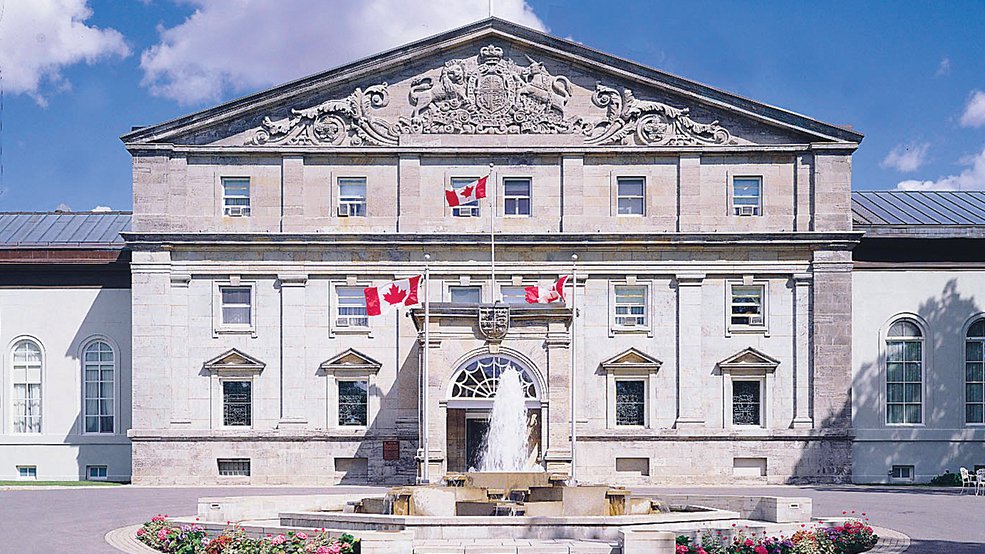
We already have our “White House equivalent,” and that’s Rideau Hall. It’s where the Head of State resides when she’s in the country, and where her representative lives and conducts his work. And I know that this may be hard for someone like Reeves to grasp, but the prime minister is not a president. He is the head of government, the “first among equals” of the Cabinet, and most emphatically not the head of state. He may have an official residence, but he doesn’t require the equivalent of a White House because his job is not the same, and he has two official offices – one in Langevin Block, and the other in Centre Block (with a temporary replacement being constructed in the West Block as we speak for the decade where the Centre Block will be out of commission). He doesn’t need a live-work space like the White House is.

It’s this kind of intellectual and cultural laziness that is the exact same as people who refer to Sophie Gregoire Trudeau as the “First Lady” when she very much is not. We don’t have a First Lady or a First Family because we have a monarchy, and those roles belong to the Royal Family. The closest thing we have to a “First Lady” other than the Queen (or Prince Philip if you want to qualify the spouse of the Head of State in such a role) is actually the Chatelaine of Rideau Hall, which is the title given to the spouse of the Governor General when the spouse is a woman (which I suppose would be châtelain when the GG is a woman with a male spouse).

So no, Lynda Reeves, we don’t need a symbol similar to the American White House because we already have one. And if we want Canadians to have an image in mind when they close their eyes and imagine what the equivalent is, there are plenty of photos to choose from. Here’s one:

Continue reading →

Roundup: Paris Accord disappointment

The inevitable happened yesterday, where Donald Trump announced that he would pull the United States out of the Paris Accords – a process that could take up to four years – with the intention of immediately trying to renegotiate re-entry on more favourable terms. Why that makes no sense is because the Accords were flexible enough that each country was supposed to set their own targets, so there was no actual need for him to pull out other than to look tough, but what can you do with a chaos generator like that? Justin Trudeau was one of the leaders who immediately contacted Trump to express his disappointment, while Catherine McKenna said that Canada was moving ahead regardless, and would be hosting a ministerial summit with China and the EU in September regarding next steps with emissions reductions.

We are no doubt going to hear some grousing from the Conservatives over the next few days about this, with renewed caterwauling about scrapping the federal carbon tax (which is actual a national carbon price, and any tax would only apply to a province that doesn’t have a price of their own that meets the target – namely Saskatchewan at this point), and concern trolling about how this makes us uncompetitive. The problem, of course, is that industry is all moving in the direction of favouring carbon pricing because it allows for stability and predictability, and it’s also a market-based mechanism to drive innovation – something that sector-by-sector regulations don’t do. And indeed, the business community in the States, including some major oil companies, are reacting negatively to Trump’s decision, and the heads of several companies are resigning from Trump’s business council in protest. And it shouldn’t be understated that the potential for a clean tech is real with price incentives that carbon pricing provides.

Meanwhile, French president Emmanuel Macron issued a statement in English, aimed to the Americans, inviting those scientists to France to continue their climate work there instead, which is a bold move.

Continue reading →