
Roundup: Mandate letters and the minister for everything

Yesterday was the day that Justin Trudeau released the mandate letters for his ministers, giving us a glimpse as to what their marching orders will be (which is still a fairly novel transparency and accountability measure in this country, it needs to be said). The National Post counted up some 288 projects listed in those mandates, some of them holdovers from the previous parliament (which isn’t surprising considering that  many of them were fairly ambitious and transformational and were not achievable within four years). But there were also a number of things missing from several of those letters that should have been dealt with – particularly on the justice file.

As with the previous parliament, each of the letters has an identical preamble, advising the ministers to “govern in a positive, open and collaborative way,” because it’s a hung parliament and all of that. In terms of specific points in the letters, there are issues like discussions with province over pharmacare, shortening wait times for airport screenings, tax cuts for green tech companies, reforming the medical assistance in dying laws, advancing international efforts to ban “killer robots,” procuring new fighter jets and modernizing NORAD. One of the more alarming mentions was in Bill Morneau’s letter, advising him to review and possibly modify the financial stress test applied to mortgages, which is a Very Bad Thing, and means that the real estate lobby is winning its air war over the good common sense of the Governor of the Bank of Canada and the Office of the Superintendent of Financial Institutions. (Seriously – there is no excuse for encouraging bad debt).

And then there is Chrystia Freeland’s letter, which is expansive and makes her in essence a “minister of everything” who is assigned to basically work with a number of other ministers to advance their priorities, whether it’s carbon pricing, getting resources to market, breaking down internal trade barriers, facilitating pharmacare talks, working on pan-Canadian childcare, gun control, regional economic development agencies, and advancing reconciliation. This leaves questions as to what exactly Trudeau will be doing while Freeland does all the work – leaving her to either take the fall while Trudeau gets to take the credit. This having been said, it’s just as likely that she wanted a full plate of projects rather than simply spending her weeks heading to provincial capitals to meet with premiers once the New NAFTA is ratified, but she certainly has her work cut out for her, ensuring that enough of these promises are fulfilled before the inevitable early election call that comes in a hung parliament.
Continue reading

Roundup: Exit Scheer

The news that blew up all of our days was that of Andrew Scheer’s sudden resignation as leader, despite having stated for nearly two months that he planned to stay on and fight the next election. As this news broke, so did the news that party funds were being used to finance his children’s private school education, and throughout the day there was a lot of back-and-forth as to just who in the party knew about it, and it sounds increasingly like Stephen Harper, the Conservative Fund’s chair, was mighty upset when he learned about it. Oops. Nevertheless, Scheer went before the House of Commons and talked about how this was all about needing to spend more time with his family, and he spun a tale about how he realized he barely knew his teenaged son, and Justin Trudeau and others were very gracious and classy, and offered more humanity to Scheer than he managed to in his time as leader. The caucus also voted to let Scheer stay on as interim leader until his replacement is chosen, but considering how well that went for the NDP, with the embittered Thomas Mulcair poisoning the well, well, you’d think they would know better.

While the group calling itself Conservative Victory that were organizing to pressure Scheer to resign has declared victory, we now begin with all of the breathless speculation as to who will run to replace Scheer, and you can bet that most of the usual names – Raitt, Ambrose, Kenney – won’t. The Star runs through the probable names and their chances of actually running.

And, of course, come all of the hot takes. Justin Ling declares this the end of Scheer’s reign of incompetence. Andrew Coyne notes that Scheer’s departure won’t solve the party’s bigger problems. Matt Gurney makes the point that the party really can’t choose a new leader until they learn the lessons from the last election. Susan Delacourt explores the parallels between Scheer’s departure and that of Joe Clark after his election loss in 1979. Paul Wells gives a fair accounting of Scheer’s self-inflicted wounds, and the huge challenge the party faces in trying to find a leader that will unify the party’s various factions. Robert Hiltz gives his not-so-fond farewell to Scheer with his trademarked acerbic style. My own column on Scheer’s demise looks at how he turned politics into a house of lies, and why his successor will need to rectify that mistake.

Continue reading

Roundup: Unveiling the critics

Andrew Scheer unveiled his list of critics – err, “shadow cabinet” yesterday, and all of the attention is on how leadership rivals fared. All eyes were of course on Maxime Bernier, who didn’t get the finance portfolio that he was publicly lobbying for – which was rather impolitic of him to have done so it needs to be said. Instead Bernier got the industry portfolio, which is still a major economic portfolio and one where he will get to rail about corporate welfare to his heart’s content. And the finance role that he so coveted? That went to Pierre Poilievre, which is something that Liberal partisans everywhere were salivating over, seeing as Poilievre is not exactly someone with poise and tact, and will be in the media a lot (though I will note that he’s better than he used to be).

And those other leadership rivals (who are still in the caucus)? Well, Erin O’Toole got Foreign Affairs, Steven Blaney gets veterans affairs, Michael Chong gets infrastructure, and Tony Clement (for his short-lived leadership ambitions) gets public services and procurement. (Lisa Raitt, meanwhile, already got the coveted deputy leader position, you will recall). But Kellie Leitch, Brad Trost and Deepak Obhrai were all left off the list – all while insisting that they’re happy with things, and that there are no hard feelings, etcetera, etcetera.

But all of this makes me wonder once again why so many of these no hope leadership candidates bothered to stay in the race to the bitter end, as if it was going to mean good standing in the party going forward. I’m not seeing a lot of “good standing” coming out of this, despite the way that it’s being parsed as healing divisions in the party, especially as the more extreme voices of Leitch and Trost being kept on the outside. Leitch, and to a certain extent Trost, humiliated themselves by running terrible campaigns that got them lots of attention but little else, and they are further marginalized by being kept away from the front bench going forward. This justifies those campaigns in what way? It’s why I find the whole exercise of the leadership campaign even more mystifying (beyond the fact that the way in which we conduct them is part of what is wrong with the way our system has been bastardized). The return for no hope campaigns is so limited that I’m can’t see the rationale, but maybe that’s just me.

Meanwhile, Paul Wells and Andrew Coyne each parse what the picks mean about the kind of face that Scheer is trying to put on the party, and the ways in which he is trying to make a mark in the post-Harper era.

Continue reading

Roundup: The “nice countries only” option

In the wake of news that Saudi Arabia has, rather unsurprisingly, used Canadian-built LAVs against its own civilians, former Liberal cabinet minister Irwin Cotler is calling on the government to end arms sales to that country. Part of the problem here is that it means a lot of lost jobs in economically vulnerable areas of the country (where these jobs are really the only thing that is keeping that region from being devastated), and the fact that there seems to be this notion that we can only sell arms to nice countries. That notion came up in last night’s NDP leadership debate in Victoria, where the three participants all gave variations of “we should only sell to nice countries,” which is unrealistic. Stephanie Carvin made this point over Twitter a couple of days ago, and it deserves a second look.

https://twitter.com/StephanieCarvin/status/892030735296716802

https://twitter.com/StephanieCarvin/status/892031138084122626

https://twitter.com/StephanieCarvin/status/892036494092890112

https://twitter.com/StephanieCarvin/status/892038040541171712

And that last point is the most salient – nobody wants to make hard choices, especially when it means lost jobs and economically devastating a region that each party covets (and make no mistake – all parties supported these jobs during the election, which makes it hard for them to be suddenly concerned about these sales to Saudi Arabia now, when they were all rooting for them when votes were on the line).

Continue reading

Roundup: Suspicions about political donations

The Star has a story that shows how a recently appointed judge made donations to the Liberal Party in the past couple of years – $1800 worth over the two fiscal years, in part by attending a fundraising dinner. And after it lays out all of his donations, the story leaves us with this: “It is not unusual for judicial appointees to have made political donations, nor does it break any rules.” Which makes me wonder why they’re making a) an issue out of it, and b) framing the story in such a way that it gives the impression that he bought his appointment, because that’s exactly what the headline screams. Emmett Macfarlane sees an issue, but I’m having a hard time buying it.

https://twitter.com/emmmacfarlane/status/892368713848147970

https://twitter.com/emmmacfarlane/status/892369069906825216

https://twitter.com/emmmacfarlane/status/892369516889550848

https://twitter.com/EmmMacfarlane/status/892369907496738820

https://twitter.com/jameslhsprague/status/892386009727590400

Part of my issue is the fact that we’re already at a crisis point in this country when it comes to grassroots democratic engagement, and this current media demonization of any political fundraising hurts that. The more we demand that anyone who has made donations be excluded from jobs, the worse we make the political ecosystem as a whole. Sure, once they’ve been appointed they shouldn’t make further donations – that’s fair. But the fact that he didn’t even make the maximum allowable donation over those two years, and the fact that the amount he’s donated is a couple of billable hours for him, is hardly worth getting exercised over. This isn’t America – we don’t have big money buying candidates here, nor do we have the spectre of elected judges that are entirely interested in getting re-elected. And, might I remind you, the previous government appointed Vic Toews and most of Peter MacKay’s wedding party to the bench, which seems far bigger of an ethical breach. The current government has reformed the judicial advisory committees to broaden the scope of who they’re considering, and considering how slowly the process is going, it’s not believable that they’re simply going through the party donor rolls to find a match. And while Macfarlane insists that it’s not about the dollar amount, but the perception of bias, I am very bothered by the way in which stories like this are framed adds to that perception. It’s driving the perception, not the other way around, and that is a problem when it comes to trying to fix the actual things that are breaking down about our democracy.

Continue reading

Roundup: Backloading the spending with good reason

Yesterday was the big day, and the Defence Policy Review was released, which by all accounts was a fairly comprehensive look at what the vision of the Forces should be for the next twenty years, complete with an extra $62 billion in defence spending over those two decades, plus more cyber warfare and drones, more ships, and more fighters along the way. The hitch? That most of that spending won’t start rolling out until after the next election, which could be a problem. The other hitch? That the way these things works means that it couldn’t actually start rolling out until then anyway owing to the way that these things work, and yes, the Liberals meticulously costed their plans with five different accounting firms looking over the numbers and ensuring that both cash and accrual accounting methodologies were included. (One defence analyst did note that this funding means that existing commitments that were made but not funded are actually being accounted for and funded under this new model). These accounting considerations are worth noting, and economist Kevin Milligan explains:

https://twitter.com/kevinmilligan/status/872508516132462593

https://twitter.com/kevinmilligan/status/872509412862066688

https://twitter.com/kevinmilligan/status/872510368379097088

https://twitter.com/kevinmilligan/status/872511237401096192

https://twitter.com/kevinmilligan/status/872512007248920576

https://twitter.com/kevinmilligan/status/872512983905165312

https://twitter.com/kevinmilligan/status/872575096560304132

https://twitter.com/kevinmilligan/status/872576254284775424

https://twitter.com/kevinmilligan/status/872576782850965504

Meanwhile, John Geddes casts a critical eye at the promises for future spending, while former Navy commander Ken Hansen offers his insider’s perspective on the document and its contents. Stephen Saideman takes a higher-level perspective including looking at whether the consultation process leading up to the report was followed (and it seems to be the case).

Continue reading

Roundup: Freeland articulates her vision

Foreign Affairs minister Chrystia Freeland gave her major foreign policy speech yesterday in the House of Commons, and the theme was basically that we can’t rely on the Americans anymore, so it’s time to step up more, and that includes hard power. That also means more spending on the military, some of which is there and waiting to actually be spent once we get some of our procurement issues sorted, but that particular speech is later today as the Defence Policy Review is finally unveiled. (And incidentally, on Friday, Marie-Claude Bibeau will unveil our feminist foreign aid policy). It was noted by a couple of people, chiefly among them Paul Wells, that we really should have a major foreign policy speech every year or so, and this is certainly a better indication of where the government’s thinking is at.

https://twitter.com/AaronWherry/status/872099635107704832

This was not the case with the previous government, and it’s certainly worth noting. That this government actually uses the time allotted for statements by ministers is a good thing, as the constant eschewing of Parliament in favour of human backdrops in some alternate location was insulting.

Meanwhile, Stephanie Carvin offered some cogent analysis over Twitter, so here you go:

https://twitter.com/StephanieCarvin/status/872137661275934723

https://twitter.com/StephanieCarvin/status/872138106413166593

https://twitter.com/StephanieCarvin/status/872138388056551425

https://twitter.com/StephanieCarvin/status/872138744316534784

https://twitter.com/StephanieCarvin/status/872139113910194177

https://twitter.com/StephanieCarvin/status/872139424515149824

https://twitter.com/StephanieCarvin/status/872139675980443648

https://twitter.com/StephanieCarvin/status/872140002398003200

https://twitter.com/StephanieCarvin/status/872140341067034624

You can also find Carvin’s thoughts in expanded form here. For some more analysis on the speech, read Paul Wells for some more context around the points Freeland made in the speech, Susan Delacourt on the jabs made at the Trumpocalypse, and Stephen Saideman for some more foreign and defence policy angles.

Continue reading

Roundup: BC Speaker drama, part III

While the drama over the coming BC Legislature Speaker election draws closer, and we are faced with more stories of not only the likelihood of a partisan NDP Speaker, but also one who will take off the robes to vote as an MP in committee (which is unconscionable, frankly), we see yet more boneheaded suggestions being thrown into the mix, none more so than our friends at Democracy Watch who want to turn this into an opportunity to turn the Speaker into an independent appointment, like an Officer of Parliament.

Hell. No.

This all having been said, the Speaker is the servant of the House, and to do that, he or she must be a member of it. There’s a reason why when a Speaker is elected, they are “dragged” to the Chair, because Speakers in the 1300s sometimes faced death when Parliament displeased the King. That’s not an inconsequential part of the reason why we have a Parliament in the manner that we do, and it’s important that we keep that in mind as we practice our democracy.

We also need to call out that for a group that purports to be focused on democracy, Democracy Watch is a body that seeks to limit actual democratic accountability with the imposition of innumerable independent Officers of Parliament who are appointed and unaccountable, and which seeks to codify conventions in order that they can be made justiciable with a goal of ensuring that political decisions wind up in the courts rather than at the ballot box. Theirs is not a vision of democracy, but of technocracy, and that’s not something we should aspire to, no matter what you think of our politicians.

Meanwhile, Jason Markusoff thinks that the Liberals should suck it up and put forward one of their own as Speaker for the sake of the institution (and he draws some of the lessons of New Brunswick from 2003-2006), while David Moscrop says the potential to damage the institution is too great, and it’s preferable to have another election to resolve the situation (which I’m sympathetic to). As well, Rob Shaw charts a course for redemption for Christy Clark amidst this chaos.

Continue reading

Roundup: Imagining something we already have

Two different reality shows have been made pitches about televising the renovations to 24 Sussex, and some of their reasons for doing so are frankly appalling. On the one hand, one can see the temptation of such a project, both in terms of the drama, the fact that the constant conversation and hate-watching would drive the ratings, or the possibility of some form of public accountability where people would see on their screen what their millions of dollars of tax dollars are paying for (and before you say anything else, I am very dubious about that  $38 million figure being thrown around, because it likely involves a bunch of security bells and whistles that the RCMP have thrown into it that may not actually be necessary but are a bunch of “nice to haves” while they’re blue-skying). And while that’s all well and good, one of the proponents, Lynda Reeves went and put her foot in it.

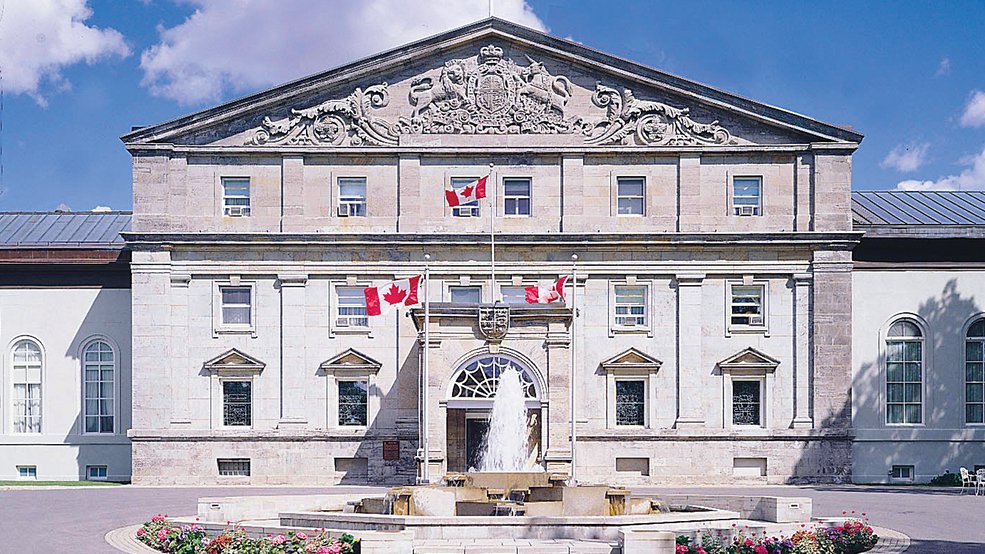
We already have our “White House equivalent,” and that’s Rideau Hall. It’s where the Head of State resides when she’s in the country, and where her representative lives and conducts his work. And I know that this may be hard for someone like Reeves to grasp, but the prime minister is not a president. He is the head of government, the “first among equals” of the Cabinet, and most emphatically not the head of state. He may have an official residence, but he doesn’t require the equivalent of a White House because his job is not the same, and he has two official offices – one in Langevin Block, and the other in Centre Block (with a temporary replacement being constructed in the West Block as we speak for the decade where the Centre Block will be out of commission). He doesn’t need a live-work space like the White House is.

It’s this kind of intellectual and cultural laziness that is the exact same as people who refer to Sophie Gregoire Trudeau as the “First Lady” when she very much is not. We don’t have a First Lady or a First Family because we have a monarchy, and those roles belong to the Royal Family. The closest thing we have to a “First Lady” other than the Queen (or Prince Philip if you want to qualify the spouse of the Head of State in such a role) is actually the Chatelaine of Rideau Hall, which is the title given to the spouse of the Governor General when the spouse is a woman (which I suppose would be châtelain when the GG is a woman with a male spouse).

So no, Lynda Reeves, we don’t need a symbol similar to the American White House because we already have one. And if we want Canadians to have an image in mind when they close their eyes and imagine what the equivalent is, there are plenty of photos to choose from. Here’s one:

Continue reading

Roundup: Paris Accord disappointment

The inevitable happened yesterday, where Donald Trump announced that he would pull the United States out of the Paris Accords – a process that could take up to four years – with the intention of immediately trying to renegotiate re-entry on more favourable terms. Why that makes no sense is because the Accords were flexible enough that each country was supposed to set their own targets, so there was no actual need for him to pull out other than to look tough, but what can you do with a chaos generator like that? Justin Trudeau was one of the leaders who immediately contacted Trump to express his disappointment, while Catherine McKenna said that Canada was moving ahead regardless, and would be hosting a ministerial summit with China and the EU in September regarding next steps with emissions reductions.

We are no doubt going to hear some grousing from the Conservatives over the next few days about this, with renewed caterwauling about scrapping the federal carbon tax (which is actual a national carbon price, and any tax would only apply to a province that doesn’t have a price of their own that meets the target – namely Saskatchewan at this point), and concern trolling about how this makes us uncompetitive. The problem, of course, is that industry is all moving in the direction of favouring carbon pricing because it allows for stability and predictability, and it’s also a market-based mechanism to drive innovation – something that sector-by-sector regulations don’t do. And indeed, the business community in the States, including some major oil companies, are reacting negatively to Trump’s decision, and the heads of several companies are resigning from Trump’s business council in protest. And it shouldn’t be understated that the potential for a clean tech is real with price incentives that carbon pricing provides.

Meanwhile, French president Emmanuel Macron issued a statement in English, aimed to the Americans, inviting those scientists to France to continue their climate work there instead, which is a bold move.

Continue reading