Roundup: Expenses arbitration comes back

At long last, former Supreme Court Justice Ian Binnie’s report on his arbitration of Senate expenses was released yesterday, and it should come as no surprise to anyone paying attention that the amounts that many of those senators owed was slashed by a considerable amount. (For others, not so much, but we’ll get to that in a moment). Why? Because in the course of his audit, the Auditor General and his staff made a series of value judgments as part of their report, particularly in instances where senators added personal businesses to Senate-related travel, or when spouses travelled with them. Binnie re-evaluated those claims with more information and a broader mindset and found that indeed, many of those claims were actually reasonable, and he let them go through, cutting the demanded repayments significantly in many cases. In other cases, notably Senator Colin Kenny, he remained unconvinced and ordered them to make their repayments with little or no reductions in the amounts owing. After saying that he wasn’t hired to look into motives of these Senators, he did admit that he felt that for the most part, nobody was actively trying to game the system, but that there were some disagreements in how rules were applied. An interesting turn of events is the fact that Senator Dagenais plans to launch a complaint against the AG for the way in which the audit was conducted, which has most pundits and journalists aghast, because they like to think that the AG can do no wrong (when that is obviously not the case, particularly if one starts digging into some of the value judgments made in the Senate audit). The AG’s response to Binnie’s report was that he thinks that the Senate still needs to follow up on all of his recommendations, including the external oversight body, but I will again raise the point that an external body is a violation of parliamentary privilege, and that the institution needs to be self-governing. This is not a technocracy, and the suggestions by some of an audit committee that is still majority Senate-controlled is a far more acceptable solution. The other bit of interest was the way in which he, intentionally or otherwise, blew holes in the defence offered by Mike Duffy’s lawyers, that the Senate was this lawless and inscrutable place that would have anyone confused. Nonsense, said Binnie – there were rules that mostly required a bit of common sense in their application. One wonders if this is something that Justice Vaillancourt will take note of as he deliberates on Duffy’s fate.

Continue reading

Roundup: Process questions and straw men

Because it was making the rounds yet again on the Sunday morning politics shows, I figured I should reiterate a few points, plus make a couple of new ones, concerning the new Senate appointments, and the role of the new “government representative.” The first point is that yes, the Senate is going to have to change a few of its rules, and that is a process that has already started and probably won’t be concluded for a few more weeks or months. That we have a name and a face to go with this new role may accelerate the process rather than it being nebulous with Dominic LeBlanc and Maryam Monsef just shrugging and declaring that they were confident that the Senate could work it out. With Peter Harder now in the picture, with an idea about how he wants to tackle his role, there is something a little more concrete in terms of how he wants to shape the new rules to suit his purposes. His budget as “government representative” as opposed to Leader of the Government in the Senate is also up for some debate, particularly within the Internal Economy Committee, just as they are going to have to take up what to do with the new “Independent working-group” and how they want to organise and style themselves so as to give a voice to the independent senators who are currently being frozen out of decision-making processes. (This goes as well for the Rules Committee, which has already been undertaking the question of how to better allow independent senators onto committees, as that process is mostly done behind closed doors by the caucus whips). Harder’s decision to remain officially an independent while taking on this role does complicate things, but nothing is so difficult that it cannot be solved with a little more diligence, and hopefully it won’t be too impeded by some of the more partisan senators on either side of the aisle whose feelings have been bruised by the talk of independence being an improvement on the way the Senate operates. The final point is this constant concern trolling that somehow the budget won’t get passed, or that the government won’t be able to get its agenda through if nobody is there to crack the whip. It’s a lot of specious reasoning predicated on a number of straw men, ignorant of history and civic literacy. Apparently every time the governing party in the Senate was in the minority there was some kind of constitutional crisis, which is false, and no, budgets were not held up or defeated. The Senate is very reluctant to stop any bill because they are aware of their democratic legitimacy (and yes, they do have it by virtue of Responsible Government so don’t even go there), and when they have defeated legislation, it is generally for good reason, such as constitutionality, the legislation being out of bounds, or the fact that the country was not on side with it, and it needed to be put to a test (such as with free trade in the 1980s). They have a job to do. I’m particularly galled at those concerned that the Senate is going to suddenly be empowered to use their constitutional veto powers if they are more independent and less beholden to the government of the day, never mind that the Senate has not abused its veto in decades. They were given those powers for a reason, and yes, sometimes elected legislators get things wrong and there needs to be a mechanism to stop their legislation. But this pearl-clutching about the new state of affairs really needs to stop.

Continue reading

Roundup: The big visit

With Trudeau now in Washington DC, we are being bombarded by What It All Means. And thus, the arrival was full of firsts, and we are being told to expect an announcement regarding the expansion of the border pre-clearance programme, however privacy concerns remain. John Kerry says there’s no urgent need for a new Canada-US pipeline as we already have some 300 already, while our new ambassador says that the Keystone XL issue “sucked all of the oxygen” out of the relationship between the two countries, while progress is coming on some “less sexy” files. And here’s a look at the State Dinner menu, which features both Canadian and American spring flavours. Trudeau is also expected to announce that he will host a “Three Amigos” summit with the American and Mexican presidents in June, something Stephen Harper was supposed to do and then didn’t.

Continue reading

Roundup: Anticipating the road trip

With the First Ministers’ meeting now out of the way, attention is turning to Justin Trudeau’s trip to Washington DC next week, and what will happen there, and naturally, what it all means. At least five ministers will accompany him on the trip – though not necessarily to the state dinner, which is going to apparently be quite the event. Obama is apparently looking to Trudeau to be a partner for green initiatives, and indeed Trudeau will be hosted by an environmental group with a known anti-oilsands agenda (to the protests of Conservative MPs). Trudeau, for his part, is being introduced to the Americans first by appearing on 60 Minutes where he will be seen in a more serious light than his appearance in Vogue, and part of his message is that he wants Americans to be a little more outward looking and pay attention to other countries. Of course, the one topic that must not be spoken of is the presidential nomination process, for which Trudeau cannot (and indeed must not) make any kind of pronouncements on other than that he won’t comment on the internal politics of another country. Not that it won’t stop everyone from asking while he’s down there (because you know they all will, Canadian and American media alike), but he’s savvy enough of a politician not to say anything. Instead it’ll likely be a litany of platitudes about trade, trying to thin the border, and thanks for Canada’s renewed contribution in the conflict with ISIS in Iraq and Syria. And the requisite celebrity questions and requests for selfies, of course.

Continue reading

Roundup: Boutique tax credits for everyone!

The very first Private Members’ Bill up on the docket to be debated is one that give me a real headache, and it’s one that should be disallowed from being voteable, all because of a wee little loophole in the rules. The bill, from Conservative MP Ted Falk, aims to increase the tax rebate which charities receive to match the same level that one gets for political donations. The problem? That this is really an expenditure, and private members’ bills are forbidden to spend money without a royal recommendation (though MPs have gone to increasingly ridiculous lengths in recent years to try and contort logic to pretend that those bills don’t spend money when in fact they do). The even bigger problem? That a loophole currently exists in the rules that makes it technically possible for these bills asking for a tax credit to bypass the spending rules because technically (and under the way that procedure is interpreted) the bill seeks to reduce tax paid, not increase or expend taxes. That’s not actually true, mind you – ask the Auditor General or any decent economist and they’ll tell you in no uncertain terms that tax credits are actually expenditures, and unfortunately there is precedent on Falk’s side, particularly with a certain PMB from Dan McTeague several parliaments ago where he got a tax deduction in under that technicality and it was deemed to be in order. The government repealed the measure in their next budget, but the bill got though when really it shouldn’t have. Unfortunately it opened the door to these kinds of bills that are looking to create new boutique tax credits, and that’s a problem. Our tax code is already thousands of pages, and far too complex. Boutique tax credits are actually terrible policy, but governments have decided that they’re good politics because they feel like they’re rewarding certain groups for certain behaviours, and damn the consequences. The Auditor General has sounded the alarm that these measures aren’t being properly tracked because they’re not deemed expenditures (even though they are), which means that they’re not being given proper parliamentary oversight to ensure that it’s money that’s being well spent – and he found many cases where it’s not. But as Falk is demonstrating, the floodgates are opening, and it won’t be long before the Order Paper is replete with these PMBs demanding new boutique tax credits for everything under the sun, to encourage all manner of behaviour that they deem a social good, under the rubric that they’re not spending any money and thus within the rules. It’s a loophole that Parliament needs to set upon itself to close for the sake of the tax code and parliament’s ability to hold these kinds of spending measures to account. Sadly, one suspects that in their self-interest, MPs won’t make the needed rule change and we can expect this situation to get worse with every passing parliamentary session.

https://twitter.com/avelshi/status/704465684797915136

Continue reading

Roundup: Looking beyond mediocrity

It’s Manning Networking Conference time again, and with a leadership contest in the offing, you can bet that some possible leadership hopefuls are starting to lay out a few markers (even if Nigel Wright wants them to focus more on policy). Jason Kenney is again “contemplating” a run after apparently recovering from burnout after the election (and it does bear noting that he’s only just started showing up to QP again). Peter MacKay thinks that the Conservatives can beat Trudeau of they’re smart about it, while others like Michael Chong and Diane Watts think the party needs to do better on issues like the environment. But all eyes, of course, were on Kevin O’Leary, who said a few outrageous things as he is wont to – that he wants a national referendum on pipelines, that he thinks it should be the law that a prime minister has to have run a business before they can lead the country, or that he thinks the party system is becoming doomed in the wake of a mass populist movement where people wants politicians to solve their problems regardless of political brand or label. Of the many things he did say, one that I thought merited a little more attention was his calling out the Conservatives for having become a party of mediocrity, and I do think that’s true, as it built itself around the personal brand of Stephen Harper post merger. Despite the NDP using phrases like “Bay Street buddies” in their references to the Conservatives over the past decade, there was really very little of that kind of branding to the party. It wasn’t about wealth (despite their policies actually benefitting the wealthy) or aspiration, or even markets once you really broke it down, but rather about this attempt to appeal to the suburban nuclear family in all of its messaging and the way it built programmes (but again, while they appeared to be for these suburban masses, the benefits disproportionately went to the top). Harper himself cultivated the image of being some minivan driving hockey dad, despite the fact that he was both a career politician, and it soon became clear that his kids weren’t much into hockey either (though his son was apparently quite the volleyball player, for what it’s worth). For O’Leary, whose brand is about greed being good, and a certain conspicuousness to his wealth, it’s pretty much anathema to the suburban image that Harper was crafting, and that his ministers followed suit in embodying. The closest they got to any Bay Street types was Joe Oliver, but he again was less about materialism or consumerism than he was about parroting approved Harper talking points. It is interesting that this is something that O’Leary has picked up on and would certainly be pushing back on should he decide to go ahead and pursue a leadership bid, because that would certainly be a radical shake-up for the party.

Continue reading

Roundup: A faux national unity crisis

Energy East is going to be a new crisis of national unity, comes the overwrought cries of the Conservatives in response to the opposition of several Quebec mayors, including Denis Coderre, to the pipeline. And you just have to sigh a little and shake your head, because what else can you do, particularly because you’ve got two fairly powerless mobs yelling at one another and shaking their fists? The Alberta government, mind you, isn’t stirring things up, and the Quebec government, who has more of a say in this than the local governments do, is not making the same bellicose noises against the pipeline. Instead you’ve got Brad Wall stirring the pot, trying to score points for his upcoming election, and Rona Ambrose making patently ridiculous statements about how this is supposedly like the National Energy Programme of the early 1980s, which boggles the mind. And never mind the fact that Trudeau has indicated general support for the pipeline (predicated on a proper environmental assessment and getting the requisite “social licence” from the communities that is passes through), apparently that’s not good enough either for Ambrose and the Conservatives, who continue to insist that all government positions be bellicose statements – because that worked out so well for them when they were in power. Trudeau has a meeting with Coderre this morning, and no doubt it’ll be discussed, but the fact that you have groups who aren’t involved in the decision-making trying to pit Alberta and Quebec against one another just makes it look like the two kids in the backseat who are hollering “Mom! He’s touching me!” It’s tiresome and infantile, and if they’re trying to make Trudeau look like the reasonable grown-up in all of this, well, they just might get their wish.

Continue reading

Roundup: An appointment panel is named

The government announced the composition of the permanent members of the Senate appointment advisory board, along with the ad hoc members of the three provincial members for the Ontario, Quebec and Manitoba seats that they plan to fill immediately. The federal members are headed by Huguette Labelle, a former senior civil servant and chancellor of Ottawa University, along with Indira Samarasekera, the former president of U of A who comes from a physical sciences background, and Daniel Jutras, a dean of law from McGill University. The provincial members have more varied backgrounds, including one Manitoba member who is a folk singer who also dabbles in pseudoscience around past lives, so oops there. They expect to make their first round of recommendations by the end of February – later than would have been hoped, but it’s only about three sitting weeks, so not too long to delay processes in the Senate, particularly as one of those first five appointments is to be the government’s new “coordinator” in the Senate (which remains a boneheaded suggestion if you ask me, considering that they will have no Senate experience whatsoever). And then come the complaints, mostly from the Conservatives (though the NDP did their share of tutting and shaking their heads about the “undemocratic” nature of the Senate). The problem with the complaints, largely coming out of Conservative Senate Leader Claude Carignan’s office, is that they’re grasping at straws – two of the academics were Trudeau Foundation scholars, so that obviously means they’re Liberals and can’t possibly be independent, right? No, seriously, that was Carignan’s argument. Also, that they were too elitist to pick “ordinary” Canadians to sit in the Senate, which actually isn’t their mandate. They are supposed to look for people with distinguished public service or who have some legislative experience. While I have my particular issues with the notion that the new Senators appointed through this process will all be independent (no, that’s not a guarantee, and nothing can stop them from joining whichever caucus they choose), there is this endemic chattering amongst Conservative senators that they’ll just all be Liberals by any other name, and as a result, they denounce the whole process. Never mind that the process by which some of those same senators got appointed was not particularly well run (the panic appointments of 2008 produced a number of senators of dubious merit), it makes their objections to this process to seem a bit precious. The other complaints – that because the appointment panel was not chosen by all-party consensus, that their deliberations are secret, that the short-lists are similarly kept secret, that the PM isn’t bound by the list – are all frankly out of step with the practice of Responsible Government and the constitution, and make no sense. Scott Reid’s complaint that it’s a process insulting to Albertans and their “elected” senators is also farcical considering the sham election process and the judgment of the Supreme Court of Canada in the Senate reference case. And while there is plenty of things that could be criticised about the way this process is happening, the fact that the Conservatives are choosing the most ridiculous and specious arguments is a sign of that they’re not taking this seriously, which blunts the effectiveness of their role as official opposition.

Continue reading

Roundup: I Lost My Talk

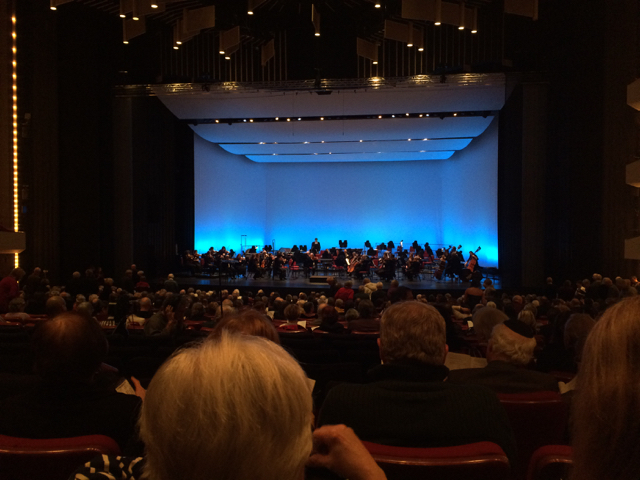
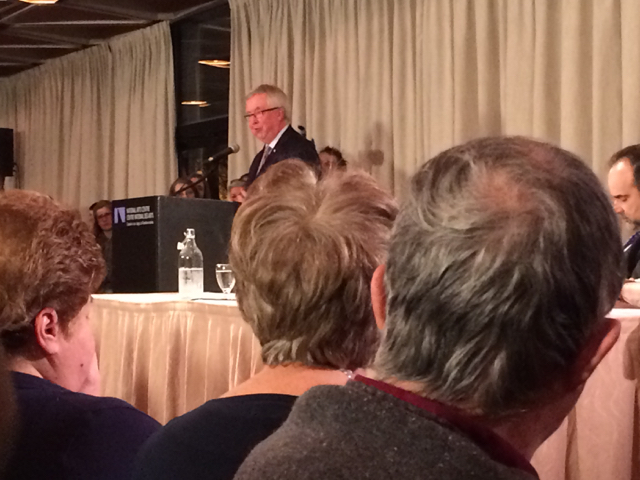
I Lost My Talk performanceIt’s been a while since I’ve done any arts reporting, but this is an exception. Last night I had the good fortune to attend the world premiere of I Lost My Talk, the new original composition commissioned by the family of former Prime Minister Joe Clark as a gift for his 75th birthday. The composition is based on the poem of the same name by Rita Joe, considered the “poet laureate of the Mi’kmaq” people, and it deals with a people losing their language and subsequently culture thanks to the legacy of residential schools. The evening was marked by a talk on Art and Reconciliation, led by Dr. Marie Wilson of the Truth and Reconciliation Commission, followed by the performance of the work itself. Presented along with other works about the endurance of the spirit – Shostakovich’s Symphony No. 9 in E-flat Major, Korngold’s Violin Concerto in D Major, Op.35, and John Williams’ theme from Schindler’s List, I Lost My Talk was the final performance of the evening. It was presented along with a video projection of a dance performance, also created to accompany the work. While one may not be sure how to turn a very tight poem of a few lines into an eighteen minute musical piece that is done without lyrics – lines of the poem recited intermittently through the piece – it was done perfectly. The composition itself was like an epic score to the poem, that was cinematic in scope and feel, the film and the choreography therein were wonderfully realized, and visually arresting. In total, it’s a powerful new work of Canadian composition that takes on the themes of reconciliation, bringing elements of the Indigenous conversation to more European art forms, and creates something powerful of them together. It was stated in the talk beforehand that reconciliation is not an Indigenous problem – it’s a Canadian one, where all of our society needs to participate. This work is part of that conversation, and reconciliation. One can think of no greater gift to a former Prime Minister like Joe Clark than the one that his family commissioned for him with I Lost My Talk. That the National Arts Centre is carrying on and extending the work with more First Nations artists creates a broader dialogue for the work, and the ongoing project or reconciliation.

Joe Clark – Art & Reconciliation Panel

Continue reading

Roundup: Bemoaning private meetings

There are times when demands for transparency from the government in all things does perplex me, particularly times when it starts to feel creepily inappropriate. Case in point is the sudden cry of “Oh noes! Justin Trudeau’s itinerary doesn’t list who those private meetings are with!” followed by some handwringing about taxpayer dollars. And then a chorus of “Oh noes! He met with lobbyists!” Because that’s the whole point of lobbying – to meet with officials, and not all lobbying is evil or the exchange of money, gifts or favours for the sake of influence, despite what American television will tell you (though, to be honest, the American version of lobbying – where those lobbyists have been able to be on the floor of the House of Representatives – is excessive). The fact that we can see after the fact that the PM and his staff have met with lobbyists is a sign of the transparency in our reporting mechanism, and I’m sure that there are meetings that should probably be private for all sorts of legitimate reasons. Can we ask questions about it? Sure. Does it mean that we are entitled to be privy to all of the details? I don’t see why. The thing is, sometimes the government relies on private, frank conversations in order to help guide their thinking – kind of like meetings with the Governor General. Sometimes good governance requires a modicum of discretion, and sometimes total transparency makes things worse. Is there a balance to be had? Of course. The fact that we’re getting daily itineraries is a far cry more than what we got under the last guy, and while that can’t simply be the go-to excuse that something is better than nothing, it also behoves us to temper our expectations a little. They don’t have to jump when we say so. I sometimes wonder if there aren’t a few people who don’t realise this and who get bent out of shape when it doesn’t happen. By all means, let’s ask the questions – but let’s also not pretend that the system is broken when we don’t get the answer we’re looking for.

Continue reading