
It being a Tuesday, all of the party leaders were in the House today, which is of course a rarity these days. Thomas Mulcair led off by asking which story was true — whether Harper had no idea that appointing a Federal Court justice would be a problem, or whether it was likely to be an issue before the courts. Harper equivocated, didn’t really answer and tried to say that nobody had a problem with Nadon during the process (which isn’t really true if we read between the confidential lines). Mulcair wondered why Harper didn’t get a Supreme Court reference before they appointed Nadon if they knew it would be an issue, but Harper insisted again that the NDP said good things about him. Mulcair asked why they didn’t try to change the appointment rules before appointing him. Harper responded by quoting Françoise Boivin’s praise of Nadon. Mulcair accused Harper of trying to strong-arm the Supreme Court into accepting the appointment, but Harper muttered about independent legal advice. Mulcair said that the appointment process clearly wasn’t working and needed to be changed, but Harper yet again repeated that Boivin praised Nadon, and characterized the SCC decision as “changing the rules,” when they absolutely did not. Justin Trudeau led off for the Liberals, and asked about the wage-suppressing effects of the mismanaged Temporary Foreign Workers programme. Harper batted back that the Liberals kept changing their position, and then changed topic, bringing up the PBO’s report on tax changes and how they benefitted mostly lower-income Canadians. Trudeau changed topics, and asked about the delays in filling that vacancy on the Supreme Court bench, and if it would be filled before the House rises for summer. Harper insisted that the Liberals didn’t object to Nadon’s appointment, but wouldn’t promise when a new name would come forward.
Tag Archives: Euthanasia
QP: Asking about the SCC appointment process
It was a rare Monday appearance in QP for the prime minister, given that there is a Maternal, Newborn & Child Health summit in Toronto later in the week that he’s hosting, not to mention that the premier of Turks & Caicos was also in attendance in the Speaker’s gallery. Thomas Mulcair kicked things off by asking why the PM changed his version of events around the call with the Chief Justice. Harper, sounding a bit hoarse, insisted that he had no idea what Mulcair was speaking about, but he knew that there was a potential issue that could go before the courts, so her consulted with independent legal experts. Mulcair tried again, and got the same response. Mulcair asked again, this time in French, and Harper reiterated that they always thought Federal Court judges would be eligible. Mulcair brought up the list of six judges published in the Globe and Mail, but Harper reiterated that they were under the impression that those judges were eligible, and with the Supreme Court having decided otherwise, they would respect that decision. Mulcair then demanded that Harper promise that he would not try to appoint a Federal Court judge for a Quebec seat, and Harper repeated that he wouldn’t. John McCallum led off for the Liberals, and brought up abuses to the Temporary Foreign Worker programme, but Harper insisted that he couldn’t decipher just what the Liberal position was on the issue. McCallum cranked up his rhetorical fire for an English supplemental, demanding that the government adopt his party’s five-point plan. Harper repeated that he couldn’t tell what the Liberal position was, but real job shortages should create an upward pressure on wages which is good for all Canadians. Scott Brison was up for the final question of the round, asking about the numbers of Canadians who have given up trying to even find work, but Harper said that Liberal plans would raise taxes and lose more jobs.
Roundup: Victoria Day and the Canadian Crown
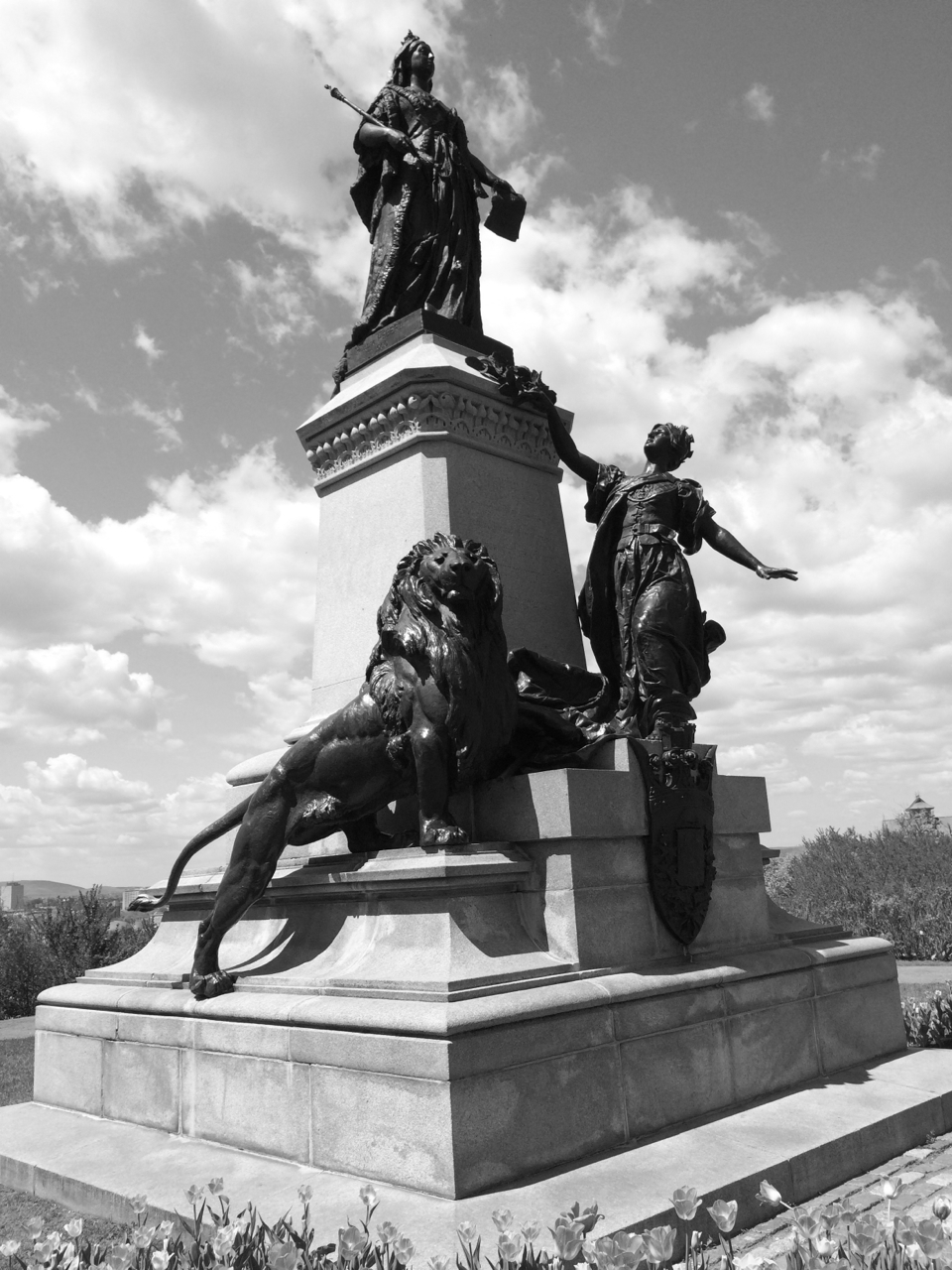
Given that yesterday was Victoria Day, here is a look at how it’s a particularly idiosyncratic Canadian holiday, which combines the celebration of the monarch who founded our country along with the official birthday of the reigning monarch, and has a history wrapped up in things like Empire Day, but remains uniquely Canadian all the same.
Roundup: Mulcair goes off on reporters
Today is the big day, as Thomas Mulcair goes before committee to defend his party’s use of “satellite” offices and staff doing supposedly “parliamentary” work in provinces where they don’t have MPs. And it could get really testy, given that Mulcair went off on reporters yesterday and was pretty much mansplaining to CTV’s Laurie Graham during caucus outs yesterday. CBC’s leak/counter-leak story is updated with more counter-leaks from House of Commons finance who did have a problem with people being in Montreal, but were still trying to figure out how to deal with it when everything blew up. But there was no problem and this is just the Board of Internal Economy being partisan! Oh, and in case you were wondering, he still plans on hiring someone to work out in Saskatchewan – just not co-locate them with party staffers. Okay then! The NDP also appear to be gearing up for a legal challenge if the committee decides to delve into the matter further, and have sought a legal opinion by the former Commons law clerk to back them up.
QP: 39 options!
Every leader was finally present in the House today — promised to be the only day that will happen this week. Go grand inquest of the nation! Thomas Mulcair started off by reading an old Stephen Harper quote about using time allocation on an electoral reform bill. Harper, unfazed, noted that the NDP opposed the bill without reading it. Mulcair wanted to know if Harper still stood by those sentiments of old, but Harper refused to take the bait and insisted that the current elections bill was subject to ongoing debate and that they would all eventually arrive at the conclusion that it was a good bill. Mulcair asked if Harper could yet name any expert who supported the bill. Harper insisted that the NDP had nothing on offer in the next election. Mulcair wondered if Harper stood behind some of Pierre Poilievre’s questionable assertion that the Chief Electoral Officer made false statements. Harper insisted that the NDP were not focused on the substance of the bill, even when pressed on the matter. Justin Trudeau got up for the Liberals, and after denouncing the elections bill and the government’s tactics, demanded that Conservatives be given a free vote on the bill. Harper dodged, and said that 99 percent of Canadians produced ID at the last election and needed far more rigorous forms of ID for the less important activities. Trudeau asked again in French, got the same answer, and in English once again, listed the groups concerned about the changes. Harper stuck to that same answer, and brought back his “secret votes, not secret voters” quip.
Roundup: A debate that won’t see the light of day
Conservative MP Stephen Fletcher is introducing two Private Member’s Bills on assisted suicide in order to get the debate on the agenda. The problem with this, of course, is that a) he would only have one slot for Private Member’s Business, so introducing two bills means one of them won’t see the light of day, and b) as Fletcher was a minister, his debate slot is at nearly the bottom of the list, as he only got it after he was dropped from cabinet, so it remains unlikely to see the light of day. Nevertheless, with the court challenges going on, it is a good reminder that Parliament should be debating these kinds of issues, but we all know that they are reluctant to, and try to fob off the hard work to the courts so that they can be seen to be dragged into doing something about it.
Roundup: Aftermath of a weekend convention
Justin Trudeau delivered his big speech on Saturday, and it was fairly well received, if still light on policy specifics. (Video here, with keynotes from Harper and Mulcair for comparison). He promised no new taxes, which immediately raises doubts about the affordability of his plans, and he landed a few blows against Harper in there, about the person who appointed Mike Duffy and Pamela Wallin campaigning on the strength of his judgement, and how his wasn’t the party of Sir John A Macdonald, which was a calculated means of trying to undermine Harper’s base. Part of the speech included a fictional “Nathalie” as Trudeau’s example of an everywoman to showcase his commitment to the middle class, which is a technique apparently used successfully by the Obama camp. The Maclean’s team dissected the speech and what the key points meant, while Paul Wells offers a stand-alone analysis on how Trudeau is the first leader since Chrétien to be automatically accepted by the party without labouring to, and how he’s now knocking at Harper’s door, changing the political dynamics in this country.
Roundup: Commence the convention
The Liberals’ policy convention is now underway in Montreal, and while things started off with a bit of an oops – the feed from the main stage was live to the reporters’ room while Trudeau was practicing his speech, giving it away before he could make it, and it included his camera directions. He delivered his rah-rah partisan speech to kick things off, which included a couple of digs at Pauline Marois, and to Harper and Mulcair in which he said he wasn’t going to play their game of trying to make Canadians angry, and ended it with a Skype call to his family (as they stayed in Ottawa, his wife due to give birth any day now). A few Senate Liberals, but not many, are in attendance, for which the NDP are trying to get a social media shaming going. Mike Moffatt offers three questions for the Liberals to look at as they try to formulate economic policy during this weekend’s convention. Kate Heartfield notes the implicit populist tones in Trudeau’s economics video, and how it still creates an Us and Them in order to play that populist card, while still trying to look like he’s above tribalism. Michael Den Tandt writes that the broad strokes economic policy will be looking at ways to bring the Red Tories and Blue Liberals back into the fold and away from the Conservative coalition. Paul Wells writes about the Conservatives hoping that the convention will prove to be a gaffe-fest for Trudeau (and along the way, coins the best descriptor for the Fair Elections Act as being “Conservative-fair”).
Roundup: Trudeau’s mistakes and the sanctimonious reaction
Justin Trudeau admitted that a couple of errors were made in relation to travel claims that should have been charged to the Speaker’s Bureau he belongs to rather than his MP expenses, dating back to 2009 and 2010. He said that it was human error, repaid them by personal cheque, and said that had there been better disclosure rules – like his party has put into place – this would have been caught sooner. And then the partisan spin happened. The NDP tried to somehow wedge this into a kind of Nigel Wright scenario, which makes no sense whatsoever. There were also sanctimonious cries about how he swore he never used his MP expenses for his outside work – and it seems pretty clear that it was a mistake, where the claims were bundled incorrectly, but now we apparently can’t take his word for anything – gods help us if any of his denouncers have ever made a mistake before. Liberal partisans, meanwhile, note that the NDP are the most opaque about their own expenses, for what it’s worth. And for everyone who cries that it should be an MP’s job to speak publicly, I would ask where exactly in an MP’s job description is being a motivational speaker? It’s not. An MP’s job is to hold the government to account and to scrutinise the public accounts, though you’d be hard pressed to find an MP who actually does that these days – I can think of a mere handful. Trying to claim that their job is something else is one more reason why the state of parliament has become so abysmal.
Roundup: The tale of the second cheque
Boom! The ClusterDuff exploded yet again yesterday, with yet more revelations from Senator Mike Duffy, who took advantage of what could be his final days of the protection of parliamentary privilege, and laid out yet more accusations against the PMO. This after a morning where Stephen Harper took to the radio waves and declared that Nigel Wright had been fired, in direct contradiction to all previous assertions that Wright resigned. So while the Commons fixated on this contradiction, Senator Duffy took the floor in the Senate, and detonated his next bomb – that there was not one cheque, but two, and that the talk of an RBC loan was actually a script from the PMO that he had been made to deliver. That second cheque was from the Conservative party lawyer, Arthur Hamilton, which paid for Duffy’s legal fees – and this time, he provided documents to prove it. The party doesn’t deny covering the legal expenses, saying that they will sometimes pay the legal fees of their caucus members. This is likely an indication, according to John Geddes, that the party was still keen to defend him and by extension their decision to appoint him as a PEI senator, with their particular reading of those rules. While Duffy contended that there remains a whole other email chain in the hands of his lawyers that he wants to see turned over to the RCMP, though an envelope was later handed to the CBC which appeared to cast some doubt as to Duffy’s version of events – or at the very least was a good trial run as to his scripting around where the money came from. If there is one bright side to all of this it’s the level of engagement that the public is demonstrating, and the fact that senators are pointing to the number of emails they are receiving from people who want to see due process – and one senator that I spoke with this afternoon brought this up without prompting. And while these senators have zero sympathy for their three embattled peers, they at least want to ensure that there is process followed.