Roundup: Appointment board terms

The Order in Council relating to the new Senate appointment board was made public yesterday, and some of the details were tweeted out (as below, with commentary). Of note for me when you read the terms was that this interim process for the first five appointments will be done by engaging with civil society groups of various distinctions. The permanent process going forward will be the one that invites people to nominate others (or themselves) as vacancies come open.

https://twitter.com/EmmMacfarlane/status/690289470709563392

https://twitter.com/EmmMacfarlane/status/690289727677829121

https://twitter.com/EmmMacfarlane/status/690290163809959937
Continue reading

Roundup: I Lost My Talk

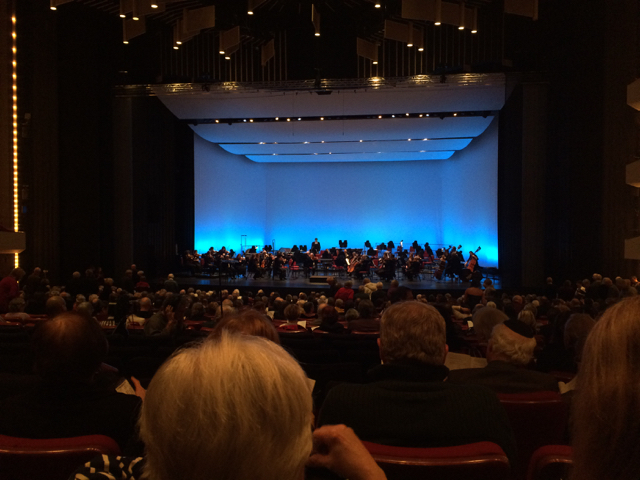
I Lost My Talk performanceIt’s been a while since I’ve done any arts reporting, but this is an exception. Last night I had the good fortune to attend the world premiere of I Lost My Talk, the new original composition commissioned by the family of former Prime Minister Joe Clark as a gift for his 75th birthday. The composition is based on the poem of the same name by Rita Joe, considered the “poet laureate of the Mi’kmaq” people, and it deals with a people losing their language and subsequently culture thanks to the legacy of residential schools. The evening was marked by a talk on Art and Reconciliation, led by Dr. Marie Wilson of the Truth and Reconciliation Commission, followed by the performance of the work itself. Presented along with other works about the endurance of the spirit – Shostakovich’s Symphony No. 9 in E-flat Major, Korngold’s Violin Concerto in D Major, Op.35, and John Williams’ theme from Schindler’s List, I Lost My Talk was the final performance of the evening. It was presented along with a video projection of a dance performance, also created to accompany the work. While one may not be sure how to turn a very tight poem of a few lines into an eighteen minute musical piece that is done without lyrics – lines of the poem recited intermittently through the piece – it was done perfectly. The composition itself was like an epic score to the poem, that was cinematic in scope and feel, the film and the choreography therein were wonderfully realized, and visually arresting. In total, it’s a powerful new work of Canadian composition that takes on the themes of reconciliation, bringing elements of the Indigenous conversation to more European art forms, and creates something powerful of them together. It was stated in the talk beforehand that reconciliation is not an Indigenous problem – it’s a Canadian one, where all of our society needs to participate. This work is part of that conversation, and reconciliation. One can think of no greater gift to a former Prime Minister like Joe Clark than the one that his family commissioned for him with I Lost My Talk. That the National Arts Centre is carrying on and extending the work with more First Nations artists creates a broader dialogue for the work, and the ongoing project or reconciliation.

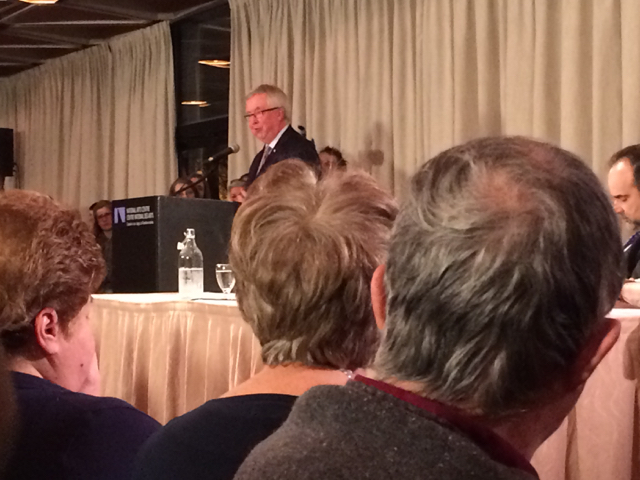
Joe Clark – Art & Reconciliation Panel

Continue reading

Roundup: Refugee plans leaking out

We have some more details on the Syrian refugee plans that have started leaking out – 900 Syrians arriving per day starting December 1st, primarily from camps in Lebanon, Jordan and Turkey; military facilities are being quickly winterized to help house them, mostly in Ontario and Quebec; and it looks like Christmas leave and vacations are being cancelled for a number of civil servants and military personnel to help make this all happen in time, which will cost in overtime. All will be identified by the UNHCR as resettlement candidates and screened on the ground (screening process explained here), and once they land and additional checks are made, they’ll immediately be made permanent residents. And it sounds like there may also be an advertising campaign to help Canadians who want to help out and do more to help the refugees. We’re due to get the official confirmation for these plans by next week, so we’ll see how much of all these leaks bears out then, but it does appear that the ambitious plan is coming together, and perhaps all of the overblown concerns for plans nobody has seen or articulated may be for naught.

Continue reading

Roundup: Liberal revisionism

Of all of the hopeful and optimistic things that our new cabinet ministers have been talking about, one is already raising alarm bells, which is our new heritage minister, Mélanie Joly. Joly says that her ministry is one about symbols, and she is going to go about changing those symbols to ones of “progressiveness,” saying that those promoted by the previous government weren’t those shared by Canadians. That of course is total nonsense, but it all points to the kinds of revisionism that both parties engage in, even though everyone seemed to think that it was only the Conservatives who did it. While some of this is no doubt in reference to the Conservatives’ fascination – almost to the point of fetishism – with military history and those particularly martial symbols, we shouldn’t pretend that we don’t have these traditions in Canada. Previous Liberal governments indeed liked to do so, with a focus on peacekeeping that may not have reflected reality, or at least the modern reality where the global landscape has changed and those kinds of missions may no longer be feasible the way they once were. The other one that I’m particularly worried about is whether this means that Joly will engage in a purge of monarchical symbols that the Conservatives themselves restored after decades of Liberals trying to push them aside. One of the things that I cannot forgive either the Liberals or NDP for doing in the previous decade was the way in which they allowed the Conservative government to politicise the monarchy by pretending that it only mattered to Conservatives. When they would reintroduce a monarchical symbol, they would complain rather than acknowledge that yes, we are a constitutional monarchy and we should all embrace it and its symbols rather than allowing one party to associate itself with it to the exclusion of all others. Unlike some other Liberals, Trudeau doesn’t appear to be a republican in his sentiments, and has stated that he has no intention of trying to distance Canada from the Crown, but when Joly starts talking about revisionism based on an exclusionary conception of who is and isn’t Canadian (and in this vision, Conservatives apparently aren’t), I worry. Revisionism is going to happen, but it should be called out as much as it was called out under the Conservatives because it’s still distasteful, no matter whose agenda it’s carrying out.

Continue reading

Roundup: TPP a Caretaker conundrum

The Trans-Pacific Partnership talks are taking place right now, with the possibility that a deal could be struck with Canada while we’re in a writ period. The optics of this are a bit fraught, because if the government gets the deal signed, then they can crow about their prowess on the campaign trail, and how they’re signing deals to boost our economy. But the flip side of that coin is that a really big deal may be a kind of violation of the Caretaker Conventions that govern how an incumbent government operates during a writ period. Remember that we can never be without a government even when Parliament is dissolved – they just need to exercise restraint, and can’t implement major policy changes or make appointments during that period. This time around, however, the government released the Convention guidelines publicly while adding specific exemptions about negotiating trade deals. On the one hand, there is a certain amount of sense – do we really want to hold up the eleven other countries while we are in an extra-long election period? (Note that there seems to be a desire to conclude the deal before the American election gears up to full-on insanity mode). One of the arguments is that there should at least be some kind of consultation with opposition leaders if the negotiations continue during the writ period, and there are complaints that the TPP negotiations are unprecedented in their secrecy. What is not mentioned is that secrecy is deliberate considering how game changing this pact could be, particularly when it comes to weakening some of the tough subsidized markets in several member countries. And if you look at the reactions that rumours of deals around weakening Supply Management or auto parts content rules, and promises by other party leaders to maintain those protectionist policies, it’s hard not to see why they want to keep a lid on things until they’re finalised – particularly if the goal is actual trade liberalisation rather than just lip-service. It’s a delicate balance, and arguments can be made on both sides of the propriety of the government’s negotiations under the Caretaker Conventions. For example, Susan Delacourt argues the government is going beyond the Conventions. I’m not sure I have any answers, but I guess we’ll see what gets decided, and let the chips fall where they may.

Continue reading

Roundup: No, Chong’s bill won’t give us Australian leadership spills

News of the leadership spill in Australia, ousting Tony Abbott as prime minister and ending the greatest political bromance of the Commonwealth countries (Harper and Abbott were quite the mutual admiration society), we were suddenly inundated with Twitter musings about whether that could happen in Canada, thanks to Michael Chong’s Reform Act which passed this summer. While Kady O’Malley offers the “in theory” answer, the in practice answer is that no, it couldn’t happen here, because Canada has a terrible system of leadership selection that purports to “democratise” the system with grassroots involvement, but instead created an unaccountable and presidentialised system of an overly powerful leader that has little fear of their caucus turning on them, because caucus didn’t select them. When it comes to removal, selection matters. A lot. Chong’s bill, perversely, makes an Australian situation less likely by raising the bar for leadership challenges to happen in the first place, and would instead give us situations like what happened in Manitoba where a sitting leader was challenged, and when it went to a leadership process where he still participated and won based on the grassroots support when his caucus was no longer behind him, well, it’s ugly and it’s down right unparliamentary given that a leader needs to have the confidence of his or her caucus, and when they don’t but stay in based on grassroots votes, the system breaks down. Paul Wells cautions that reforming a system usually replaces real or perceive problems with different problems, while Andrew Coyne points out that being able to dump a bad leader quickly is the lesser evil of being stuck with them.

Continue reading

Roundup: Totally not buying votes

With those new child benefit cheques starting to flow, a couple of bits of analysis were done over the past few days. One was to use census data to look at the demographics of ridings where people stood to gain the most from the new cheques, and wouldn’t you know it, of the 338 ridings, most were either Conservative or had a good chance of leaning that way in the next election. The other piece did some detective work into Pierre Poilievre’s big hunt for families who had not signed up for the benefit, and how he was able to derive numbers of how many families in certain regions had not done so. Why target regions? Why, electioneering, of course. There were also some pretty artificial deadlines being floated for getting people to sign up to the programme, so that cheques would handily flow just as the election is kicking off. Because that’s not trying to buy votes with people’s own money either, apparently. Among the places Poilievre visited on his “ finding families” tour were, you guessed it, Conservative ridings, while First Nations communities, who were less likely to be signed up, didn’t merit visits at all as they were unlikely to vote Conservative. So in case you really did think that these child benefit cheques were really about helping families and not about trying to buy votes, well, the analysis doesn’t support that kind of altruistic viewpoint.

https://twitter.com/acoyne/status/622932565306003456

https://twitter.com/acoyne/status/622933109340774400

https://twitter.com/acoyne/status/622933409762045953

https://twitter.com/acoyne/status/622933528775364608

Continue reading

QP: Bono’s big visit

With Bono promised to attend, MPs were vibrating with fannish glee during Members’ Statemets. Thomas Mulcair even showed up on a Monday, which is an indication of how big of a deal they were making of it. When he led off, he led immediately with the AG report on the Senate, and asked about PMO interference (not that any has been alleged). Paul Calandra, quite predictably, brought up the NDP satellite offices. Mulcair then raised the mischief-making of the possibility that Senators won’t travel extra city blocks to get cheaper temporary office space, to which Diane Finley made a bland statement about expecting senators to take whatever temporary office space if given to them. Mulcair then went on a soliloquy that he is probably glad he was shielded by privilege for, and asked a rhetorical question about why the PM appointed the senators he did, not that Calandra’s reply changed from before. Mulcair changed topics, brought up Bono (who still had not arrived) and the fact that the government has not committed to actually doing anything about the poverty pledge they are signing onto. Christian Paradis praised the government’s programmes abroad. Mulcair noted the poverty among First Nations, to which Bernard Valcourt listed their success stories in the north. Ralph Goodale led off for the Liberals, asking about the Information Commissioner’s decision to take the government to court over those deleted gun registry records, and wondered who counselled the behaviour. Stephen Blaney touted the destruction of said registry and gave a false point another the will of parliament. Goodale pressed, and Blaney doubled down. Stéphane Dion gave it a go in French, and got the same answer — again.

Continue reading

QP: Concern over a slight shrinking in GDP

It being Tuesday, the leaders were all present and ready to go, because apparently it only counts two days a week now. Thomas Mulcair led off, asking about the new numbers from StatsCan that showed that GDP shrank ever so slightly last month. Stephen Harper touted his family tax cut legislation instead. Mulcair demanded a budget, but Harper demurred. Mulcair decried “all of the eggs” in the oil basket — actually not true — and continued his demand for a budget, but Harper kept insisting that they are continuing their Economic Action Plan™ and that it was working. Mulcair then moved onto this morning’s PBO report that said that families with older kids and those without kids in childcare will be getting more benefits than those with kids in childcare. Harper first insisted that the NDP wanted to raise taxes, and then insisted that all families would get an increase in after-tax benefits. Mulcair decried those families with kids in childcare being punished, but Harper repeated his answer. Justin Trudeau was up next, and he returned to the reports of negative growth in three months of the past six, and wondered when the government would come up with a plan to get the economy moving. Harper responded with a laundry list of their recent announcements, and insisted that the Liberals only wanted to raise taxes. Trudeau noted that giving a tax break to the rich wouldn’t help, but Harper insisted that forecasts still showed growth, and wanted support for their family tax break bill. Trudeau asked again in French, and Harper repeated his answer in French.

Continue reading

QP: What about Future Shop?

Monday in the Commons, and as is now usual, none of the major leaders were present. It’s not like holding the government to account is important or anything. That left Nycole Turmel to lead off, haltingly reading a question about the closures of Future Shop stores, and government inaction on job creation. Joe Oliver was actually present for the first time in weeks, but simply delivered a talking point on the the fragile global economy and their low-tax plan. Turmel asked again in French, and got much the same answer. Turmel then turned to the issue of Jason Kenney’s false statements about precision-guided munitions. Kenney stood up and insisted that the U.S. and Canada are the only countries with these capabilities. Jack Harris asked again in English, and Kenney insisted that the Chief of Defence Staff confirmed his statement, which…is not necessarily the case. For his final question, Harris asked about Canadian jets possibly coming under fire in Syria, to which Kenney said that he was told that the Syrians didn’t have radar coverage in that region. Marc Garneau was up for the Liberals, and asked about downgraded economic forecasts. Joe Oliver responded with a quip about high Liberal taxes. Ralph Goodale then asked for more investment in municipal infrastructure, to which Joe Oliver insisted that the Liberals wanted to weaken the oil economy. Huh? Another round offered no further clarity.

Continue reading