Roundup: De-Canadianizing the Crown

A decision from the Quebec Superior Court came down yesterday which will have grave constitutional implications for Canada, yet few people actually know or understand it. The case challenged the royal succession law that the previous government passed as part of the series of reforms passed in all of the realms that share Queen Elizabeth II as their respective monarch, and by most reckonings, the Canadian law was a complete sham, simply assenting to UK legislation, in essence subordinating the Canadian Crown to a subset of the UK crown, despite the fact that they became separate entities after the Statute of Westminster in 1931. The Quebec Superior Court, however, sided with the Department of Justice, that the monarch was the same per the preamble of the constitution as opposed to a separate legal entity, and essentially reducing Canada back to a subordinate British colony, all because the Harper government didn’t want to go through the necessary steps of doing a proper constitutional amendment to change the Office of the Queen to match the aims of reform. So long, Queen of Canada. We hardly knew you.

https://twitter.com/pmlagasse/status/699675727185256448

https://twitter.com/pmlagasse/status/699676140714258434

https://twitter.com/pmlagasse/status/699677275999113218

https://twitter.com/pmlagasse/status/699678028784410624

https://twitter.com/pmlagasse/status/699678843540545536

https://twitter.com/pmlagasse/status/699678990441848832

https://twitter.com/pmlagasse/status/699686628005179392

https://twitter.com/pmlagasse/status/699686740714463234

https://twitter.com/pmlagasse/status/699686958084288512

https://twitter.com/pmlagasse/status/699687878658494465

https://twitter.com/pmlagasse/status/699689056171597824

https://twitter.com/pmlagasse/status/699689344253173761

https://twitter.com/pmlagasse/status/699691519066947588

https://twitter.com/pmlagasse/status/699691722750742529

https://twitter.com/pmlagasse/status/699811121620889600
Continue reading →

Roundup: I Lost My Talk

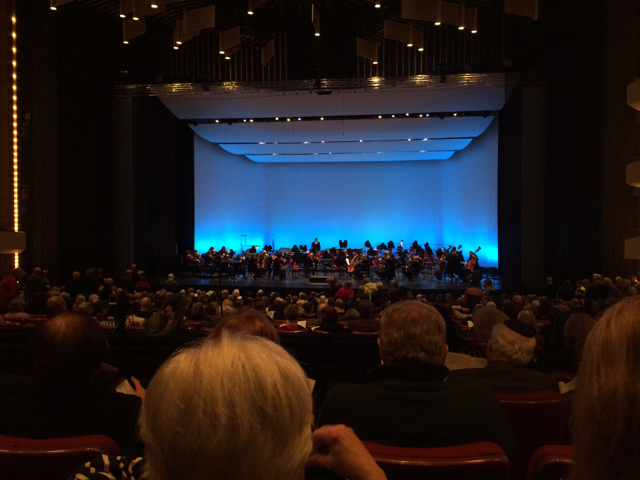
I Lost My Talk performanceIt’s been a while since I’ve done any arts reporting, but this is an exception. Last night I had the good fortune to attend the world premiere of I Lost My Talk, the new original composition commissioned by the family of former Prime Minister Joe Clark as a gift for his 75th birthday. The composition is based on the poem of the same name by Rita Joe, considered the “poet laureate of the Mi’kmaq” people, and it deals with a people losing their language and subsequently culture thanks to the legacy of residential schools. The evening was marked by a talk on Art and Reconciliation, led by Dr. Marie Wilson of the Truth and Reconciliation Commission, followed by the performance of the work itself. Presented along with other works about the endurance of the spirit – Shostakovich’s Symphony No. 9 in E-flat Major, Korngold’s Violin Concerto in D Major, Op.35, and John Williams’ theme from Schindler’s List, I Lost My Talk was the final performance of the evening. It was presented along with a video projection of a dance performance, also created to accompany the work. While one may not be sure how to turn a very tight poem of a few lines into an eighteen minute musical piece that is done without lyrics – lines of the poem recited intermittently through the piece – it was done perfectly. The composition itself was like an epic score to the poem, that was cinematic in scope and feel, the film and the choreography therein were wonderfully realized, and visually arresting. In total, it’s a powerful new work of Canadian composition that takes on the themes of reconciliation, bringing elements of the Indigenous conversation to more European art forms, and creates something powerful of them together. It was stated in the talk beforehand that reconciliation is not an Indigenous problem – it’s a Canadian one, where all of our society needs to participate. This work is part of that conversation, and reconciliation. One can think of no greater gift to a former Prime Minister like Joe Clark than the one that his family commissioned for him with I Lost My Talk. That the National Arts Centre is carrying on and extending the work with more First Nations artists creates a broader dialogue for the work, and the ongoing project or reconciliation.

Joe Clark – Art & Reconciliation Panel

Continue reading →

Roundup: Oversight and transparency

Oh, look – it’s the first Senate bat-signal of the year, this time with an interview with Senator Beth Marhsall on CBC Radio’s The House. The treatment of the interview does raise some of the usual problems when it comes to reporting what’s going on in the Senate – namely, that journalists who don’t follow the institution, or who haven’t actually given a critical reading of the Auditor General’s report mischaracterise it as showing “widespread abuse” when it certainly was not, and a good number of the report’s findings were in fact suspect because they were value judgements of individual auditors, many of whom were perfectly defensible. Marshall, however, thinks that the AG’s suggestion of an independent oversight body is a-okay, despite the fact that it’s a massive affront to parliamentary supremacy. The Senate is a legislative body and not a government department – it has to be able to run its own affairs, otherwise out whole exercise of Responsible Government is for naught, and we should hand power back to the Queen to exercise on our behalf. I can understand why Marshall might think this way – she is, after all, a former provincial Auditor General and would err on the side of the auditor’s recommendations regardless, but the fact that no reporter has ever pushed back against this notion and said “Whoa, parliamentary supremacy is a thing, no?” troubles me greatly. I still think that if an oversight body is to be created that it should follow the Lords model, as proposed by Senator McCoy, whereby you have a body of five, three of whom are Senators, and the other two being outsiders, for example with an auditor and a former judge. You get oversight and dispute resolution, but it also remains in control of the Senate, which is necessary for the exercise of parliamentary supremacy. Marshall’s other “fix” is the need to televise the Senate for transparency’s sake. While it’s a constant complaint, and yes, cameras will be coming within a year or two, the notion that it’s going to be a fix to any perceived woes is farcical. Why? With few exceptions, people don’t tune into the Commons outside of Question Period, despite our demands that we want to see our MPs on camera to know they’re doing their jobs. Cameras, meanwhile, have largely been blamed for why QP has become such a sideshow – they know they’re performing, and most of the flow of questions these days is atrocious because they’re simply trying to get news clips. I’m not sure how cameras will improve the “transparency” of the Senate any more than making the audio stream publicly available did, never mind that committees have been televised for decades. If people really wanted to find out what Senators do, there are more than enough opportunities – but they don’t care. It’s easier to listen to the received wisdom that they’re just napping on the public dime, and the people who could be changing that perception – journalists – are more than content to feed the established narrative instead.

Continue reading →

Roundup: No ideological obstruction

There’s the Senate bat-signal again. Conservative Senate leader Claude Carignan says that his caucus won’t abuse their majority in the Senate to thwart Liberal legislation that comes forward, to which I say “Um, yeah. Of course.” Because wouldn’t you know it, Senators have a job to do, and they know it. Of course, I’ve never bought into the conspiracy theory that Conservative senators would be the puppets of Harper, trying to influence things beyond the political grave, or even the theory that they would be extra dickish just because they were Harper appointees. Then again, most people seem to forget that senators of any stripe suddenly get a lot more independent when the PM who appointed them is no longer in office, and they get really, really independent once leadership races kick off. So far we’re at the first of those two, and with the Conservatives as a whole allegedly experimenting with a less command-and-control style of leadership, we may see the yoke they unduly placed over their Senate caucus lifted. Mind you, we’re still waiting for a signal to see what Trudeau will do in terms of both the Speaker of the Senate and the Leader of the Government. Without a Leader, they might as well just cancel Senate Question Period, which would be a loss because it’s quite instructive for how QP in the Commons should be run. Some senators have floated the idea of just having Senate QP be about asking questions to committee chairs (which, incidentally, they already can do), but it’s not a good idea because those committee chairs aren’t going to have a lot to say about issues of the day, they won’t have access to briefing materials, and they aren’t conduits by which the government can be held to account, which is the whole point of QP – not asking details about committee work. But seriously – can we please stop worrying about fantastical hysteria about what the Senate is going to do? 99 percent of it is based on false assumptions and ignorance of the chamber, and it’s so, so tiresome. They have jobs to do. Let them.

Continue reading →

Roundup: The anti-intellectual warning shot

The markets are crashing, the dollar continues to plummet and the price of oil seems to be in free-fall, but what is it that has the Canadian commentariat entranced – well, aside from the latest Duffy minutiae? The fact that Doug Ford may be contemplating the federal Conservative leadership if Stephen Harper fails to win the upcoming election. It kind of makes me want to weep. “Oh, it’ll be hilarious!” the Twitter Machine keeps relaying, but no, it wouldn’t. It would be heartbreaking for what it means to democracy. As we saw with the Rob Ford years in Toronto, and as we’re seeing play out with the Donald Trump primary race in the States, what more rational people see as hilarious and unbelievable is being embraced by a share of the electorate who are disengaged and who believe that all politicians are liars, so they would rather someone who stands up there and “tells it like it is,” never mind that what they’re telling them is completely divorced from reality and also generally false. We are already dealing with an overload of anti-intellectualism in the Canadian discourse (and no, not just from the right-leaning populists – you should see the abuse heaped on the economists who dared to debunk the NDP’s minimum wage proposal earlier in the week). Do we need it compounded on the federal scene by such an individual? While people may treat it like a joke, it’s a legitimate threat. Remember that Rob Ford got elected mayor because the very people who dismiss the Ford brothers can’t seem to grasp that they do strike a chord with voters, and I can’t think of anything more terrifying for the future of federal politics.

Continue reading →

Roundup: Trying to politicize the GG

In a move so stunningly boneheaded that I can scarcely believe it, the NDP have gone to Rideau Hall to ask the Governor General to wade in on the Senate residency issue – because there’s nothing like trying to politicise the GG to show that you mean business about a petty issue. It’s like Her Majesty’s Loyal Opposition doesn’t have a clue about what Responsible Government – the central organising principle of our democratic system – actually means. Here’s a refresher for their edification – the Governor General acts on the advice of the Prime Minister because the Prime Minister holds the confidence of the House of Commons, which is the chamber elected for the purpose of granting or withholding said confidence. The entire history of the struggle for Responsible Government in the colonies that became Canada, back in the 1830s, was because they wanted to control the appointments made by the Crown, rather than leave it up to the colonial masters in the UK. The entire history of Canadian democracy rests on the fact that it’s the elected government that advises the Crown on who to appoint, and not the other way around. And yet the NDP seem to suddenly think it’s cool to ask the GG to weigh in on which appointments he thinks are okay or not. Charlie Angus may tell you that he’s asking for an explanation and that he’s not trying to draw the GG into the “scandal,” but with all due respect, that’s a load of utter horseshit and he knows it. He’s trying to get the GG to tell him that the PM is wrong so that he has “non-partisan” authority to make the claim for him; that’s never going to happen. Ever. It is assumed that the advice the PM gives the GG is legitimate because the PM has the confidence of the Commons. That means that the quality of that advice is a ballot box issue – if we don’t like it, we get to hold that PM and that government to account by voting them out. It is not up to the GG to veto it unless it’s so egregious that it’s a blatant violation of the constitution, at which point he refuses the advice and the Prime Minister is forced to resign. But as much as Charlie Angus might like to think that Mike Duffy is some unprecedented scandal that rocks the very legitimacy of the Upper Chamber (which they don’t believe is legitimate anyway, so this is grade-A concern trolling on his part), it’s not a constitutional crisis. It’s just not. Even if Harper’s advice was dubious, it was up to Duffy to ensure that he lived up to the terms of that appointment, and ensuing he was a proper resident of PEI – which essentially would have meant a hasty house sale in Ottawa, buying a year-round residence on the Island (and not a summer cottage) tout suit, and then maybe renting an apartment or buying a small condo near Parliament Hill as his Ottawa pied à terre, being a legitimate secondary residence. Duffy did not do that. He instead got political opinions to ensure that he was okay with the summer cottage and a driver’s licence and that’s it, when clearly that was not enough. He bears as much culpability in this as the PM for making the appointment – not the GG. Charlie Angus should be utterly ashamed for this blatant attempt to politicise the GG, but I’m pretty sure he’s incapable of shame.

Continue reading →

Roundup: On official birthdays

It should not be unexpected that on Victoria Day, you would get some usual trite releases by the Prime Minister and the Governor General about the importance of Canada’s relationship with the monarchy, and so on. We got them. What we also got was a bunch of ignorant backlash.

Immediately a bunch of geniuses started to tweet back that it was celebrating Queen Victoria’s birthday, not Queen Elizabeth’s, and that Harper was an idiot, and so on. Err, except that those people were the ones in the wrong because since 1957, it was decided that the Official Birthday of the Canadian Sovereign would be Victoria Day, not the April birthday of the current Queen of Canada, Elizabeth II, nor the same official birthday as the Queen of the United Kingdom, which is in June. It’s like we have our own monarchy or something! Also, it has to do with the distinction between the legal person of the Queen of the Canada, and her natural person.

https://twitter.com/pmlagasse/status/600350515633979393

https://twitter.com/pmlagasse/status/600350878269313025

https://twitter.com/pmlagasse/status/600354856294047744

Suffice to say, it’s a pretty sad statement as to the current state of civic literacy in Canada that this basic celebration of our Head of State has been completely lost to your average person. Granted, the PM’s tweet could have been better phrased, such as “official birthday” instead of “officially celebrate,” but still, the point stands. It’s time to take this basic education more seriously, Canada. Yesterday was pretty embarrassing.

https://twitter.com/lopinformation/status/600334009944645633

Continue reading →

Roundup: Committing to change – for real!

A rare bit of public damage control was on display yesterday as CBC obtained a copy of the orders that the Chief of Defence Staff put out two months ago, which told the nascent task force being assembled to deal with the forthcoming report by former Justice Marie Deschamps on sexual assault and harassment in the Forces, to basically set aside some of the coming recommendations. At this point in the timeline, General Lawson would have seen a draft copy of Deschamps’ report, and he would have had a good idea what was in it for recommendations. Within hours of the CBC report going public, Lawson put out a lengthy press release stating that the Forces would act on all ten recommendations, including the creation of an independent centre for reporting assault or harassment. A few minutes later in Question Period, Jason Kenney also said that all ten recommendations would be acted upon as well. It does make one wonder when any change in these orders occurred, and why Lawson changed his mind – though one can imagine that either the final wording of Deschamps’ report, and how it was received by both the government and the general public, may have forced a realisation that there was a real appetite for cultural change out in the wider public, and that the old way of dealing with issues internally, particularly with its culture of misogyny, weren’t going to cut it any longer. Meanwhile, it should also be pointed out that the Canadian Forces appointed a female commander, Brigadier General Lise Bourgon, to head our forces in Iraq, and more women in high-profile commanding roles can only help in driving home the message that it’s not a macho boys’ club any longer.

Continue reading →

Roundup: Minor changes on the way

First it was the Liberals offering their amendments to C-51 on Thursday, and yesterday it was the NDP. Monday we will get a laundry list from the Green Party, and now we hear that on Tuesday, the government will have amendments of their own, demonstrating that they’ve listened to at least a few of the criticisms on the bill, in particular removing the word “lawful” from demonstrations, and clarifying that CSIS won’t have arrest powers – changes that they hope will tone down the hysteria from activist groups who have been proclaiming that they would soon find themselves on terror watch-lists for dissenting against the government. Not so, the government insists – they want to keep the focus on the real terrorists. But they’re not doing anything more for oversight, and as far as they’re concerned, parliamentary oversight is a dead letter. What strikes me in all of this, however, is the way in which this is playing out like it did with amendments to the Fair Elections Act. Then, as with C-51, the government is making a few minor amendments that won’t have a very big impact on the bulk of the bill and its powers, but by at least proposing those small changes, they can turn around and look like they’ve been reasonable about listening to their critics. That way, they’ve barely put much water in their wine, but still try to come out looking like heroes, and letting politics once again triumph over good policy.

Continue reading →

Roundup: A largely fictitious distinction

While the battle over what’s happening at Veterans Affairs continues to rage, we are continually reassured by both the Prime Minister and the Original Series duotronic computer system known as Julian Fantino that we shouldn’t worry – that any cuts that have been made are all “back office” bureaucrats, and that front-line services haven’t been affected. Really! And while the example of cutting 12 photocopy clerks by moving to digitised medical records may be an example of those “back office” cuts, we should stop kidding ourselves – there is no neat dividing line between what is a front-line service position and a back-office bureaucrat because it’s the job of those bureaucrats to process the work of the front-line providers. If anything, this notion that back-office positions are being eliminated means anything, it’s that it forces more front-line workers to do the processing work themselves, essentially increasing their workload and making them less able to help veterans because they’re the ones busy processing the paperwork rather than focusing on the service aspect. Using the excuse of it being “back office” is largely a fictional distinction made for the sake of optics – but then again, that is the way that this government likes to operate, by photo op and announcement rather than by actual results, so this really should surprise nobody.

Continue reading →