Roundup: The Ontario horror show

It is now day one hundred of Russia’s invasion of Ukraine, and President Volodymyr Zelenskyy suspects that Russian forces now hold some twenty percent of the country’s territory, and asks for more Western weapons. Russians hold most of Severodonetsk, and they are moving onto its twin of Lysychansk, which will help them secure control over the Luhansk province. Meanwhile, Ukrainians who return to their homes often find them to be destroyed, with all of their possessions.

Closer to home, the Ontario election was, well, a disaster for everyone involved. Ford gets a larger seat count on a hollow platform he won’t know what to do with, while most of his experienced performers have left politics. The NDP lost nine seats and still think they’re the “strongest” they’ve ever been, but Andrea Horwath did say it was time to step down, as well she should have. Steven Del Duca also stepped down after he lost his own seat, as well he should have. Voter turnout was extremely low, which tells you that people had nothing to vote for, but this breakdown of how each party lost votes is pretty instructive about the level of disillusionment with each, for what that’s worth as the opposition parties start to rebuild. (My full column on the election will be out later today).

https://twitter.com/mattgurney/status/1532558713948708887

https://twitter.com/mattgurney/status/1532535636485455872

Continue reading

Roundup: Cancelled committees because of the human toll of hybrid sittings

It is now approximately day ninety-three of Russia’s invasion of Ukraine, and Russian forces have shelled more than 40 towns and villages in the Donbas region, while they try to encircle Severodonetsk and Lysychansk. It also sounds like Russia has lifted the age restriction for voluntary military service, which gives you a hint that they need more troops because the invasion has not gone well for them. President Volodymyr Zelenskyy is asking Western allies for rocket systems to repel Russian forces from the Donbas, before the cities and towns in the area become “uninhabited.”

Closer to home, it looks like the realities of the finite resource of Parliament are finally starting to hit for MPs and senators, and more and more committee meetings are being cancelled as there simply aren’t enough interpreters to go around, exacerbated by late-night sittings, and more than anything, the fact that they keep finding excuses to extend hybrid sittings no matter that they know full well that the use of Zoom is causing injuries to the interpreters, and most of them know that they can’t simply hire more as there are no more to hire. They literally cannot graduate enough to replace the ones who are retiring or whose injuries are forcing them from the workplace (especially as they risk permanent hearing loss). And MPs simply don’t care. Worse, they passed a motion last week to create yet another special committee, as if they had the resources to do so. Because they don’t care. It’s all about show, whether that’s the Liberals and NDP patting themselves on the back for being “good examples” of working from home, or the Conservatives’ constant filibustering and wasting of time that drags out proceedings, which taxes the interpreters even further (and isn’t helped by the fact that they refuse to wear masks in the Chamber).

I’ve stated this before, and I’ll keep saying this—it is morally reprehensible for MPs and senators to keep demanding hybrid sittings when they know the human cost it takes on the interpreters. They could easily organize themselves in safer ways to have in-person meetings, which won’t strain the interpreters, and that they could have something that resembles normal operations as a result, but they refuse, because too many of them have grown to like the hybrid sittings, so that they don’t have to travel. Who cares if a human being is suffering injuries and facing the possibility of permanent hearing loss? That MP doesn’t have to travel, so that’s what counts. It’s absolutely unconscionable, and they should be shamed for it.

Continue reading

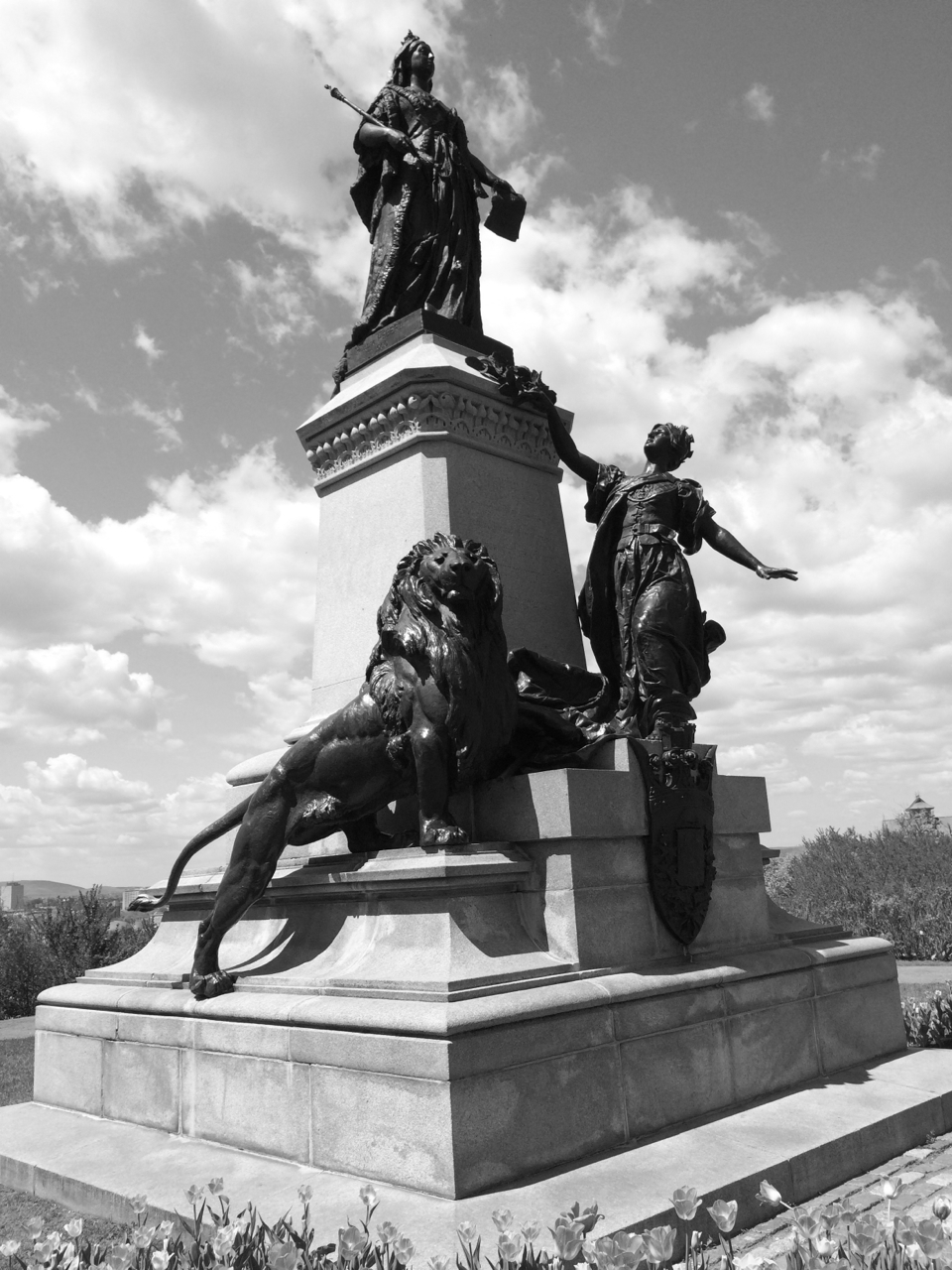
Roundup: Enjoy your Victoria Day

It’s now approximately day eighty-seven of Russia’s invasion of Ukraine, and Russia says that they now have full control of the steel plant in Mariupol, and by extension the whole city. That means Russians are starting to pull back forces from the area to redeploy elsewhere in the Donbas region, and it looks like fighting is intensifying in the Luhansk region.

Closer to home, it is Victoria Day this weekend, which is the official birthday of the Queen of Canada. So be sure to raise a toast to the current Queen, and Canada’s first Queen (and maybe while you’re at it, the Queen of the North).

Continue reading

Roundup: Royal tour, day one

It is now approximately day eighty-four of Russia’s invasion of Ukraine, and we have some confirmation now that the fighting in Mariupol is at an end. Both sides are claiming victory—Russia claiming it is a mass surrender, Ukraine stating that the garrison achieved their objectives, and in particular, they tied up Russian forces that couldn’t be deployed elsewhere, as those forces have been pushed back, as far as the border in some cases. There is now a negotiated withdrawal taking place, and prisoner swaps may be in the works, so we’ll see how this plays out.

Elsewhere, it sounds like today is the day that Sweden and Finland both make their applications to NATO, and while Turkey is still being sour about it, but we’ll see what particular concessions they try to extract before their membership is accepted.

Closer to home, it was the first day of Charles and Camilla’s royal tour, starting in Newfoundland and Labrador. They visited the provincial legislature, the lieutenant governor’s residence, and the village of Quidi Vidi, as well as met with residential school survivors. Prince Charles did talk about the need for reconciliation in his speech, and that is going to be one of the themes of the tour.

https://twitter.com/ClarenceHouse/status/1526656706914271233

https://twitter.com/ClarenceHouse/status/1526657592495423490

Continue reading

Roundup: Extremism on our own doorstep

It is on or about day eighty-three of Russia’s invasion of Ukraine, and though the Ukrainian forces have pushed some Russian troops back to the Russian border near Kharkiv, it appears that they have given up the fight for Mariupol, and that Russian troops in the steel plant are being evacuated. We’ll see how much of this is confirmed in the next few days. Meanwhile, here is a look at the aftermath of the fighting in villages surrounding Kharkiv as people start to see what is left.

Elsewhere, Putin gave a calm response to Finland and Sweden’s decision to apply for NATO membership, saying that there is no threat to Russia if these states join. So that’s…interesting. Finnish and Swedish troops will be taking part in a NATO military training exercise in Estonia (which has apparently been in the works for years).

Closer to home, there has been a lot of handwringing about the mass shooting in Buffalo, and the role that white supremacy and violent extremism play here in Canada, and the conspiracy theory of “white replacement theory” playing its own role in our politics (Hello, Andrew Scheer!). This also led to more sniping between Conservative leadership candidates, with particular focus on Pierre Poilievre, who has aligned himself with some of these characters in his support for the occupation in Ottawa. With that in mind, here is a thread full of receipts from Stephanie Carvin, selectively quoted below so click through to read the whole thing (and bonus threads here from Jessica Davis, and here from Amarnath Amarasingam that are also worth considering).

https://twitter.com/StephanieCarvin/status/1526302228868374528

https://twitter.com/StephanieCarvin/status/1526302232622288896

https://twitter.com/StephanieCarvin/status/1526302236074250242

Continue reading

Roundup: No, the Supreme Court did not allow an extreme intoxication defence

We are now on or about day eighty of Russia’s invasion of Ukraine, and it looks like Russian forces took heavy losses to the tune of as many as 73 tanks in a two-day battle that saw them destroyed in a failed river crossing. So that’s something. Meanwhile, a twenty-one-year-old Russian soldier is now on trial for war crimes for killing civilians. It also looks like some six million Ukrainians are now displaced out of the country by this point, most of them in neighbouring countries, and that situation is starting to take its toll.

As for the potential expansion of NATO with Finland and Sweden about to make their applications, Turkish president Recep Tayyip Erdogan says he is not favourable to those countries joining—and applications must be approved unanimously by member countries. This may be a ploy to extract concessions by Sweden in particular, as it relates to Turkey’s domestic political interests.

Closer to home, you will have no doubt seen a bunch of headlines saying that the Supreme Court of Canada has ruled that “extreme intoxication is a valid defence in murders and sexual assaults.” That is not true, and is extremely misleading. The court in fact stated that extreme intoxication is not a defence that can be relied upon. What they did state was that the section in the Criminal Code that said that a state of automatism brought about by intoxication was not a defence was in fact unconstitutional, because it removed the principle around needing criminal intent. (There was a second, related decision that ruled on a few other related issues). There is a difference between extreme intoxication and a state of automatism, and it should behove news outlets to make a proper differentiation so that they’re not spreading misinformation—which they essentially are with these headlines designed to induce a moral panic. So please disregard them, because it is explicitly not what the court ruled. (I will have a piece delving deeper into its issues out in a day or two).

Continue reading

QP: The person not in charge didn’t make a request

For proto-PMQ day, all of the leaders were present for the first time in a while, so that made for a nice change of pace. Candice Bergen led off, script on her mini-lectern, and she raised the testimony of the RCMP Commissioner at committee, saying she did not request the use of the Emergencies Act, even though she found it helpful. (Note that she would not have been the one to request it because the RCMP was not the police of jurisdiction). Justin Trudeau read a statement about the police needing the tools and that they now had the inquiry to review what happened. Bergen insisted that the use of the Act was an overreach and the prime minister was trying to cover it up. Trudeau dropped the script and extemporaneously stated that the Conservatives seem to be pretty nervous that the inquiry will uncover their complicity in keeping the occupation going. Bergen pivoted to the rising cost of living, or the line-ups at airports and Service Canada office, and tried to paint him as out of touch by pointing out that he doesn’t buy his own groceries or pump his own gas—never mind that as leader of the Official Opposition, she also gets a chef and a driver. Trudeau recited the list of benefits the government has been enriching for people. Luc Berthold took over in French, declared the prime minister to be a “master of disinformation” and decried the invocation of the Emergencies Act. Trudeau read the powers that were needed, and that there was an inquiry underway. Berthold then accused the prime minster of doing nothing about the cost of living and demanded a break on gas taxes, to which Trudeau read that if Conservatives really cared about affordability, they wouldn’t delay the budget implementation bill.

Yves-François Blanchet led for the Bloc, and he raised their Supply Day motion yesterday to replace the daily prayer in favour of a moment of daily reflection, insisting that this was related to the “British Monarchy,” and demanded to know how the prime minister would vote on it. Trudeau listed the things that people were more concerned about than this issue. Blanchet tried to pin Trudeau down on it, and he called this out as a desperate attempt to find wedges to exploit.

Jagmeet Singh rose for the NDP, and he raised the price of gasoline before demanding new taxes on oil companies to pay for social programmes. Trudeau reminded him that they already raised taxes on the wealthiest one percent and indexed benefits to inflation, and that the NDP had voted against that at the time. Singh repeated the question in French, and got the same answer.

Continue reading

Roundup: Boxing in the Conservatives on abortion

It is approximately day seventy of Russia’s invasion of Ukraine, and Russian forces appear to be storming the steel plant in Mariupol, after a handful of civilians were evacuated and made it to Kyiv-controlled areas. As well, UK prime minister Boris Johnson addressed the Ukrainian parliament (and I can’t wait for the usual suspects in this country to start demanding Justin Trudeau to do the same, just because).

Closer to home, that US Supreme Court leak about the potential overturning of their abortion jurisprudence has galvanized politicians in Canada in a number of ways. For the Bloc, they decided to engage in mischief by moving a unanimous consent motion after Question Period about a woman’s right to choose, which was explicitly designed to box the Conservatives into a corner, and they dutifully marched into it—right after Candice Bergen sent out orders to the caucus not to discuss it. Of course, several MPs made their comments on their way into the West Block, while most of the leadership candidates made their feelings known.

This raises questions as to whether this could happen in Canada, and it’s theoretically possible, but not under the current configuration of the Supreme Court of Canada. Of course, the more likely course is for a future government to attempt to criminalise it via the Criminal Code, which they have been attempting to in piecemeal form, either via “sex-selective abortion” legislation, or bills that give rights to foetuses, which undermines the Canadian legal jurisprudence that rights begin at birth. The bigger problem in Canada is uneven access, whether between rural and urban areas within a province, or between provinces, particularly in places like New Brunswick and PEI, and the fact that the federal government has been fairly impotent when it comes to clawbacks of Canada Health Transfers related to not providing this service (which Conservatives don’t insist on federally, but Liberals do, when they are in power). I also think it’s an issue that this “feminist federal government” simply refunded the clawbacks from New Brunswick when the pandemic began so that they couldn’t be cast as the bad guy, instead of being seen to stand up for principles and for access. And lo, we may soon need to be providing access to Americans who come to Canada for the procedure, and that may cause capacity challenges, depending on the province. So we have our challenges, but they’re different ones from the US.

Continue reading

QP: Resurrecting a five-year-old scandal

After a number of tributes for Guy Lafleur, and one for former astronaut Bjarni Tryggvason, things got underway after the two-week break. While he was in town, the prime minister was absent, but his deputy was present, so that was something, though no other leaders were present either. Luc Berthold led off in French, and he he decried the budget, accusing the prime minster of being out of touch. Chrystia Freeland replied that Canadians understand that inflation is a global phenomenon, and she listed some international comparisons to show that Canada was lower, citing the reasons as COVID and Putin. Berthold then pivoted to the story in the Globe and Mail about the RCMP considering laying a fraud charge against the prime minister for the trip to the Aga Khan’s private island, to which Mark Holland stood up to say that this matter was settled years ago. Berthold insisted this proved Trudeau’s lack of judgment, and decried the loophole in the law, and demanded to know when Trudeau last met with the RCMP, and Holland repeated his response. James Bezan repeated the question about the story in English, and he wondered if the prime minister gave himself the power to break the law, and Mark Holland got back up to recite in English that this was settled five years ago and that the Ethics Commissioner had a report. Bezan repeated his question, and Holland sang the praises about the government’s economic actions.

Alain Therrien led for the Bloc, and he led with this dubious court decision of the appointment of a unilingual lieutenant governor of New Brunswick, saying it demonstrates that the government treats francophones as second-class citizens, and Ginette Petitpas-Taylor insisted that the LG was taking French lessons, and why they were modernising the Official Languages Act. Therrien kept after this, and added to his outrage the appointment of a unilateral anglophone board of directors at CN Rail, and Omar Alghabra insisted that this board would be rectified in the next round of appointments.

Rachel Blaney rose for the NDP, and she raised the fact that the seniors reimbursed for GIS clawbacks were subjected to a time limit, for which Kamal Khera rose to recite her praise for the government’s actions on seniors. Don Davies raised the fact that the government was backing down on some PMPRB regulatory changes for drug pricing, and Adam van Koeverden read a statement about balancing access for new medicines and lowering drug prices.

Continue reading

Roundup: Trudeau confirms that there are to be strings attached

It’s around day forty-eight of Russia’s invasion of Ukraine, and it appeared to be a fairly quiet day. Well, as quiet as can be in a country where two-thirds of its children have been forced to flee their homes in the past six weeks, which creates plenty of problems for their safety and security as they may be exploited in the confusion. Meanwhile, Russia has tapped a new general to lead its forces in Ukraine, and he’s one with a reputation of particular brutality in leading the Russian troops that acted in support of Syrian dictator Bashar al-Assad, leaving a trail of civilian deaths and human rights violations in his wake. As well, Austria’s chancellor met with Putin, the first European leader to do so since the invasion, and tried to convince him to end the invasion, but he walked away from the meeting without any optimism that the war will end anytime soon.

Closer to home, prime minister Justin Trudeau has confirmed that he’s looking to have strings attached to future health care funds from the federal government, because he’s well aware of the history of provinces that have taken more federal dollars and used them on other things, including tax cuts, and the healthcare system has been left to suffer. Which is the way it should be—if the federal government is giving you money for healthcare, it should be used for just that, and no, that doesn’t mean they’re micro-managing, it means they want accountability for the money they send.

We also got confirmation that provinces are dishonestly ignoring the fact that the agreement in the 1970s to transfer tax points to the provinces in lieu of health transfers. They continue to insist that the federal government only funds 22 percent of their health care systems, but with the tax points, it’s over 33 percent, which is not insignificant considering that provinces are demanding the federal government fund the systems to at least 35 percent—a 35 percent that they don’t count the tax points under. They need to count those tax points, and government and media need to make that clear, rather than media just repeating the premiers’ talking points and both-sidesing it.

Continue reading