
On a sweltering day in Ottawa, things carried on as usual in the House of Commons. Andrew Scheer led off, railing about carbon taxes killing the manufacturing sector, never mind that in his Ontario example, it was a provincial carbon price. Justin Trudeau hit back with jibes that it was good to see that most of the aconservaties believed in the Paris Accords and that carbon pricing was good for the market. Scheer groused that they would meet the targets without a carbon price, before moving onto the Norsat sale and lack of a comprehensive security screening. Trudeau reminded him that they took the advice of national security agencies. Scheer took a second kick, needling that Trudeau admired Chinese dictatorship too much to care about national security, and Trudeau lashed back that partisan jibes like that were unworthy of this place. Denis Lebel was up next, demanding a non-partisan process to appoint parliamentary watchdogs, and Trudeau noted their new appointments and rattled off some of the diversity of the new reports. Lebel tried again in English, and got the same answer. Thomas Mulcair was up next, asking if the Der Spiegel article was true that the government was backing away from climate goals at the G20. Trudeau insisted that they have been climate leaders and pointed to examples. Mulcair pressed, and Trudeau was unequivocal that he did not say what was in the article. Mulcair then turned to the issue of court cases involving First Nations children and dialled up the sanctimony to 11, and Trudeau noted the memorandum of understanding he signed with the AFN this morning about moving forward on steps. Mulcair demanded that the NDP bill on UNDRIP be adopted, but Trudeau insisted they were moving forward in consultation (never mind that said bill is almost certainly of dubious constitutionality).
Tag Archives: Environment
QP: A furious rewrite of the scripts
With the news that Madeleine Meilleur had withdrawn her name from consideration for Language Commissioner just before QP, you could almost hear the furious rewriting of question scripts. In fact, I saw pages deliver new scripts to MPs just before everything got underway. Andrew Scheer led off, raising her withdrawal, and wanted an assurance that future appointments would have cross-party support. Justin Trudeau responded with praise for his new open and transparent process. Scheer shifted topics to the risk profile of the Infrastructure Bank, and Trudeau praised the commitment to $180 billion in new Infrastructure that the Bank would leverage private sector dollars to help with. Scheer repeated the question in French, insinuating that this was about Liberal millionaire friends, and Trudeau reiterated his points on the need for the Bank. Scheer then moved to the issue of a public sex offender registry, and Trudeau insisted that they took the protection of families seriously, and it was up to police to advise the public. Scheer demanded that Trudeau reject the advice of bureaucrats to not make a registry public, but Trudeau stuck to his points. Thomas Mulcair was up next, noting the presence of a Hiroshima survivor and demanded the government join nuclear disarmament talks in New York. Trudeau said that they were taking meaningful steps which included rallying states for the support of a fissile material cut-off treaty and getting tangible results. Mulcair pressed, and Trudeau noted that the treaty Mulcair demanded we sign onto didn’t include nuclear states, so it was somewhat useless. Mulcair moved onto criminal records for simple possession while marijuana legalisation in the pipeline, and Trudeau returned to his well-worn talking points about decriminalisation not protecting children or taking profits away from the black market. Mulcair asked again, louder, and Trudeau held firm.
QP: The Trudeau/Scheer damp squib
A new week, and Justin Trudeau was back in the Commons after a morning at Niagara Falls to do a guest spot on US television, and before his meeting with the visiting president of Chile. After a moment of silence for the victims of the London Bridge attack, Andrew Scheer led off, mini-lectern on desk, asking for an update and reaction to the attack. Trudeau gave condolences to the family of the Canadian woman who died in the attack, and noted that an hour before, he had spoken to Theresa May about the issue an hour before, and then offered his well wishes to Scheer as new leader of the Opposition. Scheer then turned to the Infrastructure Bank, and concerns that it would assume all risks with future projects. Trudeau didn’t really answer, but talked about the need for more infrastructure investments across the country. Scheer insisted it was all about rich friends of the PM, but Trudeau reminded him that they raised taxes on the wealthy to lower taxes on the middle class. Scheer then changed topics to ask about the politicised nomination of Madeleine Meilleur as Language Commissioner and demanded that it be cancelled. Trudeau said that it was important to get the right people for the job, regardless of their political history — a new talking point. Scheer tried again in English, and Trudeau dug in a little more this time, pointing out how politicised the previous government’s appointment process was whereas the current government had created a new process. Alexandre Boulerice led for the NDP, railing that the Infrastructure Bank would necessitate user fees, and Trudeau stuck to points about the need to invest in infrastructure. Daniel Blaikie repeated the question in English, and Trudeau noted that the Federation of Canadian Municipalities was applauding the decision to unlock more capital in that way. Blaikie then turned to the Meilleur nomination, and Trudeau repeated his points about merit-based appointments. Boulerice repeated Blaikie’s question in French, and Trudeau repeated his answer.
Roundup: Imagining something we already have
Two different reality shows have been made pitches about televising the renovations to 24 Sussex, and some of their reasons for doing so are frankly appalling. On the one hand, one can see the temptation of such a project, both in terms of the drama, the fact that the constant conversation and hate-watching would drive the ratings, or the possibility of some form of public accountability where people would see on their screen what their millions of dollars of tax dollars are paying for (and before you say anything else, I am very dubious about that $38 million figure being thrown around, because it likely involves a bunch of security bells and whistles that the RCMP have thrown into it that may not actually be necessary but are a bunch of “nice to haves” while they’re blue-skying). And while that’s all well and good, one of the proponents, Lynda Reeves went and put her foot in it.
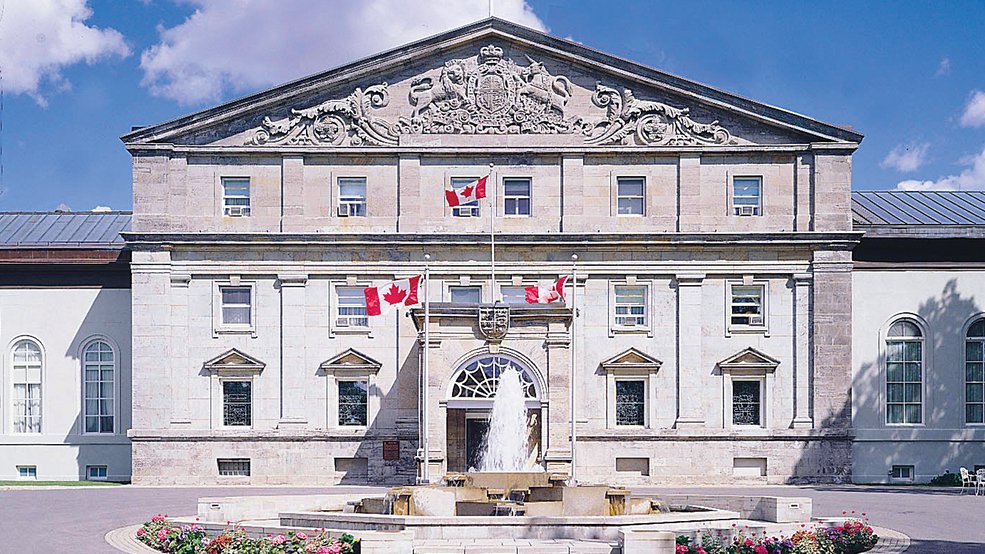
We have an equivalent. It’s called Rideau Hall.
FFS. https://t.co/TOodBg8rOy pic.twitter.com/vkBcq8Xd42— Dale Smith (@journo_dale) June 3, 2017
We already have our “White House equivalent,” and that’s Rideau Hall. It’s where the Head of State resides when she’s in the country, and where her representative lives and conducts his work. And I know that this may be hard for someone like Reeves to grasp, but the prime minister is not a president. He is the head of government, the “first among equals” of the Cabinet, and most emphatically not the head of state. He may have an official residence, but he doesn’t require the equivalent of a White House because his job is not the same, and he has two official offices – one in Langevin Block, and the other in Centre Block (with a temporary replacement being constructed in the West Block as we speak for the decade where the Centre Block will be out of commission). He doesn’t need a live-work space like the White House is.
It’s this kind of intellectual and cultural laziness that is the exact same as people who refer to Sophie Gregoire Trudeau as the “First Lady” when she very much is not. We don’t have a First Lady or a First Family because we have a monarchy, and those roles belong to the Royal Family. The closest thing we have to a “First Lady” other than the Queen (or Prince Philip if you want to qualify the spouse of the Head of State in such a role) is actually the Chatelaine of Rideau Hall, which is the title given to the spouse of the Governor General when the spouse is a woman (which I suppose would be châtelain when the GG is a woman with a male spouse).
So no, Lynda Reeves, we don’t need a symbol similar to the American White House because we already have one. And if we want Canadians to have an image in mind when they close their eyes and imagine what the equivalent is, there are plenty of photos to choose from. Here’s one:
Roundup: Paris Accord disappointment
The inevitable happened yesterday, where Donald Trump announced that he would pull the United States out of the Paris Accords – a process that could take up to four years – with the intention of immediately trying to renegotiate re-entry on more favourable terms. Why that makes no sense is because the Accords were flexible enough that each country was supposed to set their own targets, so there was no actual need for him to pull out other than to look tough, but what can you do with a chaos generator like that? Justin Trudeau was one of the leaders who immediately contacted Trump to express his disappointment, while Catherine McKenna said that Canada was moving ahead regardless, and would be hosting a ministerial summit with China and the EU in September regarding next steps with emissions reductions.
Readout of Trudeau’s call to Trump re: Paris Agreement. #cdnpoli pic.twitter.com/71uX5O5Vih
— Dale Smith (@journo_dale) June 1, 2017
Trudeau’s full statement on Trump pulling out of the Paris Accord. #cdnpoli pic.twitter.com/Ce2z1iI76S
— Dale Smith (@journo_dale) June 1, 2017
We are no doubt going to hear some grousing from the Conservatives over the next few days about this, with renewed caterwauling about scrapping the federal carbon tax (which is actual a national carbon price, and any tax would only apply to a province that doesn’t have a price of their own that meets the target – namely Saskatchewan at this point), and concern trolling about how this makes us uncompetitive. The problem, of course, is that industry is all moving in the direction of favouring carbon pricing because it allows for stability and predictability, and it’s also a market-based mechanism to drive innovation – something that sector-by-sector regulations don’t do. And indeed, the business community in the States, including some major oil companies, are reacting negatively to Trump’s decision, and the heads of several companies are resigning from Trump’s business council in protest. And it shouldn’t be understated that the potential for a clean tech is real with price incentives that carbon pricing provides.
Meanwhile, French president Emmanuel Macron issued a statement in English, aimed to the Americans, inviting those scientists to France to continue their climate work there instead, which is a bold move.
Statement on the US' withdrawal from the Paris climate agreements. #parisagreementhttps://t.co/T4XOjWZW0Q
— Emmanuel Macron (@EmmanuelMacron) June 1, 2017
Trump: "I was elected to represent Pittsburgh, not Paris."
Here's the guy actually elected to represent Pittsburgh: https://t.co/LWLRbFtuKw
— ian bremmer (@ianbremmer) June 1, 2017
Roundup: The question of the Speaker
The mounting speculation in BC is now starting to focus on the race for Speaker in the legislature – or rather, the lack of a race. Word has it that the Liberals plan on putting no one forward, and the NDP/Greens are making similar noises as well. The lack of a Speaker could mean that the legislature winds up being dissolved and heading back to an election, as precedent from Newfoundland would indicate. But if, by some miracle, the Lieutenant Governor manages to cajole the legislature into at least trying to attempt to elect a Speaker (by trying to avoid a new election at all costs), then there is the possible situation that the Liberals could put forward one of their own, and if Clark is defeated on a confidence vote, have that Speaker then resign and force the NDP to put forward one of their own, which again shifts the balance to 43-43, and possibly hastening the demise of a possible NDP government.
https://twitter.com/kevinmilligan/status/870105194268209152
https://twitter.com/kevinmilligan/status/870105727964139520
What this means is that Christy Clark is not out of cards to play yet, and that no these are not tricks or games – they’re legitimate exercises of parliamentary authority, and I cannot stress enough that Clark is a very skilled retail politician. She has made the right moves about sounding like she’s willing to do a spell in opposition, and that she’s not looking to go to an election right away, but she can very easily turn around and say that she tried to be reasonable and they didn’t take yes for an answer on any number of issues, and the deadlock would quickly turn into dissolution where she has an NDP-Green agenda laid out before her that she can pick apart in an election campaign. Any suggestion that she simply bow out gracefully and turn over the keys remains premature, and the insistence that an NDP government is inevitable is counting chickens before they’ve hatched. Just because most of the pundit class doesn’t have an understanding of how the system works and the options available to Clark, doesn’t mean that she’s done for. I suspect there will be many surprises left to come, all sold with her skill and charm.
Meanwhile, Clarks’ former press secretary notes that the deal the Green signed actually weakened their ability to exert influence. Andrew Coyne pens a satirical letter from “political strategists” offering cynical (but not necessarily wrong) advice. Colby Cosh looks at the looming Speaker drama and the many other hurdles that would wreck an NDP government, giving it 22 months.
QP: A failed gotcha moment
With the PM flying back from Italy, Andrew Scheer was still left waiting for his sparring match with Trudeau despite being fired up on caucus day. Scheer led off, mini-lectern on desk, reading the accusation that the Infrastructure Bank was to be used for buying favours of friends. Amarjeet Sohi responded with his well-worn reply that the Bank would free up capital for communities to spend it on other needs. Scheer worried that taxpayers would be left on the hook when loans couldn’t be repaid, and Sohi assured him that only projects in the public interest would go ahead and that they ensured accountability. Scheer read some more concern about risk and the government co-signing loans for the one percent. Sohi reiterated his previous points. Scheer then switched to French to lament the nomination of Madeleine Meilleur, and Mélanie Joly reiterated her usual points about Meilleur’s qualifications. For his last question, Scheer railed about Karla Homolka being found volunteering at a school, and Ralph Goodall fielded the question, noting the robustness of background checks. Thomas Mulcair was up next, railing about Meilleur and demanding a parliamentary inquiry into her appointment process, and Joly gave her standard reply. When Mulcair insisted that there were too many conflicts of interest, Joly noted that committees are independent, and reiterated previous points. Mulcair then changed topics, and demanded a free vote on adopting the Electoral Reform committee report. Karina Gould said it was surprising that the NDP wanted to adopt the report considering that they didn’t even agree with it. Mulcair then changed to the issue of KPMG, and Diane Lebouthillier noted investments in cracking down on tax evasion.
Andrew Scheer is worried about the One Percent™. The populist Venn Diagram between the CPC and the NDP overlaps even further. #QP
— Dale Smith (@journo_dale) May 31, 2017
Exactly which "loophole" let Homolka out? She served her time. #QP
— Dale Smith (@journo_dale) May 31, 2017
QP: Scheer’s debut reading
The day after the Conservative leadership results, the seating plan had changed to give front-row seats to most of the failed candidates, with Rona Ambrose to sit next to Scheer for the next few weeks. As well, the PM was still in Rome, and would not be here to spar with Scheer on his first sitting day in the new job. Scheer led off, mini-lectern on desk, and launched into a rant in French about how the previous Trudeau government hurt his generation, and asked a rhetorical question about why the government was hurting Canadians. Bill Morneau first offered congratulations to Scheer for his election, and then reminded him that the economy was on the rebound. Scheer switched to English by reading complaints about people being nickled and dimed, to which Morneau repeated his congratulations in English and the positive economic indicators. When Scheer read questions about hiked taxes, Morneau reminded him that the first thing they did was lower taxes for the middle class. Scheer then changed topics and read a question about one of the surveillance planes in Iraq being withdrawn. Harjit Sajjan noted that Canada increased their contributions, and that rebalancing forces was a constant exercise. Scheer repeated his question in French and got the same answer. Irene Mathyssen was up for the NDP, railing about the Infrastructure Bank as a source of user fees. Amarjeet Sohi assured her the Bank was there to invest in the Infrastructure deficit. Alexandre Boulerice asked again in French, and Sohi reminded him that the Bank would be accountable to Parliament. Boulerice then switched to the question of lifetime pensions for wounded veterans, to which Sajjan insisted that they still planned to implement the pension. Mathyssen asked again in English, and Sajjan repeated that further details would be released later in the year.
Roundup: Scheer in ascendance
As you know by now, Andrew Scheer is the new leader of the Conservative Party, somewhat unexpectedly after he managed to squeak out a win over Maxime Bernier by getting 50.95 percent of the votes on 13 ballots. Scheer is described as “Stephen Harper with a smile” – in fact, no one in the party can recall him actually having anything but that cherubic smile on his face. While the next couple of days will be filled with portraits of Scheer, already many of his supporters note just how “middle class” he is next to Trudeau, though I’m not sure how well it tracks considering that he’s spent most of his adult life in politics, most of his children’s lives has been spent living in official residences (as they move into another one), and they attending private Christian school, while Trudeau’s go to regular public school. That Scheer has five children is a tangible signal to his social conservatism – and it was mostly the social conservatives who voted for Brad Trost and Pierre Lemieux who pushed Scheer over the top.
https://twitter.com/inklesspw/status/868629591493140480
As for the event, the fact that it was held in the same venue as Anime North made for some excitement, and there were a few crossover attendees (who, surprise, surprise, didn’t like panels on feminism at Anime North). The National Post spoke to eight cosplayers from the convention to see their views. In the speeches, it was noted that Bernier’s fell flatter, while Scheer hit the right notes, in the event that it mattered to any of those party members who were going to vote on-site rather than had mailed in their ballots previously. For his victory speech, Scheer took aim at Trudeau, but also sounded more than a few populist notes that didn’t have a lot of good economic backing. The Liberals, meanwhile, were quick to jump on Scheer’s record of social conservatism, and are already digging up things like his pro-Brexit stance or his desire to defund CBC News because he considers it propaganda when they don’t adopt Conservative terminology for things (such as not calling carbon prices a “tax”). And this is even before we mention his full-throated adoption of the alt-right weaponization of free speech on campus, with his threat to cut off federal research dollars to campuses that “don’t allow free speech” (which seems to largely mean either those who have clashes with Ann Coulter, or who don’t allow pro-life clubs to distribute gore-filled flyers).
This just arrived in my inbox, anti-abortion group applauds Scheer's win, plan to hold him to campaign promises pic.twitter.com/KhLP3xwxUi
— Katie Simpson (@Katie___Simpson) May 28, 2017
The #cpcldr round-by-round result that led to Scheer's victory. pic.twitter.com/SgmUGTlBwz
— Andrew Thomson (@thomsonian) May 28, 2017
In the aftermath, Susan Delacourt wonders about party unity if there are fewer carrots than sticks as the party is not in power. Natalie Pon, the young Conservative who led the party’s charge to change its policy on same-sex marriage, is cautiously optimistic about Scheer. Paul Wells looks at the challenges facing Scheer going forward, while Andrew MacDougall tries to discern what the contest results says about the state of the party. Brent Rathgeber says that Scheer will be beholden to the social conservatives in the party. Andrew Coyne suspects that Scheer’s election means the party is more hostile to new ideas, while Chris Selley wonders if they can be more confident in their diversity of conservatism.
Roundup: Stop berating members for doing their jobs
It’s not often that I write about provincial matters, and especially not from Manitoba, but this one I felt like I should make a remark because of the way in which the story is framed, which infuriates me to no end. The headline is “Stephen Fletcher criticizes his own government’s bill in Manitoba.” Fletcher, a former Conservative MP and one-time cabinet minister, is currently an MLA in the province, and a backbencher in the governing caucus.
Because I know that the vast majority of Canadians didn’t get a quality civics education, let me spell it out – it’s a backbencher’s job to hold the government to account. Yes, even if they’re from the same party. And in this case, Fletcher had concerns about a bill and has been asking questions about it at committee meetings late into the night. In other words, he’s doing his job. We should be encouraging this.
But what does the local Canadian Press reporter ask the premier? Whether Fletcher should be removed from caucus.
Great Cyllenian Hermes, luck-bringing messenger of the deathless gods, give me strength before my head explodes.
We The Media keep insisting that we want more independent elected officials, and we constantly fetishise things like free votes, and the moment an MP or MLA starts asking tough questions of their own party or steps out of line, we freak out and start wondering if the leader is losing control of their party, or in this case, whether they need to be kicked out of the party. In this particular case, the article goes on to say that this is the first crack in party unity. Are you kidding me?
When we elect members under the First-Past-the-Post system, we are imbuing them with individual agency. That’s why we elect them to single seats and not giving votes to parties to apportion those seats out to their MPs. We privilege the independence of MPs and empower them to do their jobs. Whether or not they choose to do so is the bigger part of the battle, because of the pressures of looking like a team player, but We The Media make it worse because we pull bullshit like this all the time. Our insistence on these ridiculous narratives and demands that our elected members all act in lockstep constantly while at the same time demanding independence is doing the system in. It’s driving the need for message control which is poisoning our democracy, because our own journalists have a tendency to be too ignorant of how the system is supposed to work.
Let MPs and MLAs do their actual work of holding governments to account, and stop causing trouble. Seriously. You’re actively hurting democracy with this kind of bullshit.