
Stephen Harper’s former advisor, and now accused fraudster, Bruce Carson, wrote a book. And as Colby Cosh noted, historians are forever grateful to those with nothing to lose. So while the Conservatives and NDP gripe about Carson’s current status, we have stories on how Harper wanted to move Jim Flaherty to industry in 2007 but he refused to go, and that Harper backed down because he didn’t want to lose him. We have a story on how Harper gave advice to Jack Layton in the 2008 election about trying to “bury” Stéphane Dion, and how Harper had Ambrose so busy doing other things when she was environment minister that she couldn’t pay attention to her actual file. And here’s a story on how Harper briefly thought he might have to step aside while the Cadman affair (remember that?) was in full swing, before being disabused of that notion by his staff. Could make for interesting reading.
Tag Archives: First Nations
Roundup: Victoria Day and the Canadian Crown
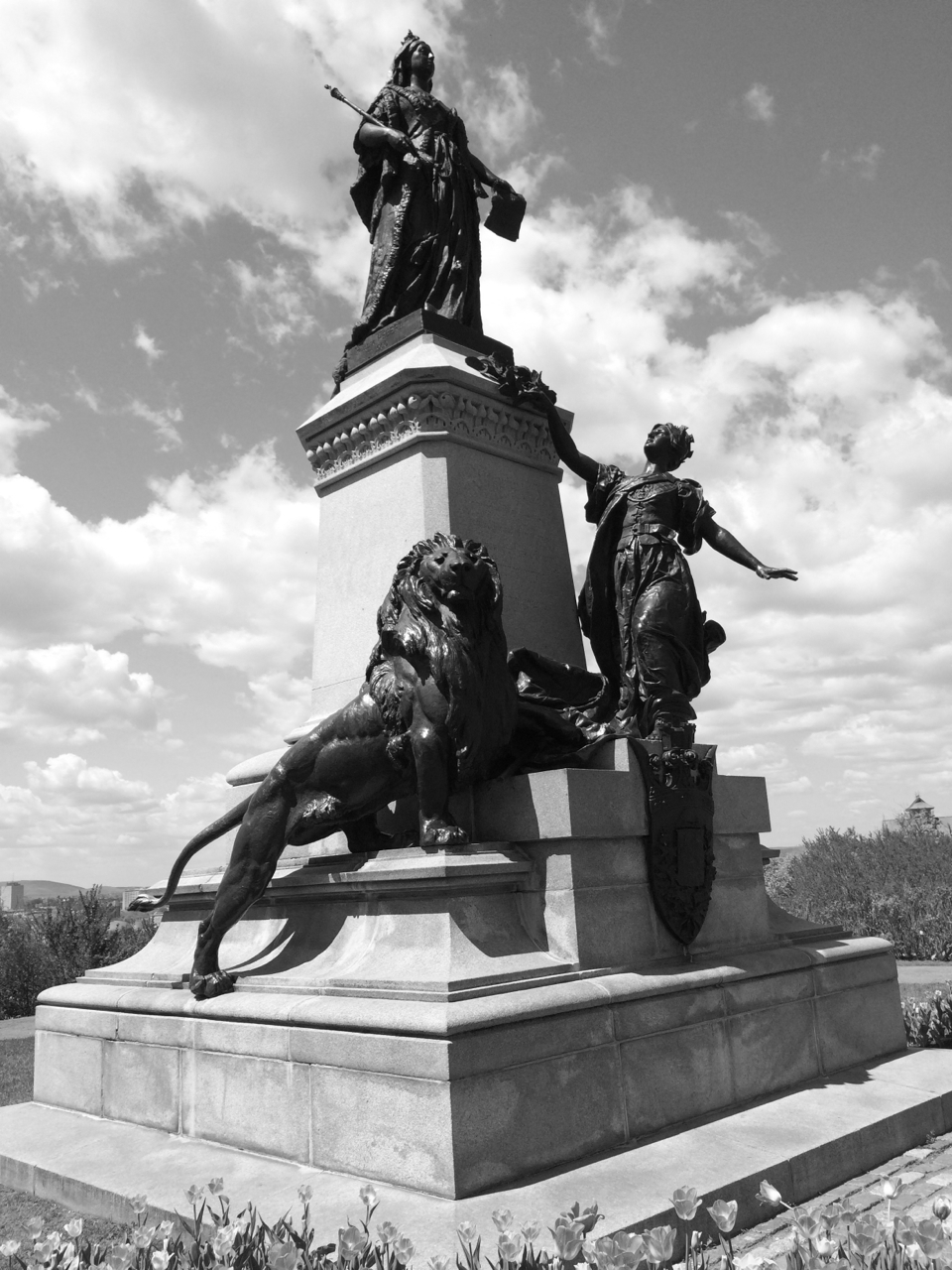
Given that yesterday was Victoria Day, here is a look at how it’s a particularly idiosyncratic Canadian holiday, which combines the celebration of the monarch who founded our country along with the official birthday of the reigning monarch, and has a history wrapped up in things like Empire Day, but remains uniquely Canadian all the same.
Roundup: Prince Charles, PC
Prince Charles and Camilla have landed in Halifax for the start of a four-day Royal Tour visiting Nova Scotia, PEI and Manitoba. Charles was sworn into Her Majesty’s Privy Council of Canada – which he will one day lead upon ascending to the throne – which is also a rare national honour to be bestowed upon him. Also on this visit will be the launch of Charles’ Campaign for Wool in Canada, which seeks to reacquaint people with the properties of the natural fibre for all sorts of purposes.
Roundup: RCMP report released
The RCMP report into missing and murdered Aboriginal women is now out, and there are a few interesting things to note, most of them presented in helpful infographics – that the homicide rate for Aboriginal women is four times that of non-Aboriginal women, that they are most likely to be murdered by an acquaintance, spouse or family member, and that their killers have an average age of 35, are less employed, and use intoxicants. In other words, it’s a more systemic societal problem and not one that can be solved by the government’s tough-on-crime policies consisting mostly of the threat of harsher penalties. Also of note are the fact that the solved rate for murdered Aboriginal women is on par with non-Aboriginal women, so it seems less like police inattention to these deaths, but the breakdown also pointed to a very big problem in BC, such as with the “Highway of Tears,” showing that there clearly needs to be more work undertaken in that area. The report renewed calls for a national inquiry to help address those systemic and societal issues and better understand how to tackle them, while the government took the statistics from the report and said that they are taking action by doing things like strengthening programmes to combat domestic violence on reserves. All RCMP divisions have been ordered to re-examine their unsolved files on these missing and murdered women in the hopes of generating new leads, and they have six months to report back on their findings. Funds for family violence prevention programmes will also be re-directed to higher-risk communities to partner with local agencies to help address “vulnerability factors.”
Roundup: Being cute before committee
And that was Mulcair’s appearance at committee – chippy, evasive, too-cute-by-half, and when he did answer a question, he did it in a sarcastic and fulsome manner (in the actual sense of the word) so as to run out the clock. The answers were full of selective facts and half-truths, raised incorrect facts about Conservatives supposedly co-locating constituency and party offices (in point of fact they were merely in the same strip mall, even though NDP staffers tweeted out photos taken from an angle so that the party sign was in the same shot as the constituency office sign, and thus constructing a wholly disingenuous image). When the NDP members of the committee weren’t busying themselves trying to run out the clock with frivolous points of order, they and Mulcair gave obsequious paeans to how wonderfully the NDP were doing as the official opposition and how the other parties were trying to punish them for it. And when it was all over, their MPs and staffers pronounced both in the House and over social media that they demonstrated “real accountability” and showed how to answer questions. In other words, they behaved as appallingly as the Conservatives do in their evasions and talking points, and patted themselves on the back for it. Well done, everyone! You’ve done parliamentary democracy proud. The committee, afterward, ordered an investigation into who has been leaking information from this whole saga to the media. Meanwhile, CTV has learned that some of those “parliamentary” staff were working in the Bourassa by-election, which may have been run out of that Montreal office. Oh, but they were “on leave,” so it doesn’t count, which makes the insistence that there are strict lines between party and “parliamentary” staff because they have separate unions all the more dubious (as a tweet from this one Liberal partisan demonstrates). At the same time, an investigation by House of Commons administration has advised the Board of Internal Economy that NDP MP Guy Caron broke the rules by sending partisan mailers into Bourassa around the time of the by-election using House resources. Oh, but they always follow the rules, remember? Here is the At Issue panel taking on the day’s events.
QP: A disputed apology
After Thomas Mulcair’s testy and evasive appearance at committee, he was in the House, ready for another round — and Justin Trudeau was also in attendance, which is now rare for a Thursday. Mulcair began by bringing up the centennial anniversary of the Komogata Maru incident and wondered why there had not been an official apology. Tim Uppal asserted that there had been an apology, and that they funded a monument in a Vancouver and they released a stamp. Mulcair switched topics and asked if the minister of Justice was aware of the advice that Justice Nadon resign from the Federal Court and rejoin the Quebec bar. Robert Goguen responded about the advice they received. Mulcair wondered if they would try the tactic with another Federal Court judge, to which Goguen insisted that they would respect the Supreme Court ruling. Mulcair switched topics again and brought up the cuts to refugee healthcare, for which Chris Alexander insisted that genuine, approved refugees would still get covered, but not those who are not approved — and he took a swipe at the Wynne government in Ontario while he was at it. Mulcair gave it another go in French, and got much the same answer. Justin Trudeau led for the Liberals and asked what problems the government thought were present in the Temporary Foreign Workers programme and what their solutions were. Jason Kenney didn’t really answer, but instead took swipes at Trudeau and the Liberals. Trudeau asked about the pathways to citizenship proposals, to which Chris Alexander touted their record on immigration. Trudeau asked his first question again in French, to which Kenney gave vague assurances before returning to his swipes.
QP: A matter of criminal negligence
It was caucus day, when caucus is generally riled up as it is, and after Thomas Mulcair got into a bit of a fight with reporters earlier in the morning, it was likely that everyone was feeling pretty scrappy. Mulcair started off by asking about actions being taken to deal with a viral outbreak, to which Harper gave vague reassurances. Mulcair changed topics, and asked again who advised Justice Nadon to resign and rejoin the Quebec bar. Harper noted that he got legal and constitutional opinions before appointing Nadon. Mulcair noted the 650 lawyers and law professors demanding an apology to the Chief Justice, but Harper rejected the premise of the questions reiterated that he got independent opinions. Mulcair changed topics again, asking about penalties for rail safety violations, and Harper insisted that it wasn’t a matter of regulations but of criminal negligence which is now before the courts. Mulcair bemoaned that nothing has been done since 2012, to which Harper responded that they brought in significant changes to the system. Justin Trudeau was up next, and noted the failures on the Temporary Foreign Workers file, but Harper insisted that they were taking action and ensured that Canadians got the first crack at jobs. Trudeau pressed — to loud objections from the Conservative benches — while Harper hit back by saying that the Liberals wanted more workers. Trudeau asked again in French, and got much the same response.
QP: Who advised Nadon?
It being Tuesday, and lo and behold, all three leaders were in the House. Praise be. Thomas Mulcair led off with a softball about the assistance that Canada is deploying to Nigeria to help locate the schoolgirls kidnapped by Boko Haram. Stephen Harper offered a condemnation of Boko Haram, needn’t said that Canadian personnel were in Nigeria to help authorities there. Mulcair moved on to ask a short question as to whether he advised Justice Nadon to resign and rejoin the Quebec Bar. Harper spoke about advice he received that said appointing him from the Federal Court would be okay. Mulcair noted that he didn’t get an answer and asked which staffer gave Nadon that advice to resign. Harper reiterated his answer. Mulcair changed topics again and demanded severe financial penalties for companies that breach railway safety rules. Harper noted improvements that had been made to the safety network, and that they were coordinating with the United States before congratulating the police for laying charges on the individuals involved in the Lac Mégantic disaster. Mulcair insisted that nothing had really been done, but Harper insisted that they were indeed taking measures. Justin Trudeau rose for the Liberals and noted his visit to Fort McMurray before saying that the Temporary Foreign Workers programme was increasing unemployment in Alberta. Harper retorted that the Liberals were looking for more TFWs for their ridings. Trudeau pointed out the ways that the government loosened the rules and demanded the adoption of his party’s plans. Harper said that while there was a need for some workers, it shouldn’t be a business model. Trudeau then noted the objections to the changes in Quebec, but Harper reiterated his assertion that the Liberals wanted even more TFWs.
Roundup: New allegations around satellite offices
Documents suggest that the NDP may have mislead the House of Commons administration with respect to their “satellite offices,” saying that those staffers would be working in Ottawa when they weren’t. This will make for a lot more awkward and/or acrimonious questions when Thomas Mulcair appears before committee to answer questions about this particular setup.
QP: We’re taking action without a commission
Somewhat amazing for a Monday in this session, there actually was a major leader in the House. Almost unbelievable, I know. Thomas Mulcair led off by asking about the UN special rapporteur on indigenous people’s report on Canada’s Aboriginals, and demanded a public inquiry on missing and murdered Aboriginal women. Peter MacKay responded and touted all of the measures they’ve taken like renewing funding for the Aboriginal justice strategy. Mulcair moved on, and demanded powers to compel testimony for the Elections Commissioner, citing that the Conservative party lawyer gave false information to Elections Canada. Pierre Poilievre insisted that his party was cleared of any wrongdoing, and a second round of those questions — which was more party business than government business — got a similar response. Mulcair then moved on to a small business hiring tax credit, to which Joe Oliver read some good news talking points about job creation. Mulcair noted that unemployment was higher in Toronto than the national average, and decried temporary foreign workers. Jason Kenney insisted that they were cracking down on those who abused the programme. John McCallum was up for the Liberals, and thrice denounced the problems with the government’s Job Bank, and Kenney defended the system, calling it a useful platform.