QP: Doomsaying and expense obsession

Caucus day, and with Trudeau back from the UN, we had a full leadership deck today (minus Elizabeth May, who is travelling with the electoral reform committee). Rona Ambrose led off, mini-lectern on desk, doomsaying the economy and the looming catastrophes of a carbon tax and a CPP increase. Trudeau reminded her that they have lowered taxes for the middle class and noted that the previous record of not raising them on the wealthy didn’t work. Ambrose moved to the possible extradition treaty with China and that country’s human rights record. Trudeau noted that the dialogue they have established means they can raise difficult questions as well as investment opportunities, while they won’t lower the standards on extraditions. Ambrose worried about Chinese cyber-attacks, and Trudeau noted again that the dialogue allows them to raise difficult issues. Ambrose asked about the extradition treaty again in French, got the same answer, and ended her round asking about a peacekeeping missing in sub-Saharan Africa. Trudeau noted the responsibility that Canada has to the world, and said that they were considering the mission carefully in order to determine what the mission would be, but assured her they would be transparent. Thomas Mulcair was up next and demanded a vote on a peacekeeping mission. Trudeau noted this appreciation for the capacity of parliamentarians to raise issues, but didn’t deliver the necessary civics lesson about why a vote would undermine the role of the opposition. Mulcair touched on the extradition treaty with China, got the same answer that Ambrose got, and Mulcair moved onto a pair of questions about the climate targets not being more robust than those of the Conservatives. In both cases, Trudeau reminded him of their commitment to working with the provinces as they agreed to price carbon.

Continue reading

Roundup: Everyone’s an expert

More amendments to C-14 in the Senate, and the very real threat from senators that they would rather veto a bad law (such as the bill as originally drafted) than let it pass and have to head back to the courts, is prompting everyone to consider themselves an expert on the Senate and how to reform it. After days of clutched pearls by pundits and the odd bit of praise (such as Martin Patriquin’s grudging admission that the Senate is a necessary evil), we’re also starting to get some pretty bizarre pieces out there, like one from iPolitics, where they got a mining company CEO to weigh in on reforming the chamber.

No, seriously.

Apparently, according to this “expert,” Trudeau has gotten it all wrong by creating a situation with “no enforceable rule,” and apparently we’ve never had a situation in the past 149 years where bills bounced back-and-forth between the chambers. Err, except that there have never been real levers by which a Prime Minister could control the chamber, only sentiment on the part of senators in his or her caucus, and we’ve had plenty of situations where bills went back-and-forth, including to having conferences between chambers (a situation which is unwieldy in the current configuration of the Senate). And while Trudeau has made mistakes, he is not to blame for the Senate’s actual constitutional powers, which are currently being demonstrated.

But wait – there’s more!™

Our CEO “expert” says that the solution is not Triple E (thankfully), but rather to reduce senators’ term limits to 12 years, to give provinces a veto on their nominees to represent them, and to ensure that a nomination panel ensures that “a new Senate is younger, more representative and better qualified for the work by credentials and life experience.”

Term limits are a solution in search of a problem because they reduce institutional independence. The problem, identified in the Ontario factum to the Supreme Court reference, is that a senator nearing their term limit can start to curry favour with the government in hopes of a post-Senatorial appointment to a tribunal or diplomatic posting. By ensuring that their end date is age 75, it scuppers those plans and keeps Senators from sucking up. Provincial vetoes? Well, senators are not there to represent provincial governments. They are not even technically representing provinces, but rather regions, and their representation tends to be for minority communities, be they linguistic, ethnic or even religious, which was the express purpose for why the Senate was built in the way that it was. And demands for a younger Senate clash with the desire to get accomplished Canadians to serve in its ranks toward the end of their careers so that they can draw on their decades of experience, and if you look at some of the qualifications of our current senators, they are on the whole a very accomplished group indeed (some exceptions apply).

So rather than get some CEO to bloviate without any actual institutional knowledge or awareness, perhaps we should all brush up on our civic literacy and learn about the chamber as it currently exists before start weighing in on how to fix something that is not actually fundamentally broken.

Continue reading

QP: Referenda and farm protests

After the machinations around the government’s climb down on their electoral reform committee and the subsequent Conservative apoplexy, it was likely to be a more tense day in QP. Here was my prediction:

Rona Ambrose led off by quoting Trudeau from a press conference earlier this morning in saying that referenda are often used to stop things, and declared it arrogant. Maryam Monsef said the time was to move past process and get onto the actual debate. Ambrose said that the NDP and the Liberals were taking the right to determine their voting system away from Canadians. Monsef praised their cooperation and doing politics differently. Ambrose repeated the question, and Monsef praised the work of the committee in engaging Canadians and bringing recommendations back to the Commons. Alain Rayes was up next, decrying the “backroom deal” with the NDP (which doesn’t appear to have been a deal considering the NDP seemed genuinely surprised that the government climbed down), and got the same lines from Monsef. Rayes gave one more demand for a referendum, and got much the same answer. Marjolaine Boutin-Sweet noted the farm protest happening outside, and demanded action on the issue of diafiltered milk. Jean-Claude Poissant noted that the government supported Supply Management and would protect it. After another identical round from Boutin-Sweet, Tracey Ramsay decried the TPP while asking the very same questions about diafiltered milk. Poissant gave the same assurances of support for Supply Management.

Continue reading

QP: An end to constant clapping?

On caucus day, all of the leaders were present but there were a few curiously empty desks. Rona Ambrose led off, mini-lectern on neighbouring desk, asking about Canadian special forces troops coming under fire near Mosul, and wondered about the training mission. Trudeau replied about helping our allies take the fight to ISIS, and listed off the additional resources added to the mission. Ambrose asked again about the combat mission, and Trudeau reiterated that it was not a combat mission. Ambrose then moved back to the howls for a referendum, and Trudeau listed off his promises of broad consultation. Denis Lebel took over in French to demand a referendum, and got much the same answer, and then a second round of the same. Thomas Mulcair was up next, asking about RCMP surveillance on journalists, and Trudeau reminded him that the RCMP were taking steps, and that they have learned from their mistakes. Mulcair asked again in English, and demanded why C-51 was not repealed. Trudeau mentioned ongoing consultations with stakeholders and the forthcoming parliamentary oversight body for national security. Mulcair then switched to C-10 and jobs affected, and Trudeau insisted that they were trying to ensure the long-term success of the industry. For his final question, Mulcair bemoaned the lack of investment in Bombardier, and Trudeau reiterate that they are encouraging investment in the sector.

Continue reading

QP: Narratives and process

While there was already drama in the Commons earlier in the morning as a government bill barely survived a tie vote, by the time QP rolled around, it was a bit more sedate. Justin Trudeau was in Montreal for an award presentation, and Rona Ambrose was elsewhere, which left Denis Lebel to lead off. He raised the new guidelines around advertising, but wondered why Trudeau was still in a Discovery Canada ad. Brison reminded him that the ad in question was not a paid ad, and thus did not apply. Lebel asked again, and Brison switched to English and hit back about the previous government’s record. Lebel switched to English to ask again, and got the same answer. Andrew Scheer asked again, and raised the self-promotion narrative before demanding do know that no government funds were used in the ad. Brison read out the policy, and suggested that Scheer rethink his questions. After another round of the same, Thomas Mulcair rose for the NDP, and thundered about the “scammers” in KPMG. Diane Lebouthillier insisted that there were codes of conduct in place and that no one gets special treatment. Mulcair thundered again in French, got the same answer, and before Mulcair thundered about Montreal infrastructure funding. Amarjit Sohi insisted that funding was on the way as consultations were underway. Mulcair asked again in English, and go the same.

Continue reading

Senate QP: About that bridge toll…

Time once again for another episode of Ministerial Senate Question Period, with special guest star Infrastructure Minister Amarjeet Sohi. Sohi took his place next to Senator Harder, and things got underway with relatively poor attendance, somewhat unusually, but many senators were at the legal and constitutional affairs committee for the pre-study of the assisted dying legislation. Senator Carignan led off, talking about a major infrastructure project in Montreal, and whether Sohi had met with the provincial minister and if they planned to participate. Sohi first thanked the Senate for the special opportunity to be there, and then launched into a discussion about the meetings he was having around the project and how important it was to engage with pension funds like the causes de depot as this project was.

Continue reading

QP: Endlessly repeating the same question

While it was Monday, the no major leaders in the Commons — Justin Trudeau was several blocks away talking about Canada increasing its contributions to the a Global Fund to fight HIV and TB, while Rona Ambrose was in Alberta, and Thomas Mulcair was, well, elsewhere. Andrew Scheer led off, mini-lectern on desk, asking if the government would match donations to other charities than just the Red Cross in the Fort McMurray wildfires. Ralph Goodale praised the capacity of the Red Cross, and said they would look at other compensation going forward. Scheer then asked why the PM’s in-laws went to Washington and not the Natural Resources Minister. Dominic LeBlanc reminded him that the president himself invited the PM’s mother and in-laws. Scheer lamented that party “bagmen” also squeezed out ministers, and LeBlanc reminded him that the two in question were invited by the White House, and the taxpayers paid no part of their trip. Gérard Deltell then took over in French, asking the same question again twice, and LeBlanc repeated the response in the other official language. Dion responded on the second time, and he praised the work of the Natural Resources minister in getting an agreement with the Americans. Peter Julian led off for the NDP, howling about KPMG’s involvement. Diane Lebouthillier decried those wealthy individuals who haven’t paid their fair share, and that there were criminal investigations underway, contrary to his assertion. Julian asked again in English, Lebouthillier repeated her answer, adding that she isn’t sure why he can’t understand it. Niki Ashton hectored about the size of the budget implementation bill, for which Bill Morneau disputed that it was an omnibus bill. Ashton then demanded immediate decriminalisation of simple possession of marijuana, and Bill Blair quoted Mulcair in saying certain decriminalisation would be a mistake.

Continue reading

QP: Demanding details of a deal not done

Another busy day on the hill, and while Trudeau had been in the Commons first thing to make another statement on the Fort McMurray situation, he was back for more as QP got underway. Rona Ambrose led off, mini-lectern on neighbouring desk, and asked for reassurance that infrastructure funding to rebuild Fort McMurray would be top priority. Trudeau assured her that yes, this was indeed a priority. Ambrose read the exact same question again in French, got the same answer, and then asked about the details for a bailout for Bombardier. Trudeau reminded her that the negotiations were ongoing, and that they expected a strong long-term business case. Denis Lebel then repeated the question in French, got the same answer, and for his final question, Lebel demanded that they government allow the Billy Bishop airport expand to let Porter also buy C-Series jets. Trudeau responded that they were not going to re-open the tripartite agreement around the Toronto waterfront. Thomas Mulcair was up next, and demanded criminal prosecutions for KPMG tax havens, and Trudeau reminded him that they were working to combat tax evasion. Mulcair repeated the question, got the same answer, before Mulcair moved onto the Canada Post review and not immediately restoring home mail delivery. Trudeau said that they committed to studying the issue and understanding how to give Canadians a better level of service. Mulcair asked the same again in English, skirting the rules around the use of the word “lying” in the chamber. Trudeau reiterated that they were putting in the time that the previous government didn’t in order to ensure Canadians got the right level of delivery.

Continue reading

Roundup: A pointless procedural dust-up

The shine has come off around the medical assistance in dying bill, as the government decided that enough was enough, and it was time to send it to committee. So they invoked time allocation, and not surprisingly, there was all manner of outcry about how terrible this was, and Conservatives like Jason Kenney equivocating, insisting that they never employed time allocation on such sensitive life and death matters as this (ignoring things like safe injection sites or laws around prostitution as also being life and death matters for those that it affects). Kenney’s later assertions about what this bill will do were also…fanciful to say the least.

https://twitter.com/dgardner/status/727954797190479872

I will say that I have little sympathy for MPs who railed about the government cutting off debate, after two nights of midnight sittings and over 84 MPs having spoken to the bill. This is second reading debate, which is the principle of the bill. And I’ve listened to enough speeches to know that they all basically say “this is a very personal issue,” and “What about palliative care?” with minor variations throughout. The concern trolling about the conscience rights of doctors is also in there, never mind that this is a bill dealing with the criminal code and that issue is one for the provinces who deliver healthcare and the provincial certification bodies for physicians. There remains committee stage debate – which is the real meat of the bill – report stage once it comes back, and third reading debate. If MPs still have things to say, there remain plenty of opportunities, and the government also pointed out that some MPs had been up to speak several times on the bill, meaning that there couldn’t possibly be that many more MPs who needed to speak. And if you’ll forgive my particular cynicism, how many more times do we need to hear MPs read those same sentiments in the record over and over again? The government was already generous in the amount of time it gave to debate second reading – accusing them of somehow stifling debate or invoking closure were both patently wrong and false. And so, once all of the procedural wrangling and grousing was done, it passed second reading by a wide margin. Liberal MP Robbie Falcon-Outlette was the sole member of that party to vote against, and he went on Power & Politics to make a bunch of patently false equivalences between this bill and the suicide crisis in places like Attawapiskat, with a host of intellectually dishonest arguments strewn along the way. The bill also began pre-study in the Senate, where I expect it will get a much tougher ride, and there remains a very real chance that even if the bill passes the Commons unscathed that it will not do so in the Senate, and that it may not pass by deadline.

https://twitter.com/cmathen/status/727990740576403456

Continue reading

Roundup: The verdict as reflection on the institution

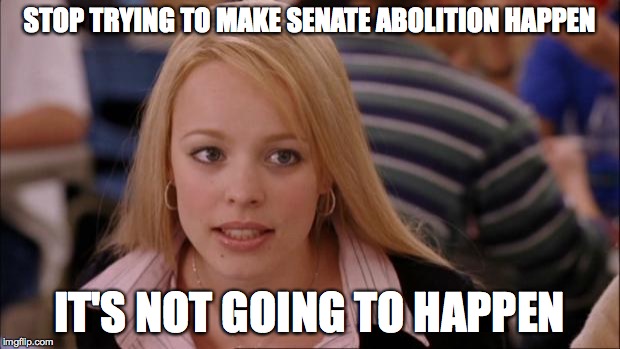
Now that they’ve had a couple of days to digest the events, we’ve got some weekend punditry on the Duffy verdict and What It All Means™ for the Senate as an institution, and well, some of it is really hard to swallow. Rick Anderson has eight thoughts about the expenses issue, and most of them are on the right track, except for number four, which is about the Board of Internal Economy (Commons) and Internal Economy Committee (Senate), and his belief that these bodies are too political to police parliamentarian expenses. The problem with this line of thinking is of course parliamentary privilege – parliament is self-governing. It needs to be. It cannot be brought under the heel of a bureaucracy, because if we can’t trust our parliamentarians to run their own affairs, then we might as well just hand power back to the Queen. Do they get it right all of the time? No, of course not, but this is a democracy and there is an accountability process, and yes, that includes for the Senate. Of course with the Senate, it is much more tied to public pressure, but that public pressure has forced the Senate to make any number of changes in the past few years (they had already started before the whole ClusterDuff affair started, but that certainly accelerated things). This is of course why I have trouble with Adam Dodek’s condemnations of the Senate post-verdict and his (frankly wrong) assertions that nothing has really changed, and his assertion that most senators treat the job as a part-time gig. I’ve known very few senators who feel that way, and most that I’ve met and been in contact with are just as engaged as MPs with their files – even more in many cases when those senators have causes that they are engaged with. The days of senators sitting on a number of corporate boards is drawing to a close as boards are professionalising and the need for a senator as a “prestige” appointment become less common. (I would add that I actually think it’s not a problem for senators to sit on a non-profit board as a way of constituency outreach). And then there’s Michael Den Tandt who retreats to the same old fears about these new independent senators being wholly unaccountable, as though something has materially changed from when they were all in party caucuses (which is false), and that somehow that caucus could keep them more in line (no, not really). Apparently Den Tandt has forgotten that the Senate has institutional independence for a reason, and his musing that the Conservatives should champion abolition by way of a referendum is frankly ridiculous – despite what people may think about a referendum being a tactic to pressure premiers, it returns to the same problem of using majoritarian tactics to pressure minority provinces into giving up their counter-balancing representation. I think I’ll leave this meme here for his edification.

Mean Girls Senate Abolition

Continue reading