Roundup: Arnold Chan and his parliamentary legacy

News was delivered yesterday morning that Liberal MP Arnold Chan has succumbed to cancer and passed away earlier that morning. The news is a blow for Parliament, as Chan was a very decent and well-liked MP who was serious about the dignity of the institution. Back in June, he delivered a speech in Parliament that was viewed at the time as a bit of a farewell (which he insisted that it wasn’t), in which he implored that his fellow MPs not only demonstrate their love of Parliament, but that they demonstrate it by doing things like ending the reliance on talking points.

At the time that Chan made the speech, I wrote a column about its importance, and why more MPs should heed his words. Scripts and talking points have been suffocating our parliament and our very democracy, and it gets worse as time goes on. That Chan could see their inherent problems and try to break the cycle is encouraging, because it hopefully means that other MPs will too. It’s one of the reasons why I hope that as part of honouring Chan’s legacy, MPs will work to do away with the rules in the Commons that have led to the rise of canned speeches, and that we can get to a place where debate is no longer a series of speeches read into the record without actual exchanges, and where MPs actually become engaged in the material rather than just reading the points that their leaders’ offices handed their assistants to write up for them. Parliament should be more than that, and let’s hope that others follow Chan’s lead.

Here are some more remembrances of Chan by his colleagues.

Continue reading

Roundup: Butts/Bannon brouhaha

Tongues were set wagging in the Nation’s Capital yesterday when The New Yorker claimed that Justin Trudeau’s principle secretary, Gerald Butts, had struck up a friendship with Donald Trump’s chief strategist Steve Bannon, of Breitbart fame. Apparently, Bannon sees Butts as the left-wing version of himself, or something, and Butts allegedly told him that there’s nothing more populist than a rich guy raising taxes on the wealthy. And while everyone clamoured for some kind of confirmation out of PMO, getting non-denials from official sources, and “it’s just business” from the less official sources, none of the Canadian stories that I read stopped at the part where the New Yorker piece claimed that Trudeau reversed a polling slump by pushing through these tax measures. While I will readily admit that most polling stories give me hives, especially two years out from an election, I can’t for the life of me recall this having happened – Trudeau’s poll numbers have remained stubbornly high, and only really dipped a little when Andrew Scheer won the Conservative leadership, because at that point there was an actual face that people could put to the poll questions (never mind that questions related to which leader one would vote for are illegitimate given our system of government). Trudeau putting forward these tax changes were the first piece of legislation that they tabled, and while it took a while to actually pass (during which time a budget had also been tabled and passed), it had no actual effect on his polling numbers. Where the New Yorker got this particular tidbit is mystifying to me, and why Canadian outlets didn’t call bullshit on this – and subsequently look side-eye at the other claims in the piece – is similarly baffling.

https://twitter.com/EmmMacfarlane/status/898019574590976000

Of course, the story would not be complete without Thomas Mulcair coming out to theatrically demand that Butts disavow this “friendship” given all of the drama around racism and white nationalism in the States over the past few days. The problem of course is that a) Butts is not an elected official, and b) there are NAFTA talks underway, and it would be really bad form for our government to so blatantly thumb our noses at the Americans in this way. Keeping a working relationship going would seem to be the most prudent course of action – but that never seem to be the course that Mulcair advocates.

Continue reading

Roundup: A sudden demand for subsidies

Something that went largely unremarked yesterday was a somewhat bizarre press release that Andrew Scheer put out, bemoaning the lack of cellphone coverage in one region of Quebec, and then wondered why the government had all kind of money to spend on other things but not this, and then lumped it in with softwood lumber and Supply Management as a Quebec priority.

https://twitter.com/journo_dale/status/889841610665730048

While the fact that the Conservative leader was in essence demanding subsidized cellphone coverage in one particular region is strange in and of itself, it should be a reminder that this is no longer a party of actual fiscal conservatism – it’s a party of economic populism that just happens to chant about balanced budgets for the sake of it. To be certain, this is the first time I’ve seen cellphone coverage being listed as a top priority from Scheer or the Conservatives, and as many of my Twitter followers pointed out, there are plenty of places in this country with poor or non-existent coverage, especially along the TransCanada highway – somewhere one might expect that it might be some kind of national priority. But I’m also curious as to what exactly Scheer proposes to do about it that government deficits aren’t taking care of – language that seems to imply that they’re not simply going to demand that companies provide this coverage through regulatory means. Add to that, they were in power for almost a decade and did nothing about these kinds of coverage gaps, so it makes one wonder why it suddenly became a priority unless it just happens to be somewhere that Scheer is hoping to pick up some votes. Crass politicking? Perish the thought!

Continue reading

Roundup: Imagining something we already have

Two different reality shows have been made pitches about televising the renovations to 24 Sussex, and some of their reasons for doing so are frankly appalling. On the one hand, one can see the temptation of such a project, both in terms of the drama, the fact that the constant conversation and hate-watching would drive the ratings, or the possibility of some form of public accountability where people would see on their screen what their millions of dollars of tax dollars are paying for (and before you say anything else, I am very dubious about that  $38 million figure being thrown around, because it likely involves a bunch of security bells and whistles that the RCMP have thrown into it that may not actually be necessary but are a bunch of “nice to haves” while they’re blue-skying). And while that’s all well and good, one of the proponents, Lynda Reeves went and put her foot in it.

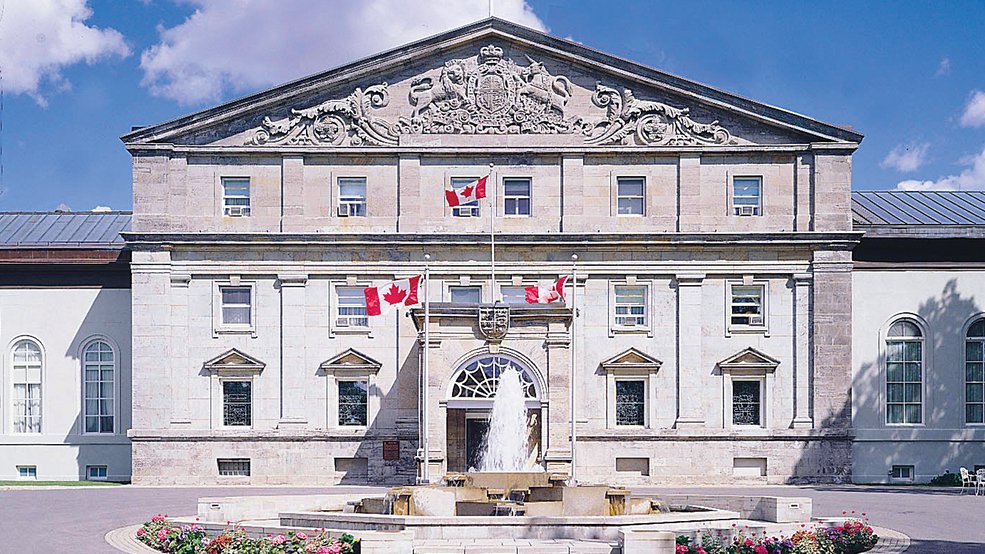
We already have our “White House equivalent,” and that’s Rideau Hall. It’s where the Head of State resides when she’s in the country, and where her representative lives and conducts his work. And I know that this may be hard for someone like Reeves to grasp, but the prime minister is not a president. He is the head of government, the “first among equals” of the Cabinet, and most emphatically not the head of state. He may have an official residence, but he doesn’t require the equivalent of a White House because his job is not the same, and he has two official offices – one in Langevin Block, and the other in Centre Block (with a temporary replacement being constructed in the West Block as we speak for the decade where the Centre Block will be out of commission). He doesn’t need a live-work space like the White House is.

It’s this kind of intellectual and cultural laziness that is the exact same as people who refer to Sophie Gregoire Trudeau as the “First Lady” when she very much is not. We don’t have a First Lady or a First Family because we have a monarchy, and those roles belong to the Royal Family. The closest thing we have to a “First Lady” other than the Queen (or Prince Philip if you want to qualify the spouse of the Head of State in such a role) is actually the Chatelaine of Rideau Hall, which is the title given to the spouse of the Governor General when the spouse is a woman (which I suppose would be châtelain when the GG is a woman with a male spouse).

So no, Lynda Reeves, we don’t need a symbol similar to the American White House because we already have one. And if we want Canadians to have an image in mind when they close their eyes and imagine what the equivalent is, there are plenty of photos to choose from. Here’s one:

Continue reading

Roundup: Asking for an electoral pony

It was entirely expected to happened, and lo and behold, Nathan Cullen stepped in front of some microphones today to cherry-pick the results of the MyDemocracy survey to declare that it told him just what he wanted to hear. Or rather, the whole survey was a failure except for the one table that proved his point.

https://twitter.com/pmlagasse/status/824378237853769728

That single table was the index that said that Canadians want parties to work together. Obviously, that means proportional representation, right? Never mind the other responses that disprove that with Canadians saying that they want simple ballots and having single parties to hold to account when things go wrong – you know, things that are more hallmarks of a First-Past-the-Post system. Of course, PR advocates have a long history of hearing what they want to hear, like how our friends at Fair Vote Canada very creatively interpreted the Liberals’ platform promise about ending FPTP to “prove” that it obviously means a PR system and only a PR system. Because that’s what they wanted to hear. And then there was Cullen’s rhetoric around it. “The idea that the Liberals, having heard all this evidence in favour of proportional systems, would then turn their backs on that promise and try to bring in a ranked ballot, alternative vote system, would be the equivalent of nuclear war in politics,” he said. That’s right. Nuclear war. Cripes.

Here’s the thing about the whole “Canadians want parties to cooperate” thing. It’s like moms and apple pie. Of course people want parties to cooperate. That’s a no-brainer. The problem of course is that decisions need to be taken, and people need to be held to account for those decisions. Our system is very much built on accountability, because that’s really the whole point of parliament. It’s to hold the government to account for the decision that it makes. When parties cooperate to make decisions, it makes accountability harder because when everyone is accountable then nobody is accountable, which is a problem for our system of government. Add to that, under our system of Responsible Government, it requires competition between parties for that power to govern. The tension between government and opposition is crucial not only for the exchange of ideas, but to both ensure that there is accountability and a suitable replacement waiting in the wings if the government should lose confidence. You can’t do that if you’re all working together.

The other part about insisting that “Canadians want parties to work together” is that it’s a wish that has about as much depth as people wanting a pony. It assumes that there are no trade-offs or downsides, and that you can simply ride or pet that pony at your leisure and not have to worry about feeding it, housing it, cleaning it, or shovelling out the barn. It’s far less glamourous, and sometimes ponies are mean, and they kick and bite. Sure, a voting system that you think will encourage parties to work together sounds like sunshine and rainbows, but it also means smaller parties holding larger ones hostage to try and gain outsized influence on decisions, and the inability for a government to speak with one voice, which is another one of those crucial things in our system that helps keep things accountable. So sure, people will answer on a survey that they want cooperation. It sounds like a wonderful thing. Reality of course is different, and people need to be very aware of that.

Continue reading

Roundup: Items left undebated

With the Commons now having risen for the holidays, there is another day or two left of work left in the Senate before they too head off for their holidays, but as Kady O’Malley points out, they are having a bit of a problem getting any bills that aren’t supply-related passed in any reasonable timeframe. The extent to which this is an actual problem just yet is up in the air – yes, fewer bills have passed to date in this current parliament, but some of them have been pretty major issues (like assisted dying), while we’ve also seen far less use of procedural tools like time allocation to ram through bills without sufficient time for debate or committee study. (We’re also not seeing massive omnibus bills being rammed through either, so points for that).

Part of the problem is simply that senators are letting items stand on the Order Paper in their name for weeks at a time, which is not uncommon in the Senate, but there has been little effort to move some of these pieces forward, and I’m not entirely sure why. In my own estimation, part of it has to do with the new normal in the Senate, where there is no longer a government caucus, and the Government Leader – sorry, “government representative” thus far hasn’t really been communicating much urgency on any particular bills so far as I can tell. Maybe I’m wrong, as I’m not privy to any discussions that he is having with other caucus leaders. Some of it I would imagine is delay engineered by some Conservative senators because they feel that measures were adopted too quickly by the House of Commons without what they would consider to be adequate scrutiny (which I would imagine the ostensible reason on holding up debate on the trans rights bill would be), while some of it is partisan stubbornness (like the bill to undo changes the previous government made to unions or citizenship revocation). Senator Peter Harder could start to invoke time allocation on those bills if he so chose, and with there now being enough non-aligned senators having been appointed to surpass the votes of the Conservatives in the Chamber, he may now be in a position to convince them that this is the way to go.

Time allocation is a tricky beast in the Senate, however, and while the previous government did not hesitate to use it in the Senate when they felt they needed to, it is a blunt instrument and Senators need to be careful that they’re not putting themselves in a position of being treated like backbenchers in the Commons. Part of what needs to happen is clear lines of communication between the government and senators who want to speak to bills so that they have timelines in mind (and to be fair, some of them may have a lot on their plates right now). But there shouldn’t be an expectation that bills need to be sped through the Senate just because they’re government bills – they already get priority in all aspects of the Senate process, but if there is a sense of urgency, that needs to be communicated.

Continue reading

Roundup: Trying to help with attendance

The Conservatives have become very preoccupied with Justin Trudeau’s attendance in Question Period of late, which is one of those particular political cudgels that annoys me on a couple of different levels. On the one hand, I’m annoyed at the PM for not taking it more seriously and showing up in order to be held to account, as our system of government demands; on the other hand, I get annoyed when the opposition plays cheap politics with this because they are just as guilty, with their own leaders having fairly poor attendance records to match. It’s especially precious that the Conservatives are so concerned about Trudeau’s attendance as Stephen Harper’s was abysmal, and by 2014, you were lucky if he might show up once a week. Might.

Huffington Post crunched the numbers and found that Trudeau has missed 58 percent of QPs within his first year, while Stephen Harper missed 46 percent in his first year. Mind you, that was his first year, and that thrice-weekly attendance fell off pretty quickly. Trudeau has had a fairly punishing international schedule, which is part of his job – but we’re seeing a number of instances, especially lately, where he is in town and not attending, or that he counter-programmes another event to take place at the same time as QP, which again annoys me because it shows that he’s not taking the responsibility of being held to account seriously. Sure, it’s great that you want to show kids that that coding is a good life lesson, but there are other hours in the day where that might be more appropriate, and not when you should be answering questions for your government’s actions.

But the petty politics that the opposition are playing around this are frustrating. Offering to move Question Period to 4:15 in the afternoon – or any other time to “help” the PM make it – is lunacy considering how disruptive it leaves the rhythms of operation on the Hill, with committee schedules where witnesses have flown in across the country, with the media’s ability to keep the production cycle of news shows. I’m not saying that this is a big deal, but I’m not sure that this is the way to address the problem of non-attendance, particularly when other leaders can hardly deign to make their own appearance most days.

Continue reading

Roundup: Peter Harder is trying to bamboozle you

Behold Senator Peter Harder, the “government representative” in the Senate. Faced with attacks from his (mostly) partisan detractors, he bravely mounted his steed, and galloped out to the webpages of Policy Options where he oh so bravely slew a straw man to defend his particular moves in modernising the Senate. And in case this wasn’t clear enough, let me spell it out for you – Peter Harder is trying to bamboozle you.

The particular straw man that Harder bravely faced was the notion that those who defend the Westminster model in the Senate are trying to keep it a mirror of the House of Lords. This, incidentally, is complete malarkey. Nobody has ever made this argument. The Senate of Canada has never borne any resemblance to the Lords (aside from the fact that each is an appointed upper body), and nobody has advanced an argument to make that claim. But Harder went on at length to prove how different the two chambers were (again, nobody claimed otherwise), and then went on to showcase all of the other upper chambers in Westminster countries and how different they were too. Look at how flexible the Westminster model is! Harder proclaims. And it’s all very “Father knows best,” as he schools everybody on parliamentary democracy. And then he starts his subtle subversion. Look at Nunavut, he suggests – they don’t have parties there! It’s a consensus legislature.

And this is the point where I want to punch someone in the throat. But I have that urge everyone someone brings up the Nunavut legislature.

The Nunavut legislature works (more or less) on a party-less consensus model because a) it has a mere 22 members; and b) it operates within the cultural context of its Inuit residents for whom consensus-making is a norm. The Nunavut legislature model is neither scalable nor portable, and anyone who tries to suggest otherwise requires a smack upside the head. The other part, which escapes Harder’s point, is that it still has an executive council and an ostensible opposition whose job it is to hold said Cabinet to account. And that’s the basis of the Westminster model that Harder quite carefully ignores in his defence of said model’s mutability. You see, the real basis of the Westminster model is that of Responsible Government, and the exercise thereof needs both a government and an opposition to hold it to account, and that can replace the government when they lose confidence. Oh, but wait – the Senate isn’t a confidence chamber, you might be saying. And that’s right. But they still have a part to play in the exercise of accountability, whether it’s asking questions of the government in their own QP (which is why the Leader of the Government is supposed to be a cabinet minister), and why they have an absolute veto, which is a necessary check on executive power.

Harder’s other suggestion – that perhaps instead of an official opposition, there instead be an “opposition representative” to mirror his role as “government representative,” is as much about undermining the ability of senators to organise opposition to the government agenda as it is about extending his own power base among the independents. 101 loose fish cannot be an effective opposition force just as much as they cannot be a consensus body (not that the Senate’s role is consensus). Harder’s attempt to delegitimise the role of partisanship in the Senate has nothing to do with trying to respect the chamber’s constitutional role (which he uses revisionist history to assert) and everything to do with his own ambitions, and he’s willing to slay as many straw men along the way as it takes to convince everyone that he’s on the right path. Don’t let him get away with it.

Continue reading

Roundup: Pushing back against Leitch

In the wake of Wednesday’s Conservative leadership “debate” – and I use the term loosely because there was no actual debate, just presentations sans Power Point – the wedge that Kellie Leitch has been nursing in her campaign became all the more stark. While Michael Chong may have been first out of the gate with his condemnation, Deepak Obhrai has used it to crank his campaign up a notch yesterday, with both an appeal for support in order to oppose Leitch specifically, and also told tales about messages he’s received from Leitch supporters telling him to leave the country.

At one point during the presentations on Wednesday, Leitch held up a book Points of Entry from sociologist Victor Satzewich to justify her screening proposals. The problem? That Satzewich’s conclusions in the book were the opposite of hers, that the system was working, that demanding more face-to-face interviews for all visa applications would make the system grind to a halt, and that while he went into the research sceptical, his research convinced him that things were better than he had initially surmised. So that’s kind of embarrassing for Leitch (or would be if she had any demonstrated capacity for shame, which I’m not convinced is the case).

Meanwhile Leitch, whose other Trumpian note has been to rail against “elites” – as though she were not the epitome of one – has been holding fundraisers in Toronto with Bay Street lawyers for $500 a pop. You know, more of those elites which she’s totally not one of. Also, if she’s so convinced that she’s going to be Prime Minister by 2019, isn’t this some kind of ethical conflict for her to be holding these kinds of cash-for-access fundraisers?

Continue reading

Roundup: The fiscal update’s hidden gem

The fall fiscal update was delivered yesterday – in the House of Commons, it must be noted – and not unsurprisingly there are deeper deficits projected while the government pledges funds to kickstart an infrastructure bank in the hopes of attracting foreign investment. Oh, and “no path back to balance” is the phrase you’re going to hear an awful lot in the coming weeks. Probably ad nauseum. Oh, and “privatization,” as the NDP now consider the infrastructure banks (because hey, we might have to start paying for the roads and bridges that this bank might fund and we couldn’t have that). That having been said, the debt-to-GDP ratio will be the government’s saving grace when it comes to the size of the deficit, as it should remain relatively stable, while still coming in at the lowest in the G7 by a significant margin. So there’s that.

This all having been said, there were other elements in the update that bear mentioning, and which should not be overlooked, which are some of the changes to the way that Parliament operates. They’re going to make the Parliamentary Budget Officer a full Officer of Parliament (which I have mixed feelings about because this solidifies his status as an unaccountable officer for MPs to fob their homework off onto while hiding behind his analyses as “objective proof” of their partisan accusation), they’re adding new independence to Statistics Canada, and they’re going to open up the Board of Internal Economy. But more important than any of that is they’re going to do something about the Estimates cycle.

Why does this matter? Because MPs are supposed to hold the government to account by controlling the public purse, but over succeeding decades, the ways in which they do that – the Estimates and supply cycle – have become so corrupted that they no longer follow the budget cycle, their accounting methods no longer match the Public Accounts so that they can’t track spending, and in many cases, MPs just vote on the Estimates in a series of votes with zero scrutiny (leaving that job up to the Senate – naturally). So if this government is promising to put the Estimates and Budget cycle back in sync, and to clean up the discrepancies between the Estimates and the Public Accounts, that is a Very Big Deal. It means that it will let MPs do their jobs like they’re supposed to do. (We’ll see if any of them do, especially with an empowered PBO for them to fob that homework off onto, but this will certainly help him too). It’s restoring some of the proper functioning of our parliamentary democracy, and we shouldn’t ignore it.

https://twitter.com/mikepmoffatt/status/793611413419880448

Continue reading