
Amidst all of the continued and sustained howling by the Conservatives for an electoral reform referendum, and the interminable bellyaching about the composition of the parliamentary committee and how it doesn’t let the NDP game the system in their favour, the Ottawa Citizen commissioned Stewart Prest to write a pair of op-eds about the reform process and the problems it faces, and to debate between the usefulness of a referendum or a citizens’ assembly. On the former point it’s fairly uncontroversial – that the Liberals won’t be able to get broad-based buy-in unless they can get more than one party on-side, but we’re not having any discussions about ideas because all we’re hearing is howling and bellyaching. Prest’s latter point, however, is the much more troublesome one, because I have a great deal of scepticism about citizens’ assemblies, particularly based on what happened in Ontario. Prest touches on the two main criticisms, both of which need to be expanded upon – that they are easy to manipulate, and that they undermine our representative democracy. On the former point, the outcomes of these assemblies tends to be overly complicated and shiny, what with STV in BC and MMP in Ontario. That there is a pro-reform bias to these assemblies is in and of itself a problem (not to mention that the pro-reform narrative, no matter who it comes from, is ripe with dishonesty particularly as it comes to the status quo), but that the lack of civic literacy on the part of the participants makes it easy for them to fall into the thrall of the various “experts” that steer them to the various options. As for the latter point, I do think it’s a problem that we entrust these very big decisions to a group of randoms with no legitimacy. (If you bring up the Senate’s legitimacy, I will remind you that their authority comes from the constitution and that their appointments are based on the Responsible Government principle that they are made by a government with the confidence of the Chamber). It does diminish our representative democracy because the inherent message is that politics is not to be left up to the politicians, which is a sad kind of cynicism. We elect our MPs for a reason. While I could be convinced as to the merits of a referendum because it would legitimise a decision of this magnitude made by our elected officials, to pass off that decision to yet another body is to again this same kind of buck-passing that has made it acceptable for us to insist that the Supreme Court now do our legislating for us instead of MPs, or officers of parliament to do the role of opposition instead of MPs. Why? Because it’s easier for the elected to hide behind the unelected to avoid accountability, and the public laps it up because they’re not elected so they must have superior opinions, freed from the grasping for re-election. So no, I don’t really see the merit in citizen assemblies as an end-run around democracy, and I think it needs to be called out more loudly.
Tag Archives: The Monarchy
Roundup: Peter Harder’s ham-handed problems
First it was the curious announcement from long-time Liberal Senator (and one-time leader of the provincial Liberal party) Grant Mitchell was stepping away from the senate caucus to sit as an independent. For someone as nakedly partisan as Mitchell, it was a curious move that raised a number of questions for me. Then, later in the evening, news came down that Peter Harder, the “government representative” in the Senate, will be naming a deputy and a whip, and that whip was to be Mitchell. (The deputy was named as Diane Bellemare, who was a Conservative senator who quit that caucus a couple of months ago and became a founding member of the Independent Working Group). In amidst a number of smartass remarks going around the Twitter Machine about how an independent whip was supposed to work, I will offer again the reminder that in the Senate, the job of the whip is more about logistics and administration with things like assigning offices and parking spaces, and with organizing committee assignments and seeing that absences are filled on committees than it is about telling senators how to vote. Likewise, deputy leaders in the Senate are much more equivalent to House Leaders in the Commons, where they help determine scheduling of debates on bills and so on. But given that Justin Trudeau was looking to shake up the way the Senate operates, thus far it has mostly been about rebranding the office of Government Leader in the Senate under a new name and maintaining the “not a minister in name only” fiction that Harper employed when he wanted to put distance between himself and the Senate. Add to that the odd insistence that Peter Harder sit as an independent while taking on this role, which is problematic at best. But if his job is just to represent the government, and to shepherd legislation through the Chamber, then why does Harder need a second person to do the House Leader-equivalent work, or a whip for the independents – particularly when the Independent Working Group has been working on developing a system of administrative representation for those unaligned senators. It smacks to me that Harder, whether with the blessing of Trudeau or not, is trying to impose a top-down organisation for unaligned senators in the chamber rather than letting the bottom-up process that the Working Group is engaged in run its course. While I’m not indulging the conspiracy theories that this is all a crypto-Liberal charade playing out, I do think that Harder is overstepping here by a great degree. Sure, it looks greatly symbolic that he got a Conservative and a Liberal with him to do these tasks, but it does look like he’s trying to impose something on the new independent senators that currently goes against what the Senate rules allow (being of course a caucus organisation that is not tied to an existing federal political party). As with Harder trying to get an inexplicably big staff for the job he says he plans to do (as opposed to the old job of Government Leader), this new move is problematic. It could very well be that Harder doesn’t know what he’s really doing and how the Senate operates, which was always the going to be a problem when Trudeau insisted that his “representative” would come from the first batch of independent appointments. But these ham-handed moves are making that problem all the more glaring. This is an increasingly obvious example of Trudeau not thinking through his Senate plans and ballsing it up as he goes along because he doesn’t understand the institution either, and that is a problem.
Very interesting: @SenMitchell, who was…pretty partisan, has decided to sit as an independent. #SenCA pic.twitter.com/7BitzkvDH3
— Dale Smith (@journo_dale) May 2, 2016
Roundup: No appetite for back pay
With parliament resuming this week, all attention is on whether or not Senator Mike Duffy will resume his duties. After all, there have been a few signs of activity in his office, with computers being updated and such, but there remains a question as to whether his health will allow it, but we’ll see. As for the question as to whether he will be getting any back pay for his time suspended without it, well, senior senators are not so keen. In fact, the phrase “no appetite” is continually used, and they are quick to point to the fact that the Senate’s internal discipline – which the suspension was part of – was based on the Deloitte audits and not criminal findings of guilt or innocence, thus his acquittal by the courts makes it largely an irrelevant issue as far as they’re concerned. I would also add that should Duffy decide to press the issue, well, there are a few well-placed senators who around this issue who are known to leak things to the media, and who will undoubtedly start doing so about any other skeletons in Duffy’s closet that they are aware of. Meanwhile, there remain questions back in PEI about whether Duffy remains qualified to represent the province, as there is still a level of distrust that he is actually a resident (and given that it sounds like he spent the bulk of his time on suspension in Ottawa, well, that doesn’t help matters much). Meanwhile, some Conservative senators are grousing a little bit that Senator Peter Harder isn’t really providing much in the way of answers during regular Senate QP (as opposed to ministerial versions thereof). I think they’re being a bit unfair, considering that he’s been on the job only a couple of weeks and hasn’t yet staffed up his office, nor really had a chance to get proper briefings from the Privy Council Office (because yes, he has been sworn into the Privy Council to take on this job, making him a quasi-minister) on the files that he is likely to be asked about, or had much in the way of a briefing binder prepared, but it does put him on notice that they do expect him to step up his game in the role of “government representative,” particularly when it comes to being the conduit for holding the government to account. These are things that are important, especially as there are no opposition voices in the Commons from Atlantic Canada or the GTA, making the Senate’s role in asking those questions all the more important.
Roundup: Mulcair’s political demise
Well, that was unexpected. After the NDP voted to adopt a resolution that would see them take the Leap Manifesto back to their riding associations for further discussion – much to the protests of their Alberta delegates – Thomas Mulcair took to the stage to give a lacklustre speech that was basically a rehash of his election speech for the past, oh, ten months, with the whole laundry list of applause lines and nothing about why he deserves to stay at the helm. And when the party voted, they voted 52 percent in favour of a leadership review. Mulcair indicated that he plans to stay on as interim leader until a new one can be chosen, which may be a process of up to two years, but we’ll see how long that lasts once the caucus and national council have had their deliberations. Suffice to say, there has been a tonne of reaction. Jen Gerson digs into the events a little more including some local reaction to the Leap Manifesto resolution adoption, while Jason Markusoff discusses that adoption on the Alberta NDP. Markusoff and John Geddes enumerate eleven signs that showed that Mulcair wasn’t going to win the review vote. Here are the five steps the party needs to take next regarding the leadership, and a look back at the results of leadership reviews in years past. CBC looks at some possible contenders for the leadership contest, while Don Braid advises Rachel Notley to divorce her party from the federal NDP. Chantal Hébert notes that the writing was on the wall for Mulcair from the start of the convention, while Michael Den Tandt says that the Leap Manifesto will sink the NDP permanently. Paul Wells delivers a tour de force with the questions that the party now has to grapple with as they choose that new leader, and the divides that future leader will have to straddle.
Roundup: Slowly effacing the Crown
There has been a certain level of trepidation amongst monarchists when the Liberals came to power, given their penchant for rewriting Canadian monarchical symbols out of things in order to focus on the maple leaf. When Trudeau announced that there would be no changes to our relationship with the Crown, there was a bit of a sigh of relief, particularly when he said that he would not be de-royalizing the service names of the Canadian Forces, but they are slowly and subtly reversing some of the Conservative restorations of monarchical symbols, starting with generals’ rank pins. They had gone from maple leaves, reverting to the older crowns given that hey, this country is a constitutional monarchy and the head of the Canadian Forces is the Queen of Canada. But now they’re turning back into maple leaves. The official excuse is that it’s easier for our international allies to recognise, but I am suspicious that this isn’t in fact a reversion to traditional Liberal effacing of monarchical symbols. What especially makes me insane about this is that it reinforces the narrative that the Conservatives as the party of the monarchy, inherently politicizing the Crown which should never, ever happen, and which is really, really irresponsible for the Liberals and NDP to engage in. Like, completely and utterly boneheadedly irresponsible. The Crown is our central organising principle. It is the centre of our constitutional framework. I cannot emphasise enough that letting one party drape themselves in the glow of the Crown unchallenged is beyond negligent. Worse, they not only let it go unchallenged by buy into this completely wrong narrative that they’re reverting to Britishisms when the Canadian monarchy is separate and distinct (well, more or less, but there is not grey area thanks to the Conservatives’ completely boneheaded royal succession bill). Rather than defending the Crown of Canada, you now have parties that are playing stupid political games around it, and doing lasting damage to Canadians’ understanding around our very constitutional framework. So slow claps all around, because this is the height of ignorant wrongheadedness. Everyone needs to be spanked for this petty and irresponsible nonsense.
https://twitter.com/pmlagasse/status/716069134925103104
https://twitter.com/pmlagasse/status/716069379809480705
Dear @davidpugliese: Canadian monarchy. It’s a Thing, and it’s distinct from the British Monarchy. pic.twitter.com/yeX5MxBn1C
— Dale Smith (@journo_dale) April 2, 2016
Update:
I may have been hasty about the pips, as there may be good reason to change them. The rest of my points, about allowing the Crown to be politicized (especially since it allows more clueless journalists to put this frame around it), and my own trepidation about the Liberal penchant for effacing Crown symbols, remains.
@pmlagasse Simply corrects over-reach on Army General ranks. Pips had no place on a Cdn Uniform as they are based on Order of the Bath
— Richard Berthelsen (@rberthelsen) April 2, 2016
Roundup: De-Canadianizing the Crown
A decision from the Quebec Superior Court came down yesterday which will have grave constitutional implications for Canada, yet few people actually know or understand it. The case challenged the royal succession law that the previous government passed as part of the series of reforms passed in all of the realms that share Queen Elizabeth II as their respective monarch, and by most reckonings, the Canadian law was a complete sham, simply assenting to UK legislation, in essence subordinating the Canadian Crown to a subset of the UK crown, despite the fact that they became separate entities after the Statute of Westminster in 1931. The Quebec Superior Court, however, sided with the Department of Justice, that the monarch was the same per the preamble of the constitution as opposed to a separate legal entity, and essentially reducing Canada back to a subordinate British colony, all because the Harper government didn’t want to go through the necessary steps of doing a proper constitutional amendment to change the Office of the Queen to match the aims of reform. So long, Queen of Canada. We hardly knew you.
https://twitter.com/pmlagasse/status/699675727185256448
https://twitter.com/pmlagasse/status/699676140714258434
https://twitter.com/pmlagasse/status/699677275999113218
https://twitter.com/pmlagasse/status/699678028784410624
https://twitter.com/pmlagasse/status/699678843540545536
https://twitter.com/pmlagasse/status/699678990441848832
https://twitter.com/pmlagasse/status/699686628005179392
https://twitter.com/pmlagasse/status/699686740714463234
https://twitter.com/pmlagasse/status/699686958084288512
https://twitter.com/pmlagasse/status/699687878658494465
https://twitter.com/pmlagasse/status/699689056171597824
https://twitter.com/pmlagasse/status/699689344253173761
https://twitter.com/pmlagasse/status/699691519066947588
https://twitter.com/pmlagasse/status/699691722750742529
https://twitter.com/pmlagasse/status/699811121620889600
Roundup: I Lost My Talk
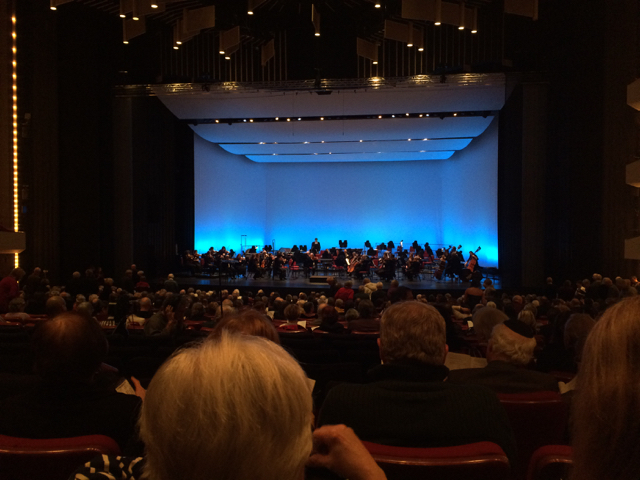 It’s been a while since I’ve done any arts reporting, but this is an exception. Last night I had the good fortune to attend the world premiere of I Lost My Talk, the new original composition commissioned by the family of former Prime Minister Joe Clark as a gift for his 75th birthday. The composition is based on the poem of the same name by Rita Joe, considered the “poet laureate of the Mi’kmaq” people, and it deals with a people losing their language and subsequently culture thanks to the legacy of residential schools. The evening was marked by a talk on Art and Reconciliation, led by Dr. Marie Wilson of the Truth and Reconciliation Commission, followed by the performance of the work itself. Presented along with other works about the endurance of the spirit – Shostakovich’s Symphony No. 9 in E-flat Major, Korngold’s Violin Concerto in D Major, Op.35, and John Williams’ theme from Schindler’s List, I Lost My Talk was the final performance of the evening. It was presented along with a video projection of a dance performance, also created to accompany the work. While one may not be sure how to turn a very tight poem of a few lines into an eighteen minute musical piece that is done without lyrics – lines of the poem recited intermittently through the piece – it was done perfectly. The composition itself was like an epic score to the poem, that was cinematic in scope and feel, the film and the choreography therein were wonderfully realized, and visually arresting. In total, it’s a powerful new work of Canadian composition that takes on the themes of reconciliation, bringing elements of the Indigenous conversation to more European art forms, and creates something powerful of them together. It was stated in the talk beforehand that reconciliation is not an Indigenous problem – it’s a Canadian one, where all of our society needs to participate. This work is part of that conversation, and reconciliation. One can think of no greater gift to a former Prime Minister like Joe Clark than the one that his family commissioned for him with I Lost My Talk. That the National Arts Centre is carrying on and extending the work with more First Nations artists creates a broader dialogue for the work, and the ongoing project or reconciliation.
We asked #Indigenous youth to create a song based on Rita Joe's "I Lost My Talk." Watch: https://t.co/XDToBIjz8O /JC pic.twitter.com/itD13V1Q2D
— National Arts Centre (@CanadasNAC) January 13, 2016
Roundup: Oversight and transparency
Oh, look – it’s the first Senate bat-signal of the year, this time with an interview with Senator Beth Marhsall on CBC Radio’s The House. The treatment of the interview does raise some of the usual problems when it comes to reporting what’s going on in the Senate – namely, that journalists who don’t follow the institution, or who haven’t actually given a critical reading of the Auditor General’s report mischaracterise it as showing “widespread abuse” when it certainly was not, and a good number of the report’s findings were in fact suspect because they were value judgements of individual auditors, many of whom were perfectly defensible. Marshall, however, thinks that the AG’s suggestion of an independent oversight body is a-okay, despite the fact that it’s a massive affront to parliamentary supremacy. The Senate is a legislative body and not a government department – it has to be able to run its own affairs, otherwise out whole exercise of Responsible Government is for naught, and we should hand power back to the Queen to exercise on our behalf. I can understand why Marshall might think this way – she is, after all, a former provincial Auditor General and would err on the side of the auditor’s recommendations regardless, but the fact that no reporter has ever pushed back against this notion and said “Whoa, parliamentary supremacy is a thing, no?” troubles me greatly. I still think that if an oversight body is to be created that it should follow the Lords model, as proposed by Senator McCoy, whereby you have a body of five, three of whom are Senators, and the other two being outsiders, for example with an auditor and a former judge. You get oversight and dispute resolution, but it also remains in control of the Senate, which is necessary for the exercise of parliamentary supremacy. Marshall’s other “fix” is the need to televise the Senate for transparency’s sake. While it’s a constant complaint, and yes, cameras will be coming within a year or two, the notion that it’s going to be a fix to any perceived woes is farcical. Why? With few exceptions, people don’t tune into the Commons outside of Question Period, despite our demands that we want to see our MPs on camera to know they’re doing their jobs. Cameras, meanwhile, have largely been blamed for why QP has become such a sideshow – they know they’re performing, and most of the flow of questions these days is atrocious because they’re simply trying to get news clips. I’m not sure how cameras will improve the “transparency” of the Senate any more than making the audio stream publicly available did, never mind that committees have been televised for decades. If people really wanted to find out what Senators do, there are more than enough opportunities – but they don’t care. It’s easier to listen to the received wisdom that they’re just napping on the public dime, and the people who could be changing that perception – journalists – are more than content to feed the established narrative instead.
Roundup: No ideological obstruction
There’s the Senate bat-signal again. Conservative Senate leader Claude Carignan says that his caucus won’t abuse their majority in the Senate to thwart Liberal legislation that comes forward, to which I say “Um, yeah. Of course.” Because wouldn’t you know it, Senators have a job to do, and they know it. Of course, I’ve never bought into the conspiracy theory that Conservative senators would be the puppets of Harper, trying to influence things beyond the political grave, or even the theory that they would be extra dickish just because they were Harper appointees. Then again, most people seem to forget that senators of any stripe suddenly get a lot more independent when the PM who appointed them is no longer in office, and they get really, really independent once leadership races kick off. So far we’re at the first of those two, and with the Conservatives as a whole allegedly experimenting with a less command-and-control style of leadership, we may see the yoke they unduly placed over their Senate caucus lifted. Mind you, we’re still waiting for a signal to see what Trudeau will do in terms of both the Speaker of the Senate and the Leader of the Government. Without a Leader, they might as well just cancel Senate Question Period, which would be a loss because it’s quite instructive for how QP in the Commons should be run. Some senators have floated the idea of just having Senate QP be about asking questions to committee chairs (which, incidentally, they already can do), but it’s not a good idea because those committee chairs aren’t going to have a lot to say about issues of the day, they won’t have access to briefing materials, and they aren’t conduits by which the government can be held to account, which is the whole point of QP – not asking details about committee work. But seriously – can we please stop worrying about fantastical hysteria about what the Senate is going to do? 99 percent of it is based on false assumptions and ignorance of the chamber, and it’s so, so tiresome. They have jobs to do. Let them.
Roundup: The anti-intellectual warning shot
The markets are crashing, the dollar continues to plummet and the price of oil seems to be in free-fall, but what is it that has the Canadian commentariat entranced – well, aside from the latest Duffy minutiae? The fact that Doug Ford may be contemplating the federal Conservative leadership if Stephen Harper fails to win the upcoming election. It kind of makes me want to weep. “Oh, it’ll be hilarious!” the Twitter Machine keeps relaying, but no, it wouldn’t. It would be heartbreaking for what it means to democracy. As we saw with the Rob Ford years in Toronto, and as we’re seeing play out with the Donald Trump primary race in the States, what more rational people see as hilarious and unbelievable is being embraced by a share of the electorate who are disengaged and who believe that all politicians are liars, so they would rather someone who stands up there and “tells it like it is,” never mind that what they’re telling them is completely divorced from reality and also generally false. We are already dealing with an overload of anti-intellectualism in the Canadian discourse (and no, not just from the right-leaning populists – you should see the abuse heaped on the economists who dared to debunk the NDP’s minimum wage proposal earlier in the week). Do we need it compounded on the federal scene by such an individual? While people may treat it like a joke, it’s a legitimate threat. Remember that Rob Ford got elected mayor because the very people who dismiss the Ford brothers can’t seem to grasp that they do strike a chord with voters, and I can’t think of anything more terrifying for the future of federal politics.