
Roundup: An apology for Zoom—but not for why you think

It’s now on or about day one-hundred-and-thirteen of Russia’s invasion of Ukraine, and it looks like Severodonetsk has not fallen, and lo, the promised humanitarian corridor did not happen. (This is my surprised face). Russians did shell a weapons depot near Lviv in the western part of the country, where Western munitions were allegedly stored. Meanwhile, civilians in areas where Russian forces were repelled are being faced with mines, which are killing and maiming people. Canada will be sending $9 million worth of barrel replacements for the howitzers we shipped to Ukraine earlier in the year, while Anita Anand is calling on the defence industry to be more responsive.

Closer to home, there was an interesting apology in the Senate on Tuesday, which was when Senator Rosa Galvez apologised for having attended a committee meeting over Zoom from out of the country. You see, the Senate adopted rules around their hybrid sittings where they must be at a designated office or residence, and that’s it. There is a sad history in the Senate of abuse going back decades were certain senators basically lived in Mexico and showed up for one day a year, and collected their base salary, and it was a scandal. Since then attendance records are made public and they essentially couldn’t get away with it any longer. (I remember after an earthquake, I went to the Hill just after it happened, and while senators were gathered on the lawn, they were keen to ensure that the person who recorded their attendance saw that yes indeed, they were present even though they were out of the Chamber at the moment it happened and the building was evacuated, because they take it seriously). Regardless, this senator says she was caught up in wanting to do her committee work while she was at the Summit of the Americas, which is commendable in a way, but also shows some of the dangers of this reliance on hybrid sittings in that it creates a new obligation of presenteeism.

Meanwhile, over in the West Block, voting was suspended for a few minutes yesterday afternoon because there was a problem with the voting app that MPs use, and once again, this is a problem with how hybrid sittings are operating. I’ve already written about how this creates a new standard of perfect attendance which is a problem for all involved, but we’re already seeing a greater move for MPs and ministers who are in town not sticking around in the Chamber, but taking off and voting by app, and this is going to have profound consequences the longer it goes on. Votes were one of the few times when ministers could reliably be found in the Chamber, and backbenchers and opposition members could buttonhole them about pressing issues. If they take off as soon as votes are about to start because they think it’s easier to press a button (and have their faces recognised), then we’re straying dangerously far from one of the core symbolic elements of our parliamentary democracy. This should be killed with fire, along with the hybrid sittings, as soon as possible.
Continue reading

Roundup: Running out of patience on procedural warfare

It’s day one-hundred-and-eleven of Russia’s invasion of Ukraine, and Russian forces have destroyed the final bridge connecting Severodonetsk and Lysychansk, which cuts off the escape route for other civilians in the region. In echoes of the siege of Mariupol, there are allegedly people sheltering below a chemical plant, and Russians are telling those trapped in Severodonetsk to surrender or die. This is giving urgency to the calls for western governments to hurry up with their deliveries of heavy weapons in order to force Russians back. Elsewhere, more mass graves have been found near Bucha, and exhumations have begun. Here is a look at the network helping to transport vulnerable elderly Ukrainians out of the conflict zones toward safer destinations further west.

https://twitter.com/KyivIndependent/status/1536273801599672321

Closer to home, there are eight scheduled sitting days left in the House of Commons before the summer break, and the government is trying to move on several key pieces of legislation in the face of Conservative obstruction. While the bill to preserve Quebec’s seat count is likely to pass with little issue, Conservatives continue to fight the bill to remove mandatory minimum sentences, and the changes to the broadcasting rules to include online platforms. The Commons spent the day moving a programming motion on the online bill that includes mandating that it finishes up at committee by the end of the week, while the Conservatives decry this as draconian and undemocratic, and so on. They’ve completely ground the progress of the bill to a halt at committee, and are insisting they need to hear from more witnesses, never mind that they have wasted the time of the witnesses who have tried to appear by filibustering on procedural issues. Also never mind that they would not tolerate the same level of obstruction when they were in government, where they simply time allocated everything from the start rather than negotiate timelines. Of course, that’s the thing about procedural warfare, is that eventually something has to give, and seeing as the Liberals have the support of the NDP, their patience has run out. Nobody is acting responsibly here, and it’s just one giant gong show at this point. Perhaps eight more days is too long.

Continue reading

Roundup: Caucus confidence and garbage legislation

It is now day one-hundred-and-four of Russia’s invasion of Ukraine, and Russia has turned over several of the bodies of Russian fighters from that steel mill in Mariupol where they were holed up for weeks. Missiles continue to fall over other parts of the country, and president Volodymyr Zelensky warns that Russians are targeting the city of Zaporizhzhia in the south, as a means of advancing further into the centre of the country. As well, here is a thread about Russia’s cyberwar in Ukraine, and how they route Ukrainian internet through Russian servers when they take over territory as a means of controlling information.

Meanwhile, a lot of attention has been paid to the confidence vote that UK prime minister Boris Johnson was subjected to within his own party, which he barely survived, and at a much lower margin than other UK prime ministers survived theirs before they made their political exits. With 42 percent of your caucus against you, you cannot survive more than a few more months. It’s simply untenable. Of course, Michael Chong had to pipe up to make yet another pitch for his (garbage) Reform Act and trying to goad the Liberals into signing onto it, which is wrong, and tiresome. Like the Liberals did when Chong first proposed the bill, there was this assertion that this would be what would do in Stephen Harper because his caucus must hate him, erm, except they didn’t. And Chong is making the very same assertion here, which seems to be yet one more Conservative falling into the trap of believing that people hate Trudeau as much as they do. Additionally, as I have stated time and time again, MPs did not need Chong’s garbage legislation to be able to oust leaders—they already had that power if they chose to use it. Putting a legislative framework around those powers only curtails them by stealth, while pretending to “give” MPs powers they already have, it absolutely limited senators’ powers within their caucuses, and it gave leaders even more insulation by putting up thresholds to levels beyond what would ordinarily have been considered fatal to a leader. It doesn’t need to spread further.

https://twitter.com/PickardJE/status/1533902493322776576

Continue reading

Roundup: The Ontario horror show

It is now day one hundred of Russia’s invasion of Ukraine, and President Volodymyr Zelenskyy suspects that Russian forces now hold some twenty percent of the country’s territory, and asks for more Western weapons. Russians hold most of Severodonetsk, and they are moving onto its twin of Lysychansk, which will help them secure control over the Luhansk province. Meanwhile, Ukrainians who return to their homes often find them to be destroyed, with all of their possessions.

Closer to home, the Ontario election was, well, a disaster for everyone involved. Ford gets a larger seat count on a hollow platform he won’t know what to do with, while most of his experienced performers have left politics. The NDP lost nine seats and still think they’re the “strongest” they’ve ever been, but Andrea Horwath did say it was time to step down, as well she should have. Steven Del Duca also stepped down after he lost his own seat, as well he should have. Voter turnout was extremely low, which tells you that people had nothing to vote for, but this breakdown of how each party lost votes is pretty instructive about the level of disillusionment with each, for what that’s worth as the opposition parties start to rebuild. (My full column on the election will be out later today).

https://twitter.com/mattgurney/status/1532558713948708887

https://twitter.com/mattgurney/status/1532535636485455872

Continue reading

QP: Taking shots at the Supreme Court of Canada

Wednesday, caucus day, and proto-Prime Minister’s Questions day. Justin Trudeau was indeed present, as were most but not all of the other leaders. Candice Bergen led off, script on her mini-lectern, and she decried the “failure” to make life affordable, as though the prime minster has magic powers to set world oil prices, or to stop droughts in food-producing regions. Trudeau reminded her that the first thing they did was to cut taxes to the middle class and bringing in the Canada Child Benefit, which is indexed to inflation. Bergen insisted that the Liberals were cheering on high gas prices, and then worried about rising interest rates, as though you can have both low inflation and near-zero interest rates in perpetuity. Trudeau took up a script to list affordability measures like cutting cellphone bills, child care, and increasing the federal minimum wage (which affects only a tiny minority of people). Bergen pivoted to the rise in violent crime and worried that violent criminals would just get house arrest (which is an utter falsehood). Trudeau read a script about how they need a system that punishes criminals but does not target Black and Indigenous people, and that the legislation increases maximum penalties. Luc Berthold took over in French to equate both higher prices and violent crime, eventually getting to a demand to lower taxes (which fuels inflation, guys), and Trudeau read some talking points about affordability measures. Berthold decried the rise in interest rates, and Trudeau extemporaneously pointed to lower child care fees thanks to his government.

https://twitter.com/journo_dale/status/1532067017490337792

Alain Therrien led for the Bloc, and he decried the potential federal intervention at the Supreme Court on Quebec’s so-called “secularism” law, and Trudeau said that he must have misheard, that the Bloc insisted that those who want to challenge the law are not real Quebeckers. Therrien insisted this as an internal matter to Quebec, and insisted Canada was trying to “force” religion into their state, and Trudeau took exception to this, saying that minorities have the same across the country, and the federal government would stand up for them.

Jagmeet Singh rose for the NDP, and listed the number of people who have died from toxic drug overdoses since 2017, and wanted the same decriminalisation approach that BC across the country. Trudeau said this was about working with provinces and municipalities to ensure there is a framework around it, but it was a complex solution. Singh repeated the question in French, and Trudeau gave the same response in French.

Continue reading

Roundup: Doug Ford broke the fact-checker

It’s now approximately day ninety-eight of Russia’s invasion of Ukraine, and Russian forces have captured half of the city of Severodonetsk in a “hail of grenades,” while fierce street fighting continues. A rocket strike also hit Sloviansk, also in the Donbas region, which killed three and wounded six. As previously mentioned, the Russian strategy seems to be to try and take the Donbas region as fast as possible, before more heavy western weapons arrive, and lo, it looks like the US will be sending medium-range rockets to Ukraine after a promise that they wouldn’t fire them over the Russian border. Meanwhile, here is a look at Médecins Sans Frontières treating civilians wounded in the fighting near Ukraine’s front lines, and how it’s at a scale they have never faced before.

Closer to home, the Toronto Star’s attempt to fact-check Doug Ford for a week wound up being an exercise in misery, as he “broke” said fact-check system. Now, to be clear, the Star’s whole fact-check exercise between the federal and provincial elections has been fairly risible. It’s not a good system where you take everything the leaders say for a week each, and then evaluate them based on number of falsehoods per time spoken. And because it’s done by someone for whom politics is not their regular beat, they don’t have enough context to know whether what is being said is true or not, and a lot of stuff is being given a pass that shouldn’t be precisely because they don’t know enough of what is going on to have a reasonable bullshit detector throughout. This having been established, Ford still broke their system by barely speaking at all, and when he does, it’s largely in generalities that can’t be easily checked, and it makes it easy for him to get caught up in exaggerations that also wind up getting a pass. Still, he did still lie a lot, particularly about the situation he inherited, but the fact-check system is pretty useless, so why bother?

Nevertheless, this is now the second election where Ford has largely been a blank slate, with little in the way of policy other than his previous move of rebating licence plate stickers, and his promise to expand a highway as though it will do anything about congestion (which it won’t because induced demand). There is no contest of ideas because it’s content-free, and nobody wants to call this fact out even though it is utterly corroding our democracy. But it seems to be a strategy that works for him, and which the media in this province seems to be fine with, because they have given him the easiest ride humanly possible, and it’s just so dispiriting. How are we a serious province?

Continue reading

QP: Rota’s return to the big chair

Not only was the prime minister president for QP, as were most other leaders, but Anthony Rota was also back in the Speaker’s chair, for the first time in months. Before things got underway, he took a moment to thank MPs for their support during his absence, and for the care team for his surgery.

After several rounds of applause, things launched with Candice Bergen at her mini-lectern, and she accused the prime minister of trying to end the energy sector by way of the carbon price, insisting that he wants high gas prices. (Erm, Candice, Europe would like a word about gas prices). Justin Trudeau somewhat haltingly listed programmes that are indexed to inflation, and reminded her of what families in Manitoba get in the carbon rebate. Bergen then pivoted to trying to find fault with both the gun control bill and the bill that will remove mandatory minimums on some gun crimes. Trudeau took up a script to praise his own gun control bill, and to recite that removing mandatory minimums is about keeping Black and Indigenous people for; being disproportionately affected by the justice system. Bergen read some scripted outrage about criminals getting house arrest, to which Trudeau read a script about systemic discrimination or people going to jail because they struggle with addiction. Raquel Dancho took over, accusing the government of being responsible for the rise in violent crime, denouncing the removal of mandatory minimums along the way. Trudeau, extemporaneously, listed the new measures in the gun control bill tabled yesterday. Dancho insisted the government wasn’t doing enough to stop gun violence, inadvertently listing things the government was already doing as her counter to “useless” gun bans. Trudeau dismissed this as parroting talking points from the gun lobby, and noted they did invest in the same tools Dancho mentioned.

Yves-François Blanchet led for the Bloc, and he complained that the federal government was ready to go to the Supreme Court of Canada over Quebec’s Law 21 and 96, and he wondered if English was really threatened in Quebec. Trudeau took up a script to raise the woman denied a teaching job because she wears a hijab, and it was his job to defend the Charter of Rights and Freedoms. Blanchet insisted this was a lie, and that secularism was being attacked, before repeating his question a to whether English was threatened in Quebec. Trudeau, extemporaneously, stated the incorrect truism that French is under threat, and insisted that this was about defending minorities throughout the country.

Alexandre Boulerice rose for the NDP, and in French, he noted that the government agreed to decriminalise small amounts of hard drugs in BC, and wanted support for the private member’s bill on doing this nationally. Trudeau recited a script about the opioid crisis and today’s announcement out of BC. Gord Johns repeated the question in English, and Trudeau read the English version of the same script.

Continue reading

QP: Torquing the Supreme Court’s rulings

While the PM was in town and had a press conference scheduled for shortly after QP, he was absent from the Chamber, as were all other leaders, though the deputy PM was present, for what it’s worth. Luc Berthold led off, and he gave a misleading statement about what the Supreme Court of Canada ruled on Friday, and demanded that the government do something about this. David Lametti said that the fact they are eligible for parole does not mean they will get it, and the parole board will determine if the Quebec City mosque shooter will get it…in 25 years. Berthold then pivoted to affordability, and mischaracterised the effect of the carbon price, ignoring the rebates, to which Chrystia Freeland recited that inflation is global, but that they were taking action such as dental care, a one-time housing benefit and tax credits. Berthold accused the government of lacking compassion, to which Freeland listed measures to help the vulnerable. Dan Albas took over in English to demand price controls on gas, and Freeland listed benefits that are indexed to inflation. Albas railed about prices rising, and Freeland repeated her list of indexed benefits.

Alain Therrien led for the Bloc, and he railed that the federal government would challenge Law 21 at the Supreme Court, insisting this was a matter of democracy (ignoring that liberal democracies protect the rights of minorities). David Lametti lamented the pre-emptive use of the Notwithstanding Clause, and said the government has concerns about provisions in the law. Therrien accused the government of trying to pick a fight with Quebec, roping Law 96 into the conversion, and Lametti reminded him that he too is a Quebecker and that plenty of people have concerns about this law.

Peter Julian rose for the NDP, and in French, lamented that the Deschamps report gathered dust and wanted the Arbour report to be implemented. Anita Anand read a script about accepting the Arbour Report, and having a conversation with the prime minster about it, and that they agree with the significant issues identified in it. Lindsay Mathyssen repeated the question in English, and Anand read the English version of the same script.

Continue reading

Roundup: Enjoy your Victoria Day

It’s now approximately day eighty-seven of Russia’s invasion of Ukraine, and Russia says that they now have full control of the steel plant in Mariupol, and by extension the whole city. That means Russians are starting to pull back forces from the area to redeploy elsewhere in the Donbas region, and it looks like fighting is intensifying in the Luhansk region.

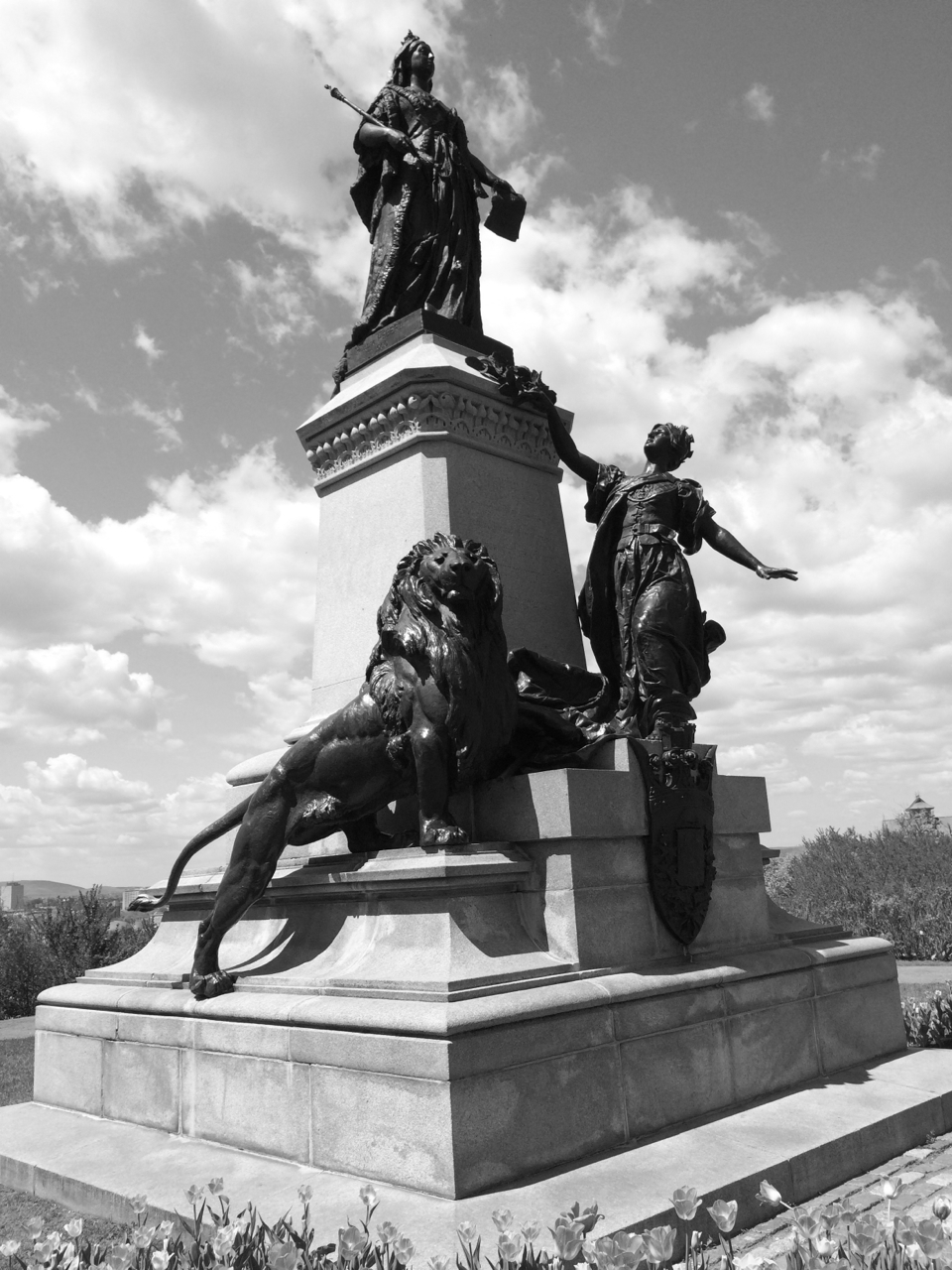
Closer to home, it is Victoria Day this weekend, which is the official birthday of the Queen of Canada. So be sure to raise a toast to the current Queen, and Canada’s first Queen (and maybe while you’re at it, the Queen of the North).

Continue reading

Roundup: Extremism on our own doorstep

It is on or about day eighty-three of Russia’s invasion of Ukraine, and though the Ukrainian forces have pushed some Russian troops back to the Russian border near Kharkiv, it appears that they have given up the fight for Mariupol, and that Russian troops in the steel plant are being evacuated. We’ll see how much of this is confirmed in the next few days. Meanwhile, here is a look at the aftermath of the fighting in villages surrounding Kharkiv as people start to see what is left.

Elsewhere, Putin gave a calm response to Finland and Sweden’s decision to apply for NATO membership, saying that there is no threat to Russia if these states join. So that’s…interesting. Finnish and Swedish troops will be taking part in a NATO military training exercise in Estonia (which has apparently been in the works for years).

Closer to home, there has been a lot of handwringing about the mass shooting in Buffalo, and the role that white supremacy and violent extremism play here in Canada, and the conspiracy theory of “white replacement theory” playing its own role in our politics (Hello, Andrew Scheer!). This also led to more sniping between Conservative leadership candidates, with particular focus on Pierre Poilievre, who has aligned himself with some of these characters in his support for the occupation in Ottawa. With that in mind, here is a thread full of receipts from Stephanie Carvin, selectively quoted below so click through to read the whole thing (and bonus threads here from Jessica Davis, and here from Amarnath Amarasingam that are also worth considering).

https://twitter.com/StephanieCarvin/status/1526302228868374528

https://twitter.com/StephanieCarvin/status/1526302232622288896

https://twitter.com/StephanieCarvin/status/1526302236074250242

Continue reading