
The first of the witnesses with the prostitution bill appeared before the Commons justice committee in its special summer session yesterday, starting with Peter MacKay, who admitted that they got no outside legal advice as to the bill’s constitutionality, and everything has a chance of being sent before the Supreme Court, so he’s just shrugging it all off. Um, okay. Way to go doing the responsible thing in crafting sound laws that will pass constitutional muster, and all of that, guys. Well done. As for MacKay’s assertion that yes, the intent is to criminalize prostitution, the bill pretty much goes about doing that in the most backward and arbitrary way possible rather than just outright criminalizing it, thus setting it up for yet another defeat by the Supreme Court. Oh, but don’t forget – we’re on a deadline of mid-December, so MPs need to hurry it up. And amidst all of the other testimony around the bill, both for and against, Robert Goguen, the parliamentary secretary, decided to be clever at one point and ask one of the government-friendly witnesses, who had been trafficked into prostitution from Hungary, whether the police bursting in while she was being gang-raped would violate her freedom of expression, since someone said that the bill contravenes that Charter right. And then the nation’s collective heads exploded. Apparently Goguen confuses prostitution with rape (it’s not), trafficking with prostitution (they are not the same and trafficking remains illegal), and because sections around communication and advertising have anything to do with the illegality of rape? It’s so stunningly brain dead that it defies logic how he possibly thought he could have been scoring any points with it. Manitoba’s Attorney General thinks that the Nordic Model is great, but the current bill has problems and he doesn’t want to see any sex workers criminalised, not that criminalising their clients actually makes them any safer since it drives them underground regardless.
Tag Archives: China
QP: No current vacancy
The days on the calendar running down, but crankiness among members ramping up, all of the leaders were present in the Commons, which was a little unexpected. Thomas Mulcair led off, asking about Quebec Supreme Court justice appointments and the possible attempt to use a backdoor to put Justice Mainville on the bench. Stephen Harper insisted that this was nothing to do with the Supreme Court, but about putting a good judge on the “supreme court” of Quebec. Mulcair pressed about whether the intent was to elevate Justice Mainville to the SCC, to which Harper reminded him that there was no current vacancy, nor a process to select a new one once a vacancy does become available. Mulcair then accused Harper of starting a war with the Supreme Court, but Harper mocked him for trying to launch into another conspiracy theory. Mulcair moved topics, and demanded that the Northern Gateway pipeline be turned town, to which Harper said that the NDP were against all resource development while they underwent environmental assessments and went through a rigorous assessment process. Mulcair listed the opposition to the pipeline, but Harper dismissed their opposition as ideological. Justin Trudeau carried on that line of questioning and pointed out the impacts a spill would have on that coastline, to which Harper accused the Liberals of holding a “deep hostility” toward the energy sector (really? Given their it boosterism for Keystone XL?) and insisted that they had a rigorous process.
QP: Hudak math and Kijiji data
For the first time of the week, all three leaders were in the Chamber, possibly for one of the last times before the Commons rises. Thomas Mulcair led off by asking about cuts to job market research, wondering how it could be justified. Stephen Harper responded by insisted that it wasn’t correct and more resources had been diverted into the area, and by the way, we created one million net new jobs. Mulcair retorted with a crack about Hudak math, and looking for information on Kijiji, to which Harper noted that the information came from Statistics Canada. When Mulcair demanded that the hiring tax credit for small businesses be extended, Harper reminded them that they voted against that time-limited measure in the first place. Mulcair changed topics and moved to the fighter jet procurement, and if other companies could put in bids. Harper assured him that the report had not yet been considered by cabinet, but they would soon. Justin Trudeau was up for the Liberals, and noted that the previous chief of defence staff noted that the F-35 was not the only suitable plane for Canada, and whether the process was going to be open and transparent. Harper repeated that cabinet had not yet considered the report. Trudeau moved onto the Northern Gateway Pipeline and the widespread opposition to it. Harper responded that the government was in the process of reviewing the report of the National Energy Board, and they would be coming to a decision soon.
Roundup: Filling the empty seat on the bench
The Prime Minister has finally announced his choice for the new Supreme Court Justice to fill the seat left by Justice Fish nearly a year ago. And yes, this one is qualified, as he currently sits on the Quebec Court of Appeal, where there isn’t a whole lot known or said about him. It has been noted that this is another male appointment – six out of seven for Harper, including Nadon, which keeps the gender imbalance on the bench. This appointment won’t face a “vetting” by a Commons committee, but considering how much of a face that process proved to be, I’m not sure that it’s any great loss.
QP: Fears of anti-choice lobbyists
Despite it being a Wednesday and caucus day, only Thomas Mulcair anchored the chamber. Harper was off in Toronto to host his summit on Maternal and Child Health, and Justin Trudeau off in Quebec City to meet the new premier. Mulcair began by asking about the refusal to fund safe abortions as part of the Maternal and Child Health initiative. John Baird responded that they have done a lot of work on maternal and child health, and got a number of other countries on board. Mulcair noted that they refused to fund the UN Population Fund as part of the initiative because of pressure from anti-choice lobbyists. Deepak Obhrai touted the 1.3 million children’s lives saved by their Initiative. Mulcair changed topics and asked about the Temporary Foreign Workers programme not helping unemployed Canadians. Jason Kenney insisted that they employers had an obligation to seek Canadian employees first. Mulcair insisted that posting jobs for TFWs at minimum wage distorted the free market, eliciting roars from the Conservative benches. Kenney noted that those minimum wage rates were largely in the seasonal agricultural sector and that the prevailing median wage was posted for other jobs. Mulcair again changed topics, and noted the objections of Ontario’s Privacy Commissioner to the lawful access provisions of the cyberbullying bill. Peter MacKay insisted that the bill would protect children and the parents of victims of cyberbullying insisted that they pass the bill — not actually true. John McCallum led off for the Liberals asking about the TFW blacklist, to which Kenney insisted that those employers were no longer eligible to get new workers, and Chris Alexander followed up by claiming they were “cleaning up the Liberal mess.” McCallum found that hilarious and an evasion of responsibility, but Alexander insisted that they were indifferent to abuse and that they brought over exotic dancers “by the hundreds and thousands” with no corner for their welfare.
Roundup: More pledges and hints of strategy
As part of the pledge not to raise personal taxes should he form government, Thomas Mulcair has added one that he would never appoint a senator. Never mind that he would be constitutionally bound to do so as it’s a listed imperative in the text, or that the mounting number of absences would start to grind the legislative process to a slow halt, or the fact that once a future government does start making appointments again, it’ll create a further shock to the system that will cause more problems down the road. But hey, it’s easy to make facile promises without thinking about them, right? Paul Wells parses this promise as well as Mulcair’s other promises, like biannual first ministers meetings, to get a glimpse of what Mulcair’s emerging constitutional strategy might look like. Michael Den Tandt looks at Mulcair’s economic promises and pokes holes in the conceits that they can grow the economy and attract investment while increasing taxes on corporations, especially if all of our pension plans are dependent on those corporations turning a profit.
Roundup: Victoria Day and the Canadian Crown
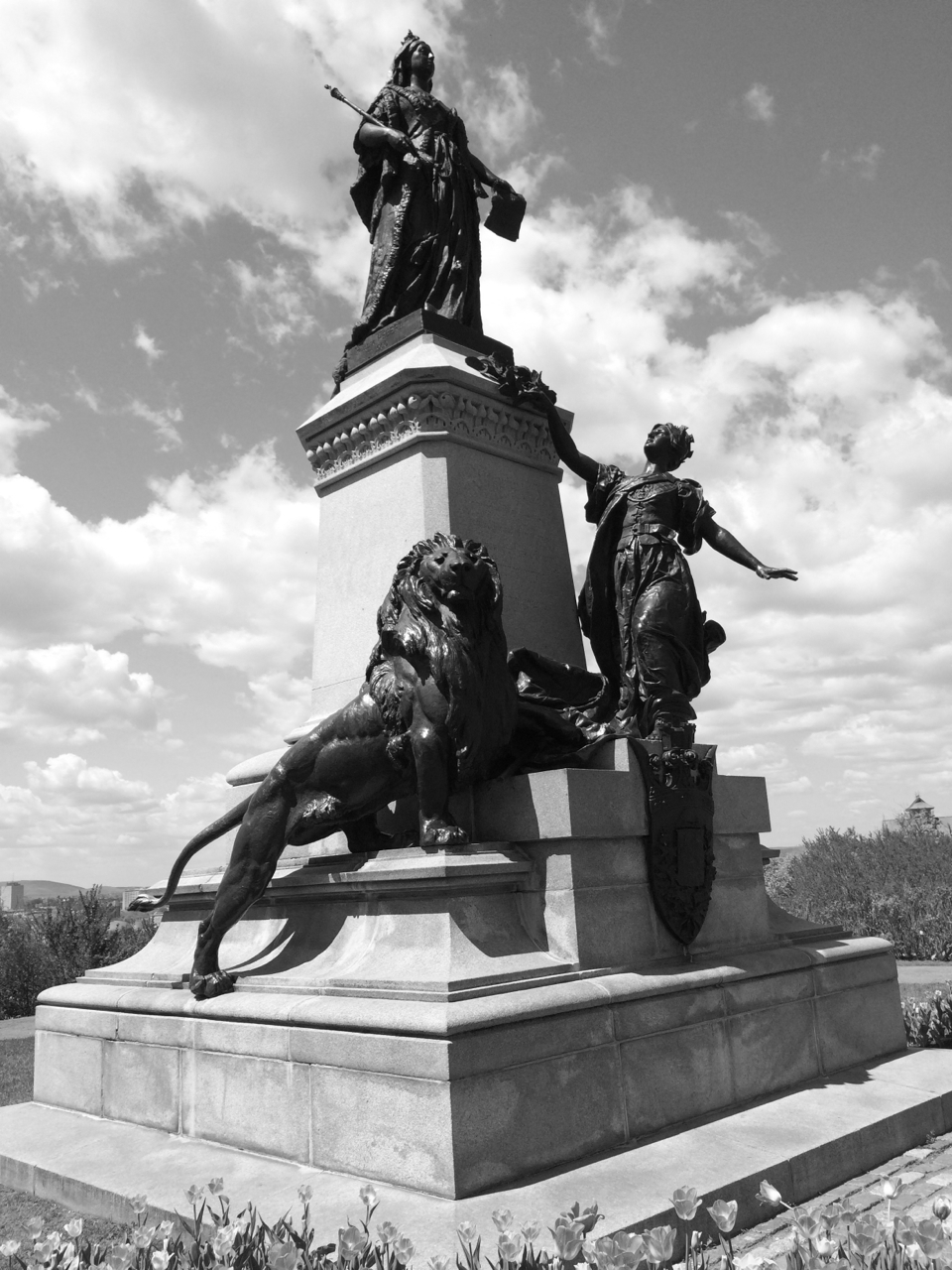
Given that yesterday was Victoria Day, here is a look at how it’s a particularly idiosyncratic Canadian holiday, which combines the celebration of the monarch who founded our country along with the official birthday of the reigning monarch, and has a history wrapped up in things like Empire Day, but remains uniquely Canadian all the same.
Roundup: RCMP report released
The RCMP report into missing and murdered Aboriginal women is now out, and there are a few interesting things to note, most of them presented in helpful infographics – that the homicide rate for Aboriginal women is four times that of non-Aboriginal women, that they are most likely to be murdered by an acquaintance, spouse or family member, and that their killers have an average age of 35, are less employed, and use intoxicants. In other words, it’s a more systemic societal problem and not one that can be solved by the government’s tough-on-crime policies consisting mostly of the threat of harsher penalties. Also of note are the fact that the solved rate for murdered Aboriginal women is on par with non-Aboriginal women, so it seems less like police inattention to these deaths, but the breakdown also pointed to a very big problem in BC, such as with the “Highway of Tears,” showing that there clearly needs to be more work undertaken in that area. The report renewed calls for a national inquiry to help address those systemic and societal issues and better understand how to tackle them, while the government took the statistics from the report and said that they are taking action by doing things like strengthening programmes to combat domestic violence on reserves. All RCMP divisions have been ordered to re-examine their unsolved files on these missing and murdered women in the hopes of generating new leads, and they have six months to report back on their findings. Funds for family violence prevention programmes will also be re-directed to higher-risk communities to partner with local agencies to help address “vulnerability factors.”
Roundup: Checking in with the props
With all of the talk about the future of the income splitting promise in doubt, Jennifer Ditchburn checks in with the family that was used as the prop for the announcement during the last election. She found that they’re not really Conservative party members, and they’re waiting to see what else gets proposed instead of income splitting before they make up their minds. Stephen Maher notes Kenney’s intrusion into the file, and how he continues to stoke the social conservative base, which may be in support of his likely leadership bid.
Roundup: Possible charges against Wright
And with the likelihood that charges will be laid against Nigel Wright, the ClusterDuff exploded all over again yesterday, as an 81-page court affidavit from the RCMP investigator was made public. There are some fairly shocking revelations in there – things like how Wright was in communication with Senator Irving Gerstein as Gerstein made back channel contacts with a partner at Deloitte to inquire about the progress of the Duffy audit and how the repayment would affect it – and that such partner is a top Conservative donor, and that the firm also audit’s the party’s finances. Or that the Prime Minister was told “in broad terms” that Wright was helping Duffy out with the repayment – though it also says clearly that Harper was not told the particulars. That Gerstein considered using party funds to repay Duffy when they thought it was a $32,000 price tag. That there are a number of problems with Duffy’s various speeches in the Senate where he painted himself as some kind of unwitting victim. And that there was a heavy PMO hand in the attempt to change the audits, though there was pushback (including from one of LeBreton’s staffers, Chris Montgomery), and frustration on Wright’s part because the Senate was not responding as they would like when it came to the management of the crisis. Why, it’s terrible that Wright and the PMO were confronted by the notion that the Senate is an independent chamber of parliament that is institutionally independent from their control. The horror! There was even apparently an incident where the Senate clerk had to have words with Senator Carolyn Stewart-Olsen about her partisan behaviour on the steering subcommittee of the Internal Economy Committee. (Mark Kennedy has some highlights here.)